
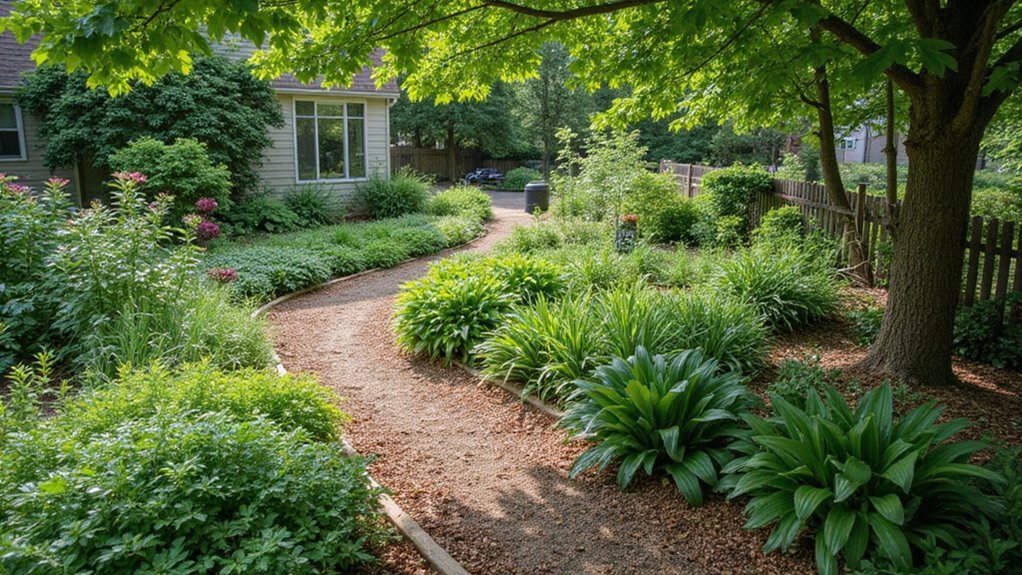
So, you’ve got a garden that’s basically a brown patch of regret, right? Here’s the thing: you can actually make it beautiful *and* help the planet without turning into a composting zombie. We’re talking smart watering tricks, native plants that don’t need constant babying, and soil so rich it’ll make your neighbors jealous. But which techniques’ll actually work for *your* yard? Let’s figure that out.
Conserve Water: Install Smart Irrigation and Harvest Rainwater
When you’re tired of watching your water bill climb faster than a vine on a trellis, it’s time to get smart about watering your garden. Smart irrigation systems are basically plant babysitters that know exactly when your garden’s thirsty. They adjust watering based on rainfall and soil moisture, so you’re not drowning your petunias during rainstorms. Install one, and your plants’ll stay happy while your wallet stays fuller.
Now, here’s the real money-saver: rainwater harvesting. Plop a barrel under your downspout and watch it fill up like magic. You’ll collect gallons during storms. Use that free water for your vegetables and flowers instead of running the hose. Your garden gets hydrated, your bills drop, and Mother Nature gives you a high-five. That’s basically winning at gardening.
Build Living Soil With Composting and Mulching
Your garden’s soil is basically its stomach, and you’ve gotta feed it right or everything falls apart. Start composting your kitchen scraps—fruit peels, coffee grounds, eggshells—in a bin or pile. In about three to six months, you’ll have dark, crumbly gold that smells like a forest floor, not like your trash can exploded. Spread that finished compost two to three inches thick around your plants. Then add mulch on top—wood chips, straw, or leaves work great. Mulch keeps weeds down, holds moisture in, and breaks down into even more soil goodness. Your garden basically becomes a never-ending buffet. Healthy soil means healthier plants, fewer problems, and honestly, way less work for you overall.
Choose Native Plants That Thrive Without Chemicals
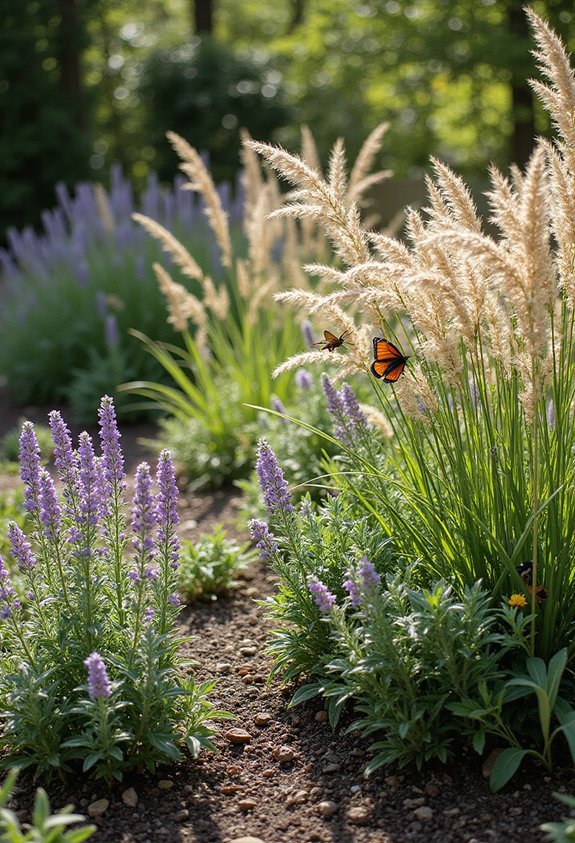
Once you’ve got that rich, living soil cooking, it’s time to stock your garden with plants that’ll actually cooperate with you. Native plants are basically your garden’s best friends—they’ve evolved right here and know exactly how to handle local weather without throwing a tantrum.
These tough little survivors don’t need fancy chemicals or constant babying. They’re adapted to your rainfall, temperature swings, and soil conditions. Plant them in clusters of three or five for maximum visual impact and easier maintenance.
Native plants attract local pollinators and wildlife too, turning your yard into a thriving ecosystem. Plus, you’ll skip the expensive fertilizers and pesticides. Your wallet—and the bees—will thank you.
Natural Pest and Weed Control Without Synthetics
Now that you’ve built a thriving garden with native plants, it’s time to deal with the freeloaders trying to crash your party—the bugs and weeds that’ll eat your hard work for lunch. You can sprinkle diatomaceous earth around plants to slice up soft-bodied insects. Hand-pick bigger pests like beetles and caterpillars—yes, it’s gross, but effective. Plant garlic and marigolds nearby. They’re basically bug repellent bouncers. For weeds, pull them when soil’s moist, roots and all. Mulch thick layers around plants. Wood chips block sunlight so weeds can’t photosynthetically brag about themselves. Try vinegar spray on stubborn weeds. Your garden stays clean, your conscience stays cleaner, and Mother Nature gives you a thumbs up.
Attract Pollinators and Wildlife With Habitat Design
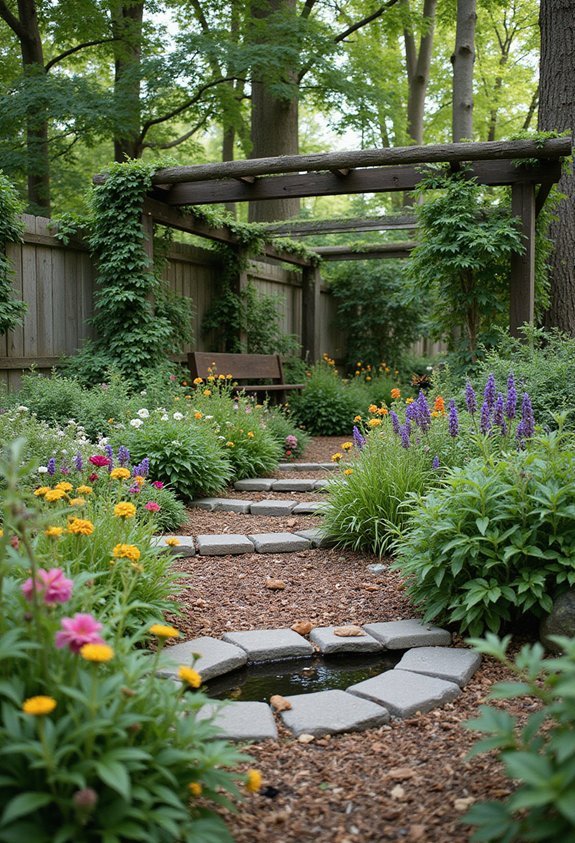
While you’re busy evicting the garden’s unwanted guests, don’t forget that some creatures actually deserve an invitation—the pollinators and wildlife that’ll make your garden sing. Plant native flowers in clustered groups of three or more for maximum bee appeal. Add a shallow water source—a birdbath or saucer works great—because butterflies need drinks too. Leave some “messy” areas with dead wood and leaf piles; insects think it’s a five-star hotel. Tall plants like coneflowers and zinnias give hummingbirds landing pads. Avoid pesticides that’ll turn your garden into a no-fly zone. You’re basically creating an all-you-can-eat buffet that doesn’t require fancy invitations. Your garden’ll buzz with activity, and honestly, that’s the whole point.
Reduce Runoff With Permeable Hardscaping Solutions
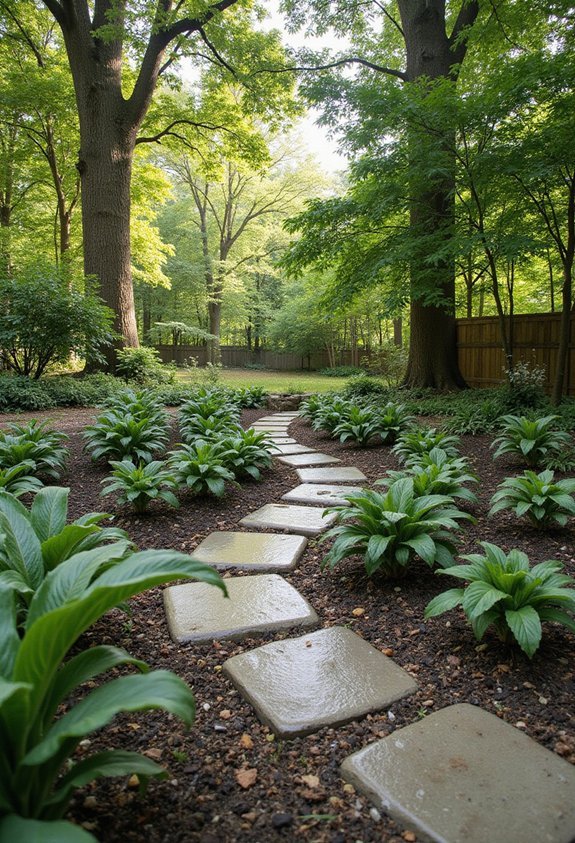
When rain hammers your garden, it’s gotta go somewhere—and if you’ve got regular concrete or compacted soil, all that water just runs off like it’s late for an appointment, taking your topsoil and nutrients right along with it. Enter permeable hardscaping. Porous pavers, gravel pathways, and permeable concrete let water soak right through instead of creating muddy rivers. Your garden literally drinks instead of drowning. Install stepping stones with gaps between them. Plant groundcover in those spaces. Rainwater filters down, recharges your soil, and feeds those thirsty roots below. Plus, you’ll stop eroding your landscape like it’s made of cookie dough. Your garden stays intact, your soil stays put, and Mother Nature stops crying about runoff.
Make Your Sustainable Garden Work: Maintenance and Long-Term Success
After you’ve built your sustainable garden masterpiece, the real work actually begins—but don’t panic, it’s the good kind of work. You’ll water deeply but less often, encouraging roots to dig down like tiny miners searching for treasure. Pull weeds regularly—they’re freeloaders stealing your plants’ nutrients and bragging rights. Mulch with 2-3 inches of shredded bark to lock in moisture and keep soil cooler than your temper on yard-work day. Check soil health yearly and add compost when needed. Your native plants won’t need constant babying, which is honestly the whole point. Prune dead branches, refresh mulch seasonally, and watch for pests before they throw parties in your garden. You’ve got this, and your future self will thank you profusely.
Frequently Asked Questions
How Much Does It Cost to Convert an Existing Traditional Garden to Sustainable Landscaping?
You’ll spend between $3,000 and $10,000 converting your traditional garden to sustainable landscaping, depending on your garden’s size and complexity. Factors like removing sod, installing native plants, adding mulch, and building rain gardens substantially/considerably/notably affect your final costs.
What Is the Timeline for Seeing Results From Sustainable Gardening Practices?
You’ll notice immediate results within weeks—better soil quality, reduced watering needs, and healthier plants. However, you’ll experience full ecosystem benefits like increased biodiversity and pest control within 6-12 months of consistent sustainable practices.
Can Sustainable Gardens Work in Small Urban Spaces or Apartments?
You can absolutely create sustainable gardens in small urban spaces. You’ll benefit from container gardening, vertical planters, and window boxes. You’ll grow herbs, vegetables, and flowers while maximizing your limited space. You’re making eco-friendly choices regardless of your apartment’s size.
How Do I Deal With Existing Chemical Residue in My Soil?
You’ll want to test your soil first to identify specific contaminants. Then replace the top 12 inches of contaminated soil with fresh, clean soil. Alternatively, you can plant in raised beds with new soil, which’ll bypass existing chemical residue entirely.
Which Sustainable Techniques Provide the Most Immediate Visual Impact?
You’ll get immediate visual impact by installing native perennials, adding colorful mulch, and planting fast-growing shrubs. These techniques transform your landscape instantly while establishing sustainable foundations for long-term garden health and ecological benefits.
Conclusion
You’ve got this! Your garden’s about to become an eco-friendly powerhouse. You’ll save water, skip the nasty chemicals, and watch butterflies throw parties in your yard. Sure, you might get dirt under your fingernails and occasionally chat to your compost pile. But honestly? That’s half the fun. Your garden’ll thrive, your wallet’ll thank you, and Mother Nature’ll give you a high-five. Go build that sustainable space!