
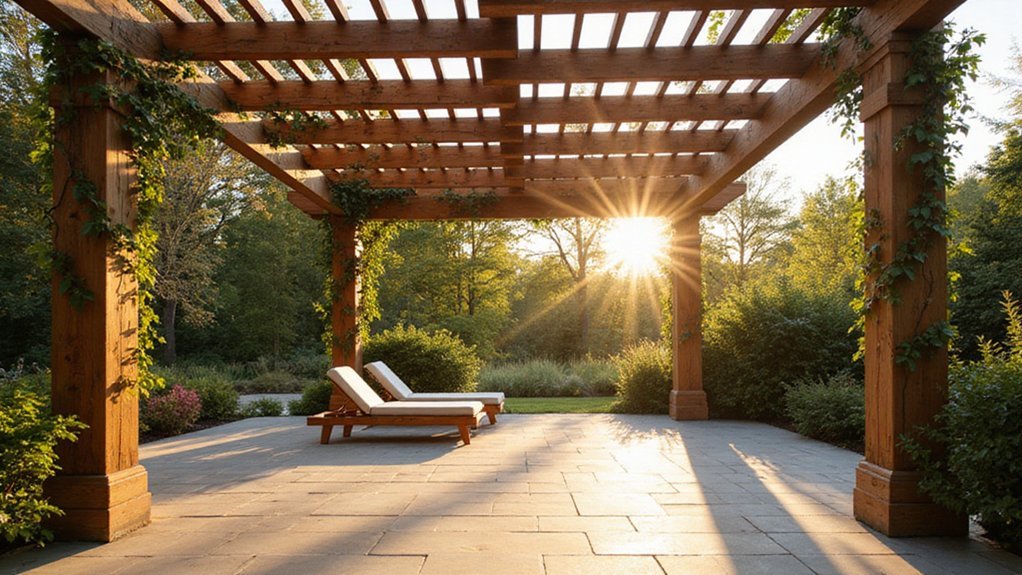
You’ve probably fantasized about a backyard oasis where you can actually relax instead of sweating like you’re in a sauna, right? Modern wood pergolas—especially those crafted from cedar or redwood—give you that perfect spot without breaking the bank or your back during installation. They’re sleek, they’re sturdy, and they’ll make your patio look legitimately sophisticated. But here’s the thing: choosing the right wood species and design matters way more than you’d think.
Natural Wood Pergola Styles for Modern Patios
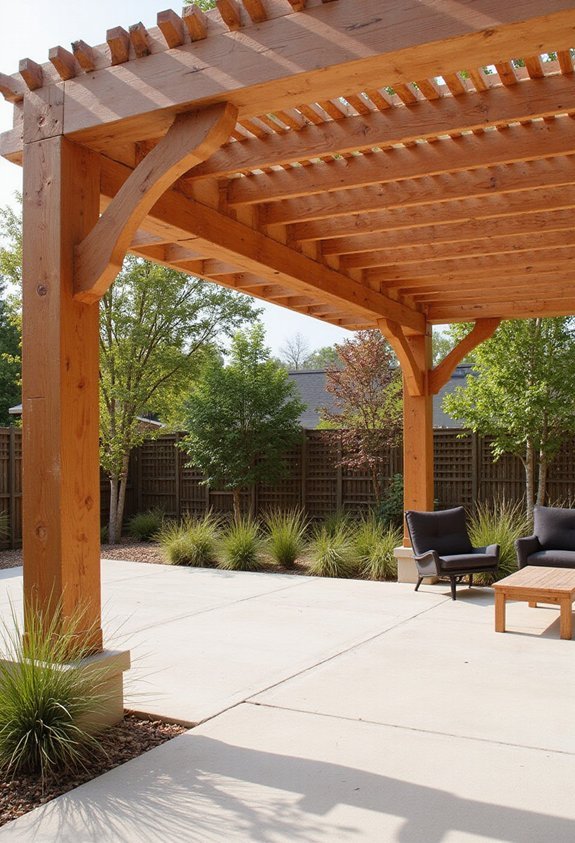
Ever wondered why your patio feels like it’s missing something? Natural wood pergolas might be your answer. You’ll love how these beauties add instant character to your space. Envision this: rich cedar or redwood beams stretching eight to twelve feet overhead, casting dappled shadows on your lounging area. The warm honey and amber tones complement modern concrete or stone patios perfectly. You’re basically getting nature’s air conditioning without the electricity bill. These structures work great for growing climbing vines like clematis or jasmine. Your guests will actually want to hang out there instead of scrolling their phones. Plus, there’s something satisfying about having a spot that’s totally yours. Wood pergolas genuinely transform boring outdoor spaces into Instagram-worthy retreats.
Cedar, Redwood, or Exotic Hardwoods: Which Lasts Longest?
When you’re dropping serious cash on a pergola, you want it standing strong for decades, not crumbling like a stale cookie in five years. Cedar’s your budget-friendly buddy—it’ll last about 15 years and smells amazing. Redwood’s the middle child, sticking around 20 years with that gorgeous reddish tone. But exotic hardwoods? They’re the overachievers, lasting 25+ years without breaking a sweat. Honestly, they’re practically immortal. Cedar and redwood need regular staining to avoid turning gray and grumpy. Exotic hardwoods laugh at maintenance—they’re naturally rot-resistant and weather-proof like they’ve got SPF 1000. Your wallet might feel lighter with exotic options, but your future self will high-five you. Pick what matches your patience level and budget, friend.
Modern Pergola Design vs. Traditional Structures: Key Differences
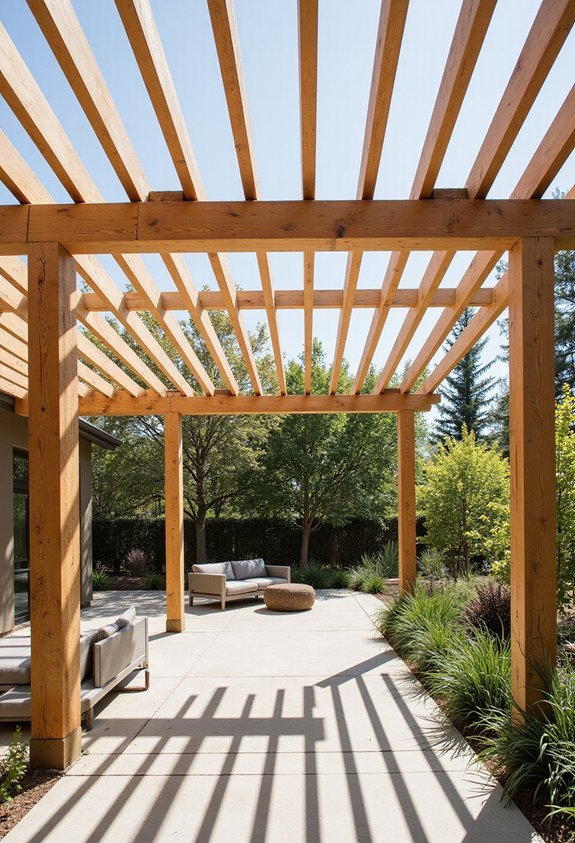
If you’ve scrolled through Instagram lately, you’ve probably noticed pergolas looking way different than your grandpa’s backyard version. Modern designs ditch the heavy, ornate details. Instead, they’re sleek and minimal with clean lines and geometric shapes. Traditional pergolas? They’re basically fancy wooden boxes with decorative lattice work and chunky support beams.
Here’s the real difference: modern pergolas often feature adjustable louvers that actually do something—like block the sun when you’re sweating through your shirt. Traditional ones just sit there looking pretty, offering zero shade control. Modern versions also rock contemporary materials like aluminum mixed with wood, while grandpa’s stuck with pure timber.
Design-wise, modern pergolas keep things simple and functional. Traditional structures prioritize ornamental details and visual fussiness. Both are gorgeous, but modern wins at practicality and not trapping weird bugs in lattice gaps.
Sizing Your Pergola to Match Your Patio and Home Architecture
Now that you’ve picked your pergola style—modern minimalist or traditional fancy—it’s time to make sure the darn thing actually fits in your space. Measure your patio width and length first, or you’ll end up with a pergola that looks ridiculous, like wearing clown shoes to a wedding.
Your pergola should cover about 60-75% of your patio. Too small and it’s basically useless. Too large and you’re basically building a second house. Check your home’s roofline height and match your pergola’s proportions to it. A bungalow needs a shorter structure. A two-story modern home can handle something taller.
Leave at least 3 feet on all sides for walking and furniture. Don’t create an obstacle course. Your guests will appreciate not stubbing their toes constantly.
Best Wood Species for Weather Resistance and Low Maintenance
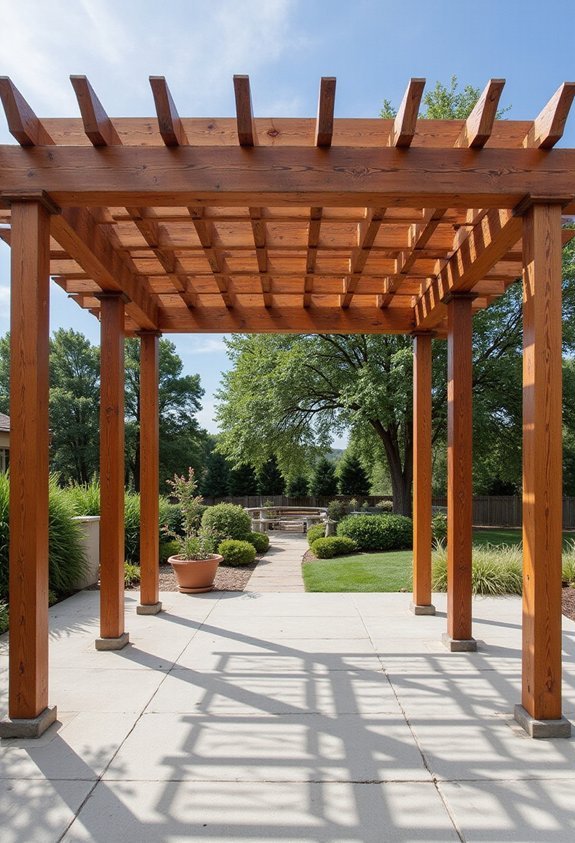
You’ve got your pergola sized perfectly, and now comes the fun part—picking wood that won’t turn into a moldy mess in two years. Cedar and redwood are your friends here. Both naturally resist rot and bugs without needing constant babying. Cedar smells amazing too, like nature’s air freshener. Ipe wood is seriously tough—it’s dense and dark, practically indestructible. Fair warning: it costs more and requires sharp tools because it’ll fight back. Composite materials mimic wood but never rot, though purists might turn their noses up. If you’re on a budget, pressure-treated pine works fine with proper sealing. Just repaint every few years and you’re golden. Pick whatever matches your home’s vibe and your bank account!
Slat Spacing for Shade and Sunlight
Once you’ve nailed down your wood choice, it’s time to think about the gaps between your slats—because basically, you’re either creating a sun trap or a shadow cave, and there’s no in-between. Tight spacing (like one inch apart) gives you serious shade. Your guests won’t squint or sweat through their shirts. Wider gaps (three to four inches) let sunlight flood through like you’re basically not trying. You’ll get dappled light that moves throughout the day. Most folks find two inches the sweet spot. It’s the Goldilocks zone—not too dark, not too bright, just right for afternoon hangouts. Think about your climate. Hot regions? Go tight. Cooler areas? Space them out. Your future self will thank you either way.
Climbing Plants and Vines for Pergolas
If you’ve got a naked pergola sitting in your yard looking lonely, it’s time to dress it up with some climbing plants and vines. Clematis vines explode with purple flowers and’ll turn your boring wooden frame into a showstopper. Ivy grows like it’s training for the Olympics, covering 10-15 feet annually without breaking a sweat. Honeysuckle smells incredible and attracts hummingbirds that zoom around like tiny fighter jets. Don’t sleep on jasmine either—it blooms at night and makes your patio smell like heaven. Plant these bad boys on the sunny side where they’ll thrive. Your pergola’ll transform from sad to rad in one growing season. Trust me, your neighbors will be asking for gardening tips instead of wondering why you’ve abandoned your yard.
Position Your Pergola: Sun, Wind, and Sight Lines
The spot you pick for your pergola matters way more than you’d think—it’s basically real estate for your outdoor room. You’ll want to check out your sun patterns first. Too much sun? You’ll basically become a human rotisserie. Not enough? You’re hosting mosquito conventions all summer long. Next, scope out the wind. A breezy spot’s nice, but not when your pergola’s doing the cha-cha in a storm. Watch how the breeze moves through your yard around 3 p.m. Finally, consider sight lines. Position your pergola where you can actually see people coming (or where you can hide from them). Avoid blocking your favorite window view or creating an awkward angle that makes guests feel like they’re sitting in a closet.
Pergola Costs: Materials, Labor, and Timeline
Now that you’ve got your pergola spot picked out, let’s talk about what this backyard dream’s actually gonna cost you. Materials run anywhere from $1,000 to $5,000, depending on whether you’re going cheap pine or fancy cedar. Labor costs another $500 to $2,000 if you hire professionals—honestly, worth it unless you enjoy sweating through your shirt like a nervous penguin. The whole project takes about two to four weeks from start to finish. Your timeline depends on weather, complexity, and how often your contractor takes “lunch breaks.” Factor in permits too, which vary wildly by location. Bottom line? Save up, plan ahead, and maybe convince a handy friend to help. Your future self’ll thank you when you’re relaxing under that beautiful shade.
Build It Yourself or Hire a Pro?
So, you’re standing in your backyard staring at a pile of lumber and wondering if you’ve made a terrible mistake? Yeah, that’s the DIY decision moment right there.
Building it yourself saves serious cash. You’ll pay less for materials and zero labor costs. But here’s the thing: you need real skills, proper tools, and patience that doesn’t quit halfway through.
Hiring a pro costs more upfront. We’re talking thousands of dollars. However, they’ll finish faster, handle permits, and guarantee it won’t collapse during your next barbecue.
Consider your experience level honestly. Can you read blueprints? Do you own a drill? Have you successfully assembled anything bigger than furniture?
Choose DIY if you’ve got time and confidence. Hire someone if you’d rather avoid stress and potential sawdust disasters.
Seal Your Pergola: Finishes for Long-Term Protection
Your beautiful pergola isn’t going to stay beautiful if you just leave it hanging out in the sun and rain like it’s on some kind of outdoor vacation. That wood’ll turn gray faster than your uncle at a family reunion, and nobody wants that.
You’ve got solid options here. Stain soaks in deep, bringing out the wood’s natural colors while protecting it from UV rays and moisture. It’s like sunscreen for your pergola. Polyurethane gives you a glossy shield and lasts about five years before you’ll need touching up. Paint covers everything and comes in endless colors, but it hides that gorgeous grain you paid for.
Apply finishes every three to five years, and you’re golden. Your pergola’ll thank you by staying stunning and not rotting into sad mulch.
Design Outdoor Zones Around Your Pergola
Once you’ve got your pergola standing strong and protected, it’s time to make the space around it actually work for you. Think of your pergola as the main character in a backyard movie, and you’re designing the supporting cast.
Start by mapping out zones. Place a 10-by-12-foot seating area directly underneath—comfy chairs, a small table, maybe some throw pillows. Position a fire pit about eight feet away for cozy evenings. Add a dining zone with a weatherproof table on the shaded side.
Don’t forget pathways! Create a simple stone or mulch walkway connecting everything. Throw in some planters with colorful flowers around the edges. This transforms your pergola from a lonely structure into an actual hangout spot where your friends won’t bail early.
Add Lighting, Fans, and Water to Your Pergola
A pergola’s got great bones, but without lighting, fans, and water features, you’re basically just sitting under a fancy stick structure when the sun dips down. String lights change everything—hang them overhead and suddenly you’ve got ambiance instead of darkness. Solar options won’t drain your wallet or sanity installing them.
Add a ceiling fan and you’ll actually enjoy summer instead of sweating like you’re in a sauna. Fans push hot air around and make bug season way more bearable, which honestly feels like winning the lottery.
Then there’s water. A small fountain or misting system transforms your pergola into an oasis. The sound’s relaxing, plus misters cool you down without making you look like you’ve taken an unexpected swim.
These three upgrades? Pure magic.
Maintaining Your Wood Pergola Through the Seasons
Everyone loves a pergola until Mother Nature decides it’s time for a reality check. Your wood structure’s gonna sweat through spring, bake in summer, and basically have a meltdown come fall and winter.
You’ll want to seal that wood every two to three years, honestly. Spring cleaning means checking for rot, splintering, and creepy crawlies setting up shop. Summer’s all about power washing those beams—they turn gnarly green when algae moves in. Fall requires leaf-clearing duty around the base, or you’re asking for moisture problems. Winter? Your pergola’s basically holding its breath, so make sure drainage works properly.
Stain or paint touch-ups keep everything looking fresh and protected. Your future self will thank you for staying on top of maintenance now.
Frequently Asked Questions
Can I Attach a Pergola Directly to My House or Does It Need a Foundation?
You can attach a pergola directly to your house, but you’ll need proper structural support. Install lag bolts into your home’s rim joist or beam, and set opposite posts on concrete footings. This guarantees stability and prevents damage to your house’s foundation.
What Permits or HOA Approvals Do I Need Before Installing a Pergola?
You’ll need to check your local building codes and obtain permits for structural pergolas. Most jurisdictions require them. If you’re in an HOA community, you’ll also need written approval before construction begins. Contact your local building department first.
How Do I Prevent Wood Rot in Areas With High Moisture and Humidity?
You’ll prevent wood rot by applying water-resistant sealants annually, ensuring proper drainage around your pergola’s posts, and selecting naturally rot-resistant woods like cedar or redwood. You should also maintain good air circulation and avoid direct ground contact with wood components.
Can Pergolas Support the Weight of Heavy Snow Loads in Winter Climates?
You can build pergolas that support heavy snow loads by using sturdy materials, reinforced beams, and proper spacing between rafters. You’ll want to consult local building codes and consider hiring a structural engineer to guarantee your pergola handles winter weather safely.
What’s the Typical Lifespan of a Natural Wood Pergola With Proper Maintenance?
You’ll typically enjoy your natural wood pergola for 15-20 years with proper maintenance. You can extend its lifespan to 25+ years by regularly staining, sealing, and inspecting for rot or pest damage. You’re investing in long-term outdoor enjoyment.
Conclusion
You’ve got this! Your new wood pergola‘ll transform your patio into an actual hangout spot—no more squinting at the sun like a confused owl. Pick cedar or redwood, seal it up good, and you’re golden for years. Add some lights, throw in a fan, and you’ll wonder how you ever lived without shade that adjusts to your mood. Your outdoor space’s about to become the envy of the neighborhood!