
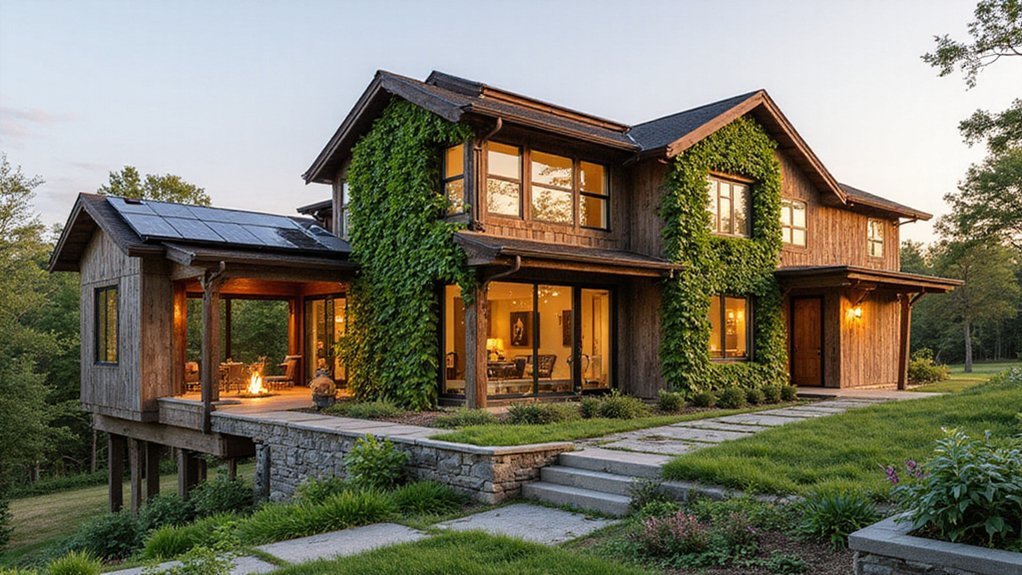
You’re probably tired of watching your energy bills grow like mold in a damp basement, right? Here’s the thing: building green doesn’t mean you’ll live in a cardboard box or eat twigs for dinner. Modern sustainable homes combine smart design choices—think solar panels and rainwater systems—with genuine comfort and style. The best part? You’ll save money while actually helping the planet. But which green features work best for *your* home?
What Makes a Home Green: And Why It Matters
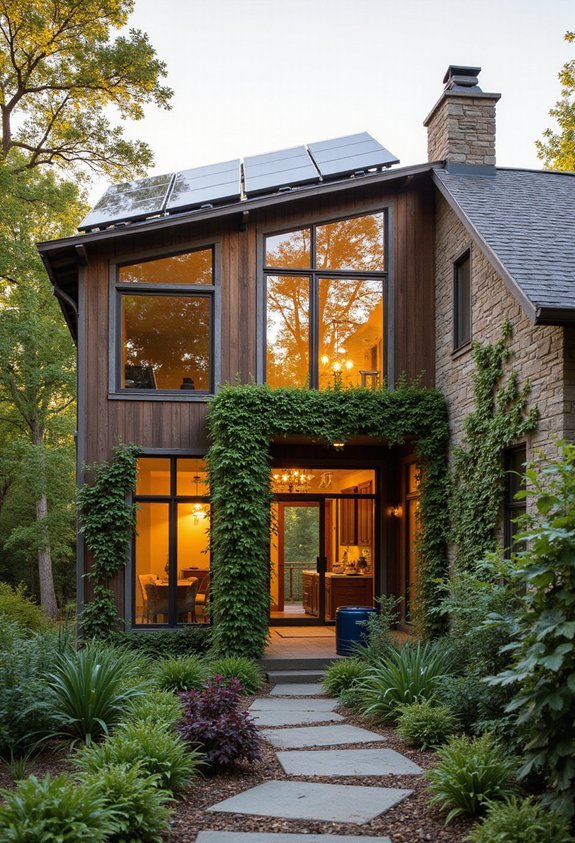
Because let’s face it, your house is probably working harder than you are to mess up the planet. A green home cuts down on energy waste and pollution. You’re talking solar panels on your roof, better insulation in your walls, and windows that actually keep heat inside. It matters because your regular house basically belches carbon dioxide like it just ate beans for dinner. Green homes use less electricity, less water, and less stuff that ends up in landfills. You’ll save money on bills and breathe easier—literally. Your family stays healthier indoors too. Plus, you’re not leaving your kids a planet that’s completely toasted. Building green means thinking smart about every single thing: materials, placement, and how energy flows through your space.
Solar Power in Green Home Design
While your roof’s been mostly just sitting there looking lazy, it could actually be working for you—and solar panels are basically your ticket to turning sunshine into cash savings. Those shiny blue or black rectangles soak up the sun’s energy and convert it into electricity for your home. You’re literally harnessing star power, which is pretty cool. Solar panels work even on cloudy days, though they’re definitely happier when it’s sunny. Installation costs money upfront, but you’ll recoup that through lower electric bills over time. Plus, your home’s resale value jumps up because buyers dig renewable energy. You’ll reduce your carbon footprint and stick it to fossil fuels simultaneously. It’s basically free money falling from the sky, except it’s photons doing the falling.
Green Roofs and Living Walls
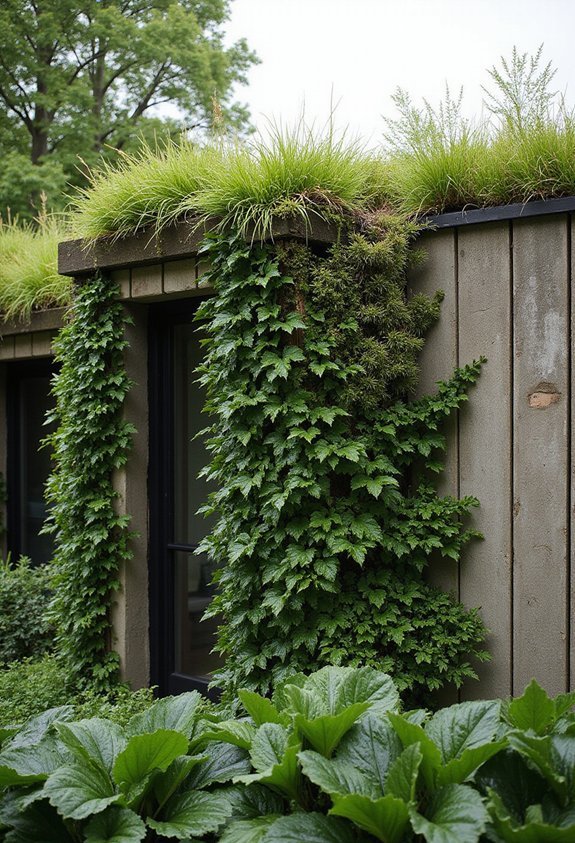
If your roof’s already soaking up the sun, why not take it a step further and actually plant something up there? Green roofs are basically gardens you plant on your house—no, they won’t make your roof leak. They’re covered with soil and plants, usually 6 to 12 inches deep. Your house stays cooler. Your energy bills drop. It’s basically free air conditioning, except you grow tomatoes on it.
Living walls are vertical gardens on your outside or inside walls. They’re like nature’s wallpaper, but alive and way cooler. Imagine walking past a wall absolutely bursting with green vines and colorful flowers. These beauties filter air, reduce noise, and make your home look absolutely spectacular. Plants doing the heavy lifting? Yes, please.
Passive House Design Essentials
After you’ve covered your roof with plants and turned your walls into living art, it’s time to talk about the real MVP of green homes: passive house design. You’re basically creating an airtight fortress that doesn’t need much heating or cooling. Think triple-glazed windows, super-thick insulation, and strategic window placement catching the sun like you’re hunting for vitamin D. Your home stays cozy without cranking the thermostat, which means your energy bills won’t make you cry. The air quality stays fresh because of mechanical ventilation systems working 24/7. No drafts sneaking in to ruin your vibes. It’s like wrapping your house in the world’s coziest blanket while keeping your wallet happy and the planet grinning.
Green Architecture Windows and Insulation
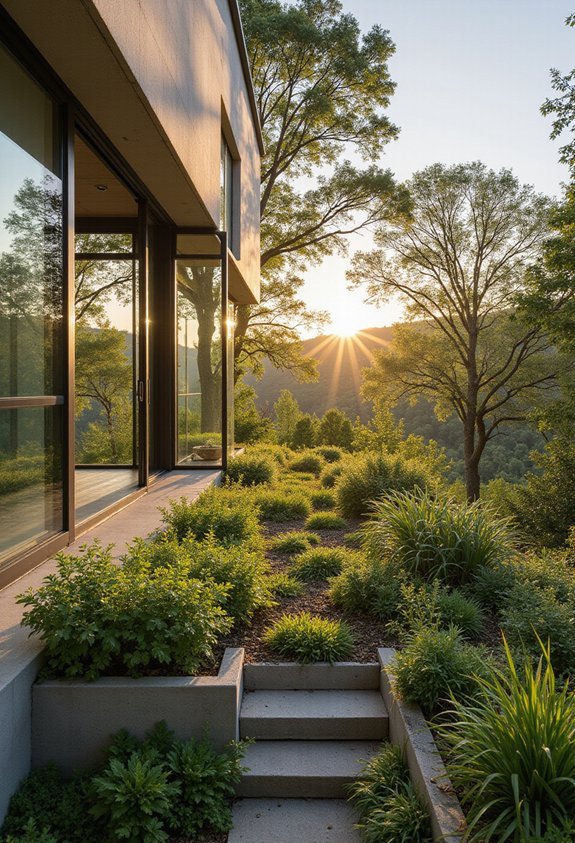
How’d you like to stop heating the great outdoors? Your windows are basically giant holes in your walls, and they’re sweating your money away like a gym sock. Triple-glazed windows—three panes instead of one—trap heat inside better than a sweater on a polar bear. They’re pricey, but they’ll save you serious cash long-term.
Now, insulation. You need it thick and fluffy, like your favorite blanket. Spray foam fills every crack and cranny, stopping drafts dead. Cellulose made from recycled paper works great too and won’t judge your life choices.
Here’s the thing: windows and insulation work together like peanut butter and jelly. One without the other? You’re just throwing money out those leaky windows. Combine them, and your home stays cozy while your wallet stays pleasantly plump.
Sustainable Building Materials
You’ve got great windows and killer insulation, but here’s the twist—what you build with matters just as much. Think bamboo instead of regular wood—it grows back faster than your regrets after eating gas-station sushi. Recycled steel beams? They’re basically giving old buildings a second life, which is pretty cool. Cork flooring keeps your feet happy and the planet happier. Reclaimed materials like salvaged bricks and reclaimed wood add character while keeping construction waste out of landfills. Low-VOC paints won’t make your house smell like a chemical factory. These choices reduce your home’s environmental footprint without making you feel like you’re living in a cardboard box. Your future self will thank you.
Rainwater Harvesting and Greywater Systems
Now that you’ve locked down your building materials, it’s time to stop letting all that free water literally go down the drain. Rainwater harvesting systems catch roof runoff in tanks (we’re talking 50-gallon barrels, minimum), giving you free water for gardens and toilets. Genius, right?
Greywater systems are even cooler. They recycle water from sinks, showers, and washing machines—basically everything except toilet water (we don’t go there). That slightly soapy water irrigates your landscape beautifully. You’ll slash your water bill faster than you can say “sustainable.”
Install gutters feeding into blue or tan storage tanks positioned low and out of sight. Gravity does the heavy lifting. Both systems reduce municipal water demands and make you feel like an environmental superhero. Your lawn stays green and so does your conscience.
Clean Indoor Air Without Toxins
While you’re busy patting yourself on the back for all that harvested rainwater, there’s something sneaky happening inside your walls—toxic air creeping around like an uninvited houseguest. You’re literally breathing in chemicals from paints, furniture, and cleaning products. Yikes!
Here’s the fix: ditch those stinky synthetic cleaners and grab natural alternatives instead. Open your windows daily—seriously, just crack them open. Get some green plants like pothos or snake plants working overtime. They’re basically tiny air-purifying ninjas sitting on your windowsills.
Install low-VOC paints (that means fewer nasty fumes). Choose solid wood furniture over particle board when possible. And skip the artificial air fresheners—they’re just masking the problem, like spraying perfume on gym socks.
Your lungs will thank you. Breathe easy, friend.
Geothermal Heating and Cooling for Long-Term Efficiency
So you’ve got clean air flowing through your home, which is awesome. Now let’s talk about keeping it toasty or cool without breaking the bank. Geothermal heating and cooling is basically nature’s way of saying, “I’ve got you.” Your system taps into the earth’s steady temperature—around 50 degrees underground—and uses it to heat or cool your place. It’s like having Mother Nature as your personal HVAC tech. You’ll dig loops about 100-400 feet down, and they circulate fluid that regulates your indoor temps. Sure, installation costs more upfront, but you’ll save serious cash on energy bills for decades. Your wallet’ll thank you, and so will the planet.
Monitor and Cut Energy Use
Once you’ve got geothermal doing the heavy lifting, it’s time to see where else your energy’s sneaking out like a lazy cat through a window. Grab an energy monitor—a small gadget that plugs into outlets and shows you what’s guzzling power. Your vampire appliances are probably throwing an invisible party while you sleep. That old refrigerator? Total energy hog. Those phantom chargers? Guilty as charged, literally.
Walk around your home with a thermal camera app on your phone. You’ll spot cold spots around windows and doors glowing blue. Seal those gaps with weatherstripping or caulk. Then tackle those energy vampires one by one. Unplug stuff. Switch to LED bulbs. Your electricity bill’ll shrink faster than your confidence at a high school reunion.
Natural Light and Passive Solar Gain
Your home’s got a free power source that’s been sitting right outside your windows the whole time—the sun. You can harness it through passive solar design. Position your windows on south-facing walls to catch maximum warmth during winter months. Install skylights in dark rooms. They’ll brighten spaces and reduce lighting needs by 75 percent. Use light-colored walls and reflective surfaces to bounce sunlight deeper into rooms. Strategic window placement keeps summer heat out while letting winter rays in. Install thermal mass like concrete or tile floors. They absorb heat during day and release it at night. Your heating bills will shrink faster than ice cream in July. Natural light boosts mood too—major win for your mental health and wallet.
Outdoor Spaces That Reduce Heat Island Effect
While you’re soaking up all that free sunshine inside, the area around your home’s heating up like a griddle on a summer cookout. That’s the heat island effect, and it’s no joke. You can fight back by planting trees and shrubs around your yard. They’ll shade your roof and walls, keeping things cooler naturally. Green roofs covered in plants work too—they’re like giving your house a nice haircut that actually lowers your utility bills. Add some light-colored pavers or concrete instead of dark asphalt driveways. They reflect sunlight rather than absorbing it like a heat sponge. Create patios with shade structures or pergolas. Even a small garden bed with native plants helps. You’re basically building nature’s air conditioning system, and honestly, it’s pretty cool.
Green Certifications: LEED, Passivhaus, and Net-Zero Standards
So you’ve planted trees, installed a green roof, and basically turned your yard into a nature preserve—nice work! Now it’s time to get official about your eco-awesomeness. Green certifications prove you’re not just *talking* sustainability; you’re actually *living* it. LEED certification checks your building’s energy use, water systems, and materials. Passivhaus focuses on insulation so good your heating bills practically disappear. Net-Zero means you’re producing as much energy as you consume—basically breaking even with Mother Earth. Getting certified takes work and paperwork, but you’ll boost your home’s resale value and earn serious bragging rights. Plus, your carbon footprint shrinks faster than your energy bills. That’s a win-win that actually smells like success.
Build Green Without Breaking the Bank
How’d you like to go green without watching your bank account turn red?
You don’t need to spend a fortune on sustainability. Start by insulating your attic with recycled materials—it’s cheaper than you’d think and stops heat from escaping like a leaky balloon. Swap out those energy-vampire light bulbs for LEDs; they’ll last longer and won’t make your electric bill faint.
Plant a small garden on your south-facing windowsill. Even six inches of herbs beats buying them packaged. Install weatherstripping around doors and windows—seriously, it’s like giving your house a cozy blanket that costs almost nothing.
Buy secondhand fixtures at salvage yards. Someone else’s outdated bathroom tile is your trendy treasure. These budget-friendly moves prove that going green doesn’t require selling a kidney.
Frequently Asked Questions
How Long Does It Take to Build a Green Home Compared to Traditional Construction?
You’ll typically need 10-20% more time building a green home than traditional construction. You’re implementing specialized materials, advanced systems, and rigorous sustainability standards that require careful planning and skilled coordination throughout your project.
Can Existing Homes Be Retrofitted With Green Architecture Features Affordably?
Yes, you can affordably retrofit your existing home with green features. Start with insulation upgrades, energy-efficient windows, and LED lighting—these changes deliver quick returns on investment. You’ll also reduce utility bills while increasing your home’s value substantially.
What Are the Health Benefits of Living in a Green Home?
You’ll experience improved air quality, reduced allergens, and better indoor environments when you choose green homes. You’ll also benefit from lower stress levels, enhanced natural light exposure, and decreased chemical off-gassing that protects your family’s respiratory health.
Do Green Homes Increase Property Value and Resale Potential?
Yes, you’ll increase your property value with green homes. You’ll attract eco-conscious buyers willing to pay premium prices. You’ll benefit from lower utility costs, tax incentives, and strong resale demand, making your investment financially rewarding.
How Do Green Homes Perform During Extreme Weather or Natural Disasters?
You’ll find that green homes perform exceptionally well during extreme weather. Their superior insulation, reinforced structures, and renewable energy systems keep you safe and comfortable when power fails. You’ll experience better protection and independence during natural disasters compared to conventional homes.
Conclusion
You’ve got this! Building green doesn’t mean you’re broke or boring. Start small with one eco-friendly upgrade—maybe solar panels or a green roof—and watch your energy bills shrink faster than your carbon footprint. Your wallet and Mother Earth will high-five you. Plus, you’ll sleep better knowing you’re not slowly cooking the planet. Green living rocks, and honestly, it’s way cooler than traditional homes. Go be a sustainability superhero!