
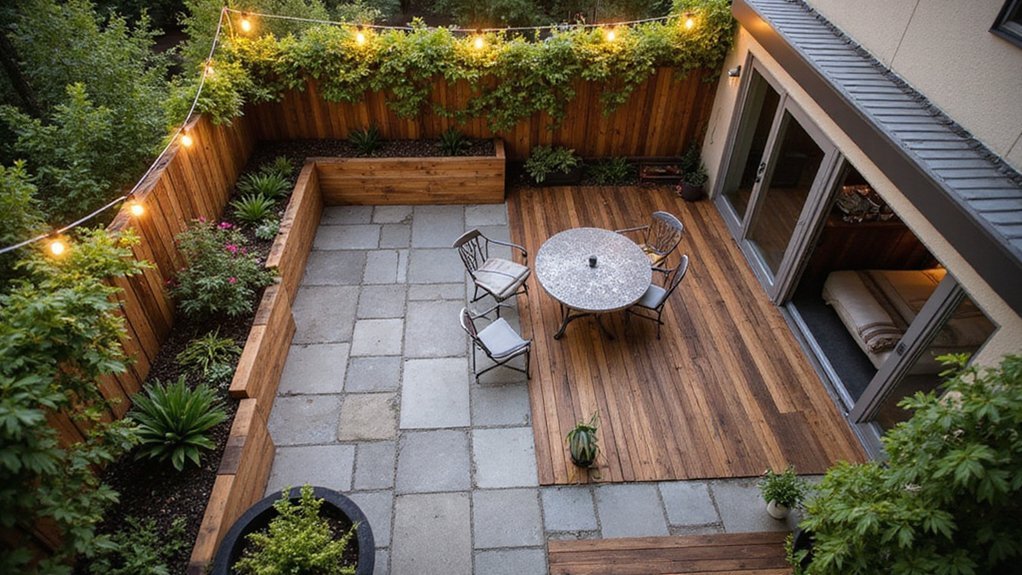
Look, your backyard doesn’t have to look like a trash heap to save the planet. You can create something genuinely beautiful using reclaimed wood, native plants, and a little creativity. And here’s the thing—you’ll actually save money while you’re at it. But where do you even start with all these eco-friendly options? Let’s explore what works best.
Sustainable Materials: Reclaimed and Recycled Options
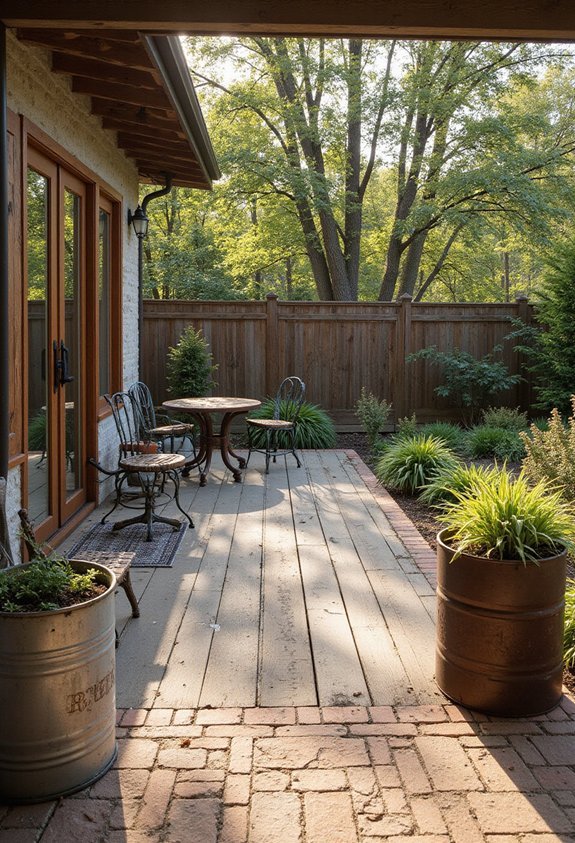
When you’re building a patio, you’ve got choices—and they don’t all have to come straight from a factory with that “new smell” everyone talks about. Reclaimed wood beams and recycled plastic lumber are total game-changers. Old barn wood gives you rustic charm and character that screams “I’ve got style.” Recycled composite decking? It won’t rot or splinter, so your barefoot days stay pain-free. Reclaimed brick and stone pavers cost less than new ones and come with cool histories. You’re basically giving old materials a second life instead of watching them decompose in landfills. Plus, you’ll feel genuinely proud knowing your patio isn’t destroying the planet. Your wallet and Mother Earth both win here.
Sustainable Landscaping: Native Plants That Save Water
Your patio’s looking sharp with all that reclaimed wood, but here’s the thing—it needs some green friends around it to really shine. Native plants are your secret weapon because they’re basically made for your area’s climate and soil. You won’t need to water them constantly like some needy houseguest. Plant native flowers, shrubs, and grasses around your patio edges, and they’ll thrive without breaking a sweat—or your water bill. Imagine purple coneflowers and black-eyed Susans dotting your space, requiring way less maintenance than fancy imported plants. They’ll attract butterflies and bees too, turning your patio into a lively outdoor hangout. Plus, your neighbors will stop asking why your garden looks so effortlessly gorgeous while theirs looks like it forgot how to photosynthesize.
Sustainable Water Features That Conserve Resources
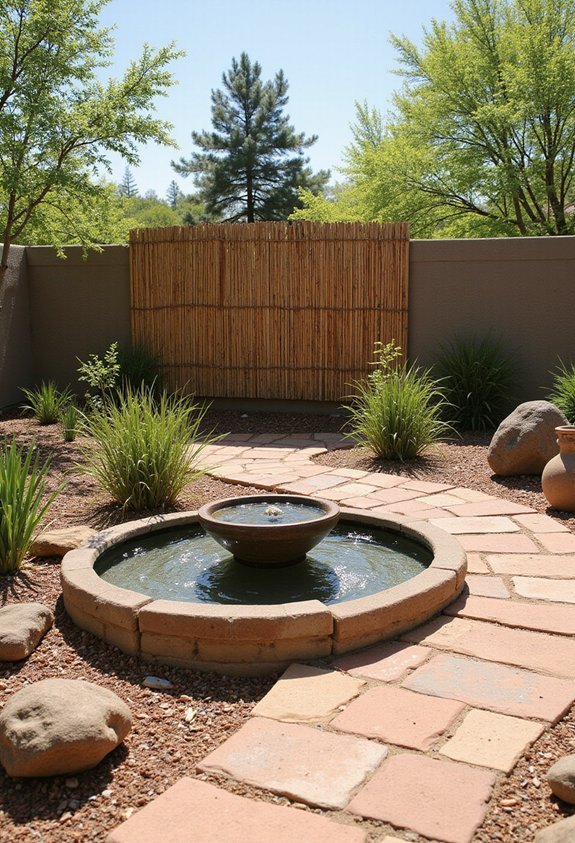
Water features sound fancy, but they don’t have to guzzle water like you’re trying to fill an Olympic swimming pool. You can install a recirculating fountain that loops the same water around and around. It’s basically a water feature on a budget—and your wallet won’t need CPR. These pumps use minimal electricity and waste zilch. Add a birdbath instead of a sprawling pond if you’re short on space. Birds love it, and you’ll save gallons. Consider a rain barrel positioned near your gutters to feed your water features naturally. It’s like giving your garden a drink from nature’s own water bottle. These sustainable options let you enjoy soothing water sounds without feeling guilty about draining Earth’s resources.
Solar-Powered Lighting and Renewable Energy
Because the sun’s basically a giant free power plant in the sky, you’d be pretty silly not to tap into it for your patio lights. Solar string lights are your new best friend. They charge all day and glow all night without costing you a dime on electricity. You can drape them over your pergola or wrap them around posts. They come in warm white or cool white, so pick whatever makes your space feel cozy. Solar pathway lights mark your walkway and look pretty darn adorable doing it. The best part? You’ll never change a battery. Well, actually you will eventually, but way less often. Your electricity bill will thank you, and Mother Earth will give you a thumbs up.
Use Permeable Paving to Manage Water Runoff
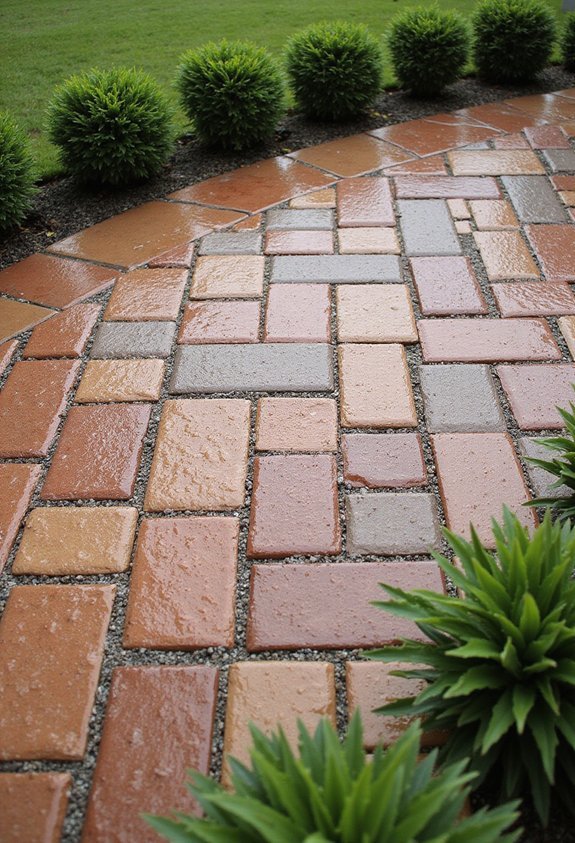
When it rains, most patios act like concrete blankets—they just shed water everywhere and let it run off into storm drains. Not cool. Permeable paving fixes this mess. You’re basically installing patio materials that let water drain right through instead of pooling like a swamp. Think porous pavers, gravel, or permeable concrete. Water soaks down into the ground below, recharging your soil and local water systems. Plus, you’ll skip puddles that attract mosquitoes—those tiny vampires won’t know what hit ’em. Your patio becomes an eco-friendly sponge that actually does something useful. Installation’s straightforward too. Lay down a gravel base, add your permeable surface, and boom—you’ve got sustainable drainage working silently beneath your feet while you’re sipping lemonade.
Choose Durable, Secondhand Furniture and Decor
Your patio doesn’t need brand-spanking-new furniture to look fantastic. Hit up thrift stores, Facebook Marketplace, and estate sales for solid wood chairs and tables that’ll outlast most modern stuff. You’ll find gems hiding under layers of dust, and your wallet won’t be gasping for air. That weathered teak bench? Perfect. Those mismatched vintage cushions in faded blues and greens? Chef’s kiss. Secondhand furniture tells stories and costs way less than shiny new pieces. Plus, you’re keeping stuff out of landfills, which is basically superhero work. Sand down rough spots, slap on some eco-friendly stain, and boom—you’ve got a unique patio nobody else has. Your friends will ask where you scored such cool finds, and you’ll just smile mysteriously.
Attract Birds and Pollinators to Your Patio
Once you’ve got your patio looking sharp with those secondhand treasures, it’s time to invite some feathered and fuzzy friends to the party. Plant native flowers like purple coneflowers and bright orange marigolds. They’ll attract butterflies faster than you can say “pollinator buffet.” Hang a bird feeder filled with seeds, positioning it about six feet high where squirrels can’t stage their heist operations. Add a shallow water dish—think bird spa, minus the cucumber slices. Native shrubs provide shelter and berries that birds genuinely crave. You’ll soon have a buzzing, chirping ecosystem happening right outside your door. Sure, you might deal with some bird poop on your furniture, but that’s basically a compliment. Your patio just became nature’s favorite hangout spot.
Frequently Asked Questions
How Do I Maintain Sustainable Patio Materials to Extend Their Lifespan?
You’ll extend your patio’s lifespan by regularly sweeping debris, sealing wood annually, cleaning stains promptly, and ensuring proper drainage. You should inspect for damage quarterly, refinish surfaces as needed, and avoid harsh chemicals that degrade eco-friendly materials.
What Is the Cost Difference Between Sustainable and Traditional Patio Design?
You’ll typically pay 10-30% more upfront for sustainable materials, but you’ll recoup costs through reduced maintenance, longer lifespan, and lower water bills. Your initial investment pays off within 5-10 years while benefiting the environment.
Can I Retrofit My Existing Patio With Sustainable Features Gradually?
Yes, you can absolutely retrofit your patio gradually. Start by adding permeable pavers, installing a rainwater collection system, or incorporating native plants. You’ll upgrade sections incrementally, spreading costs over time while building your eco-friendly outdoor space.
How Do I Choose Sustainable Materials That Match My Home’s Aesthetic?
You’ll want to gather samples of sustainable materials like reclaimed wood, permeable pavers, and recycled composites. Compare them directly against your home’s existing colors and textures. Visit showrooms to see how they’ll look in natural light before deciding.
What Permits or Regulations Apply to Sustainable Patio Installations in My Area?
You’ll need to contact your local building department to learn about zoning laws, setback requirements, and permit needs for your patio project. They’ll clarify whether you need inspections and what sustainable materials they’ll approve in your specific area.
Conclusion
You’ve got this! Your patio’s about to become the eco-friendly envy of the neighborhood. With reclaimed wood, native plants, and solar lights, you’re basically a sustainability superhero. Rain barrels‘ll catch water like you’re collecting liquid gold. Thrifted furniture? Totally cool and easier on your wallet. You’ll attract butterflies, bees, and maybe some jealous neighbors. Mother Earth’s already proud of you, and you haven’t even started digging yet!