
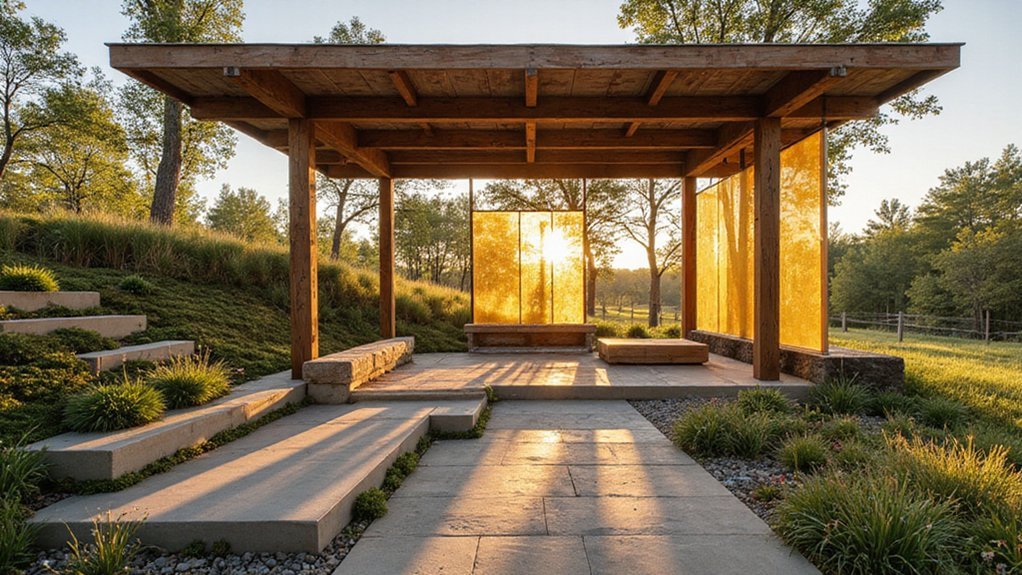
You’re probably tired of watching your deck rot or your patio crack, right? Well, here’s the thing—sustainable materials are finally making outdoor spaces that actually last. Recycled ocean plastics, clever wood engineering, and nature-inspired composites aren’t just good for the planet anymore. They’re tougher, cheaper, and honestly? They look way better than you’d expect. But which one’s right for your space?
Recycled Ocean Plastics Transform Weatherproof Outdoor Structures
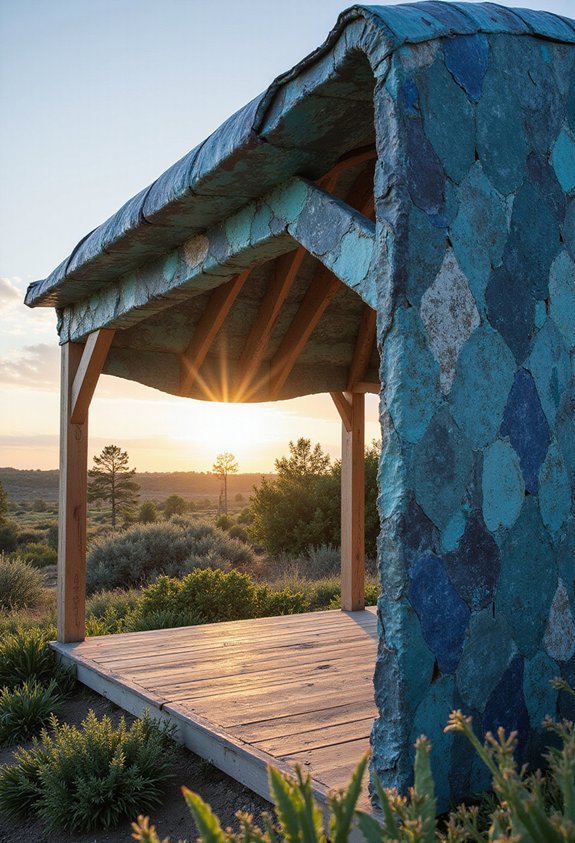
Imagine turning trash into treasure—literally. You’re probably wearing plastic bottles right now—well, not literally on your body, though that’d be wild. But here’s the thing: those same ocean plastics choking sea turtles? They’re now becoming your backyard benches and deck railings. Companies are melting down recovered ocean waste into durable, weatherproof materials. These aren’t flimsy knockoffs either. Your new outdoor furniture can handle brutal sun, freezing winters, and relentless rain without cracking or fading. The plastic gets transformed into gorgeous gray, blue, and tan structures that actually look intentional. You get sturdy picnic tables and garden edging that’ll outlast your garden itself. Plus, you’re literally saving the ocean while chilling outside. That’s what I call a win-win situation.
Cross-Laminated Timber Offers Engineered Durability
While recycled ocean plastics are saving sea turtles one deck railing at a time, there’s another material quietly flexing its muscles in the outdoor architecture game: cross-laminated timber, or CLT. You’re looking at wood layers glued perpendicular to each other—think of it as the ultimate structural sandwich. This stuff doesn’t mess around. CLT panels reach up to 12 inches thick and span massive distances without sagging like my motivation on Mondays. Your outdoor pavilions and pergolas get serious strength without the weight. It handles moisture better than traditional lumber and resists warping like a champ. Plus, it’s engineered from sustainably harvested trees, so Mother Nature isn’t crying in the corner. You get durability that actually lasts decades while keeping your conscience clean.
Permeable Pavements: Sustainable Water Management
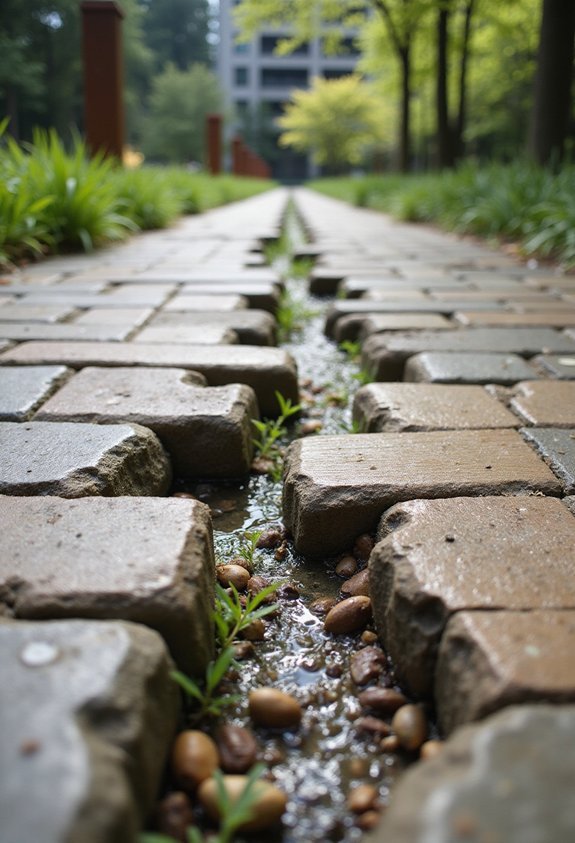
Now that we’ve covered what’s happening above ground, let’s talk about what’s happening below it—because water’s gotta go somewhere, and it turns out that traditional concrete sidewalks and patios are basically just fancy skating rinks during rainstorms. Permeable pavements? They’re like tiny sponges for your yard. These amazing surfaces let water drain right through instead of pooling everywhere like a sad puddle party. You get porous asphalt, recycled plastic pavers, or permeable concrete. Water soaks down, recharges groundwater, and reduces flooding. Plus, they’re way cooler than regular pavement—literally and figuratively. Your garden gets hydrated naturally. Stormwater runoff decreases dramatically. It’s honestly the smartest move you can make for sustainable outdoor spaces.
Bio-Based Composites: Sustainable Nature-Inspired Materials
What if your outdoor furniture could basically grow back like a superhero’s healing power? Bio-based composites make this wild dream real. You’re looking at materials made from mushrooms, seaweed, and plant fibers—basically nature’s leftovers turned into superstars.
These composites are stronger than you’d think. A bench made from mycelium (fancy fungus stuff) can handle 300 pounds without sweating. They’re lighter too, so your back won’t hate you moving them around.
Here’s the hilarious part: they actually decompose when you’re done. No plastic guilt hanging over your head. The colors range from earthy browns to deep greens, blending seamlessly into any garden.
You’re basically sitting on yesterday’s compost while feeling like an environmental hero. Not bad for materials that smell nothing like gym socks.
Recycled Stone and Aggregate: Sustainable Second Lives
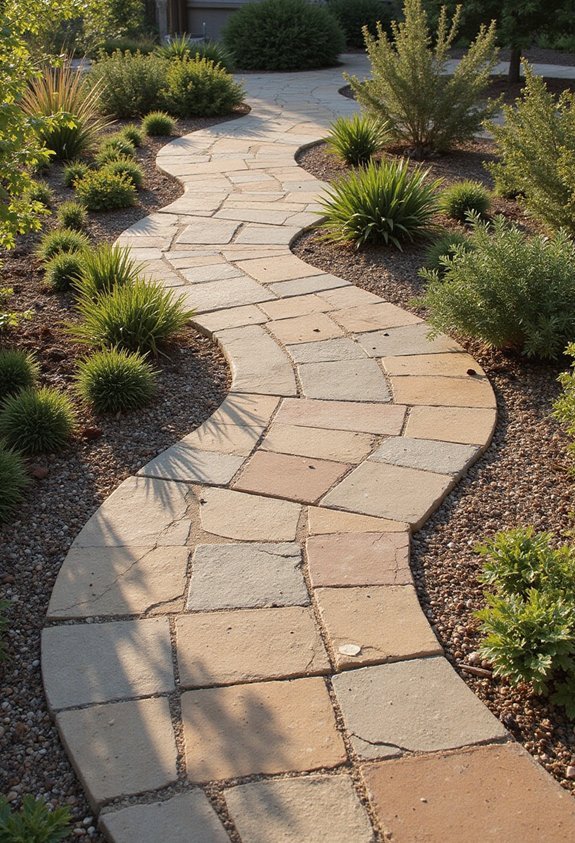
Before you toss that old concrete driveway or granite countertop into the landfill, hold up—those “waste” materials are basically treasure waiting for a second act. Recycled stone and aggregate are crushing it in outdoor design, and we’re not just talking about the sound they make underfoot.
You can grab crushed granite or recycled asphalt and use them for pathways, patios, and drainage solutions. These materials cost less than virgin stone and they’re already broken down, saving energy and trees. Reclaimed bricks and salvaged pavers add character while keeping stuff out of dumps.
When you choose recycled aggregates, you’re literally giving old building bones new life. Plus, they compact beautifully and perform just as well as new materials. Your outdoor space becomes a walking monument to sustainable choices and smart reuse.
How Sustainable Materials Cut Long-Term Maintenance Costs
While those recycled materials look great underfoot, here’s the real money talk: they’ll save you serious cash down the road. Recycled stone doesn’t crack like traditional pavers after three winters. You’re not replacing busted tiles every other year. Traditional materials need sealing every 18 months—that’s expensive stuff you skip with sustainable options. Your maintenance crew won’t show up constantly fixing drainage problems because recycled aggregates handle water way better. You’ll spend maybe $500 annually instead of $2,000. Plus, these materials don’t fade into sad, dingy colors. That means no expensive restaining or repainting every few years. Your wallet stays happy, and Mother Earth does too. It’s basically money in your pocket while being responsible. Win-win, friend.
Which Building Codes Now Require Sustainable Materials
Building codes across North America and Europe aren’t just suggesting sustainable materials anymore—they’re basically demanding them. You’ve got to follow new rules now, and honestly, they’re pretty awesome.
California’s leading the charge with strict requirements for recycled content in outdoor structures. Europe’s even tougher—they’re basically saying, “Use eco-friendly materials or don’t build here.” Canada’s jumping in too, requiring sustainable wood and low-carbon concrete for projects over 5,000 square feet.
You’ll find these codes cover everything from deck boards to retaining walls. Green roofs? They’re not optional in many cities anymore. The funny part? Your wallet actually thanks you later despite higher upfront costs.
These aren’t suggestions—they’re rules you can’t ignore without facing hefty fines and project delays.
Sustainable Materials Come in More Colors and Finishes Than You’d Expect
Now here’s where sustainable materials really shine—and we’re not talking boring beige anymore. You can snag recycled composite decking in deep charcoal, rich chocolate brown, or even weathered gray that actually looks expensive. Reclaimed wood comes in honey, mahogany, and silvery tones that’d make your outdoor space jealous of itself. Sustainable pavers? They’re dropping in slate blue, terracotta red, and cream finishes that aren’t trying too hard. Recycled plastic lumber mimics natural wood grain so well, you’ll do a double-take. And eco-friendly stone veneers offer everything from warm sandstone to cool graphite. Your deck won’t bore anyone anymore. You’re getting real color variety without sacrificing the planet. Mother Earth’s finally getting the stylish treatment she deserves.
How Long Do These Materials Actually Last?
How long will your fancy new sustainable deck actually stick around before it starts falling apart? Good news—way longer than you’d think! Most eco-friendly decking lasts 25 to 30 years, which means your grandkids might inherit it. Composite materials made from recycled plastic and wood fibers laugh in the face of rot and bugs. They won’t need constant staining like traditional wood does, saving you time and money. Recycled plastic lumber can handle decades of sun, rain, and your family’s questionable barbecue habits. Concrete alternatives last even longer—sometimes 40 years or more. Sure, they’ll eventually show wear, but they’re built tougher than your determination to avoid yard work. You’re basically investing in a patio that outlives your Netflix subscription habits.
Can These Materials Handle Extreme Heat, Cold, and Noise?
What happens when your new eco-friendly patio faces a scorching 110-degree summer or a brutal -20-degree winter? Your sustainable materials won’t sweat bullets—literally. Modern eco-friendly composites expand and contract way better than old-school wood. They’re tougher than your Uncle Bob’s leather jacket.
Cold? Heat? Noise? These materials laugh in the face of all three. Recycled plastic lumber and cork composites handle temperature swings without cracking. They won’t warp like regular wood does when things get weird outside.
And that noise problem? Cork and rubber blends absorb sound like a cozy blanket. Your neighbors won’t hear your 2 a.m. pacing anymore. These materials genuinely perform. They’re tested in extreme conditions. You’ll get decades of durability without sacrificing style.
Cost Comparison: Sustainable Materials vs. Traditional Options
While your wallet might’ve groaned at the price tag of sustainable materials five years ago, things’ve changed big time. You’re actually spending less now. Recycled plastic decking costs about $8-12 per square foot, matching traditional wood’s price. Reclaimed materials? They’re cheaper than ever. Your budget won’t need CPR anymore.
Sure, some eco-friendly options still cost more upfront. But here’s the funny part: you’ll save serious cash long-term. These materials don’t need constant maintenance like traditional options do. No expensive repairs every other season. Your wallet stays happy and fat.
Think about it. You’re choosing smarter, not just greener. Sustainable outdoor architecture won’t drain your bank account. It’ll actually keep more money in your pocket while saving the planet. Win-win, baby.
Real Projects Proving These Materials Work
The proof’s not hiding in some lab somewhere—it’s standing right in front of you at actual parks, patios, and public spaces around the country. Take the High Line in New York City. That elevated park stretches 1.45 miles and uses recycled plastic decking that’ll outlast your great-grandkids. It’s greenish-gray, super durable, and honestly prettier than crushed concrete. Then there’s the Santa Monica Pier renovation using reclaimed wood and cork surfaces. People actually want to hang out there instead of just tolerating it. These aren’t experimental science projects anymore. You’re walking on these materials right now, probably without even noticing. That’s the real win—sustainable stuff that works so well you forget it’s sustainable. It just feels normal and awesome.
Why These Materials Are Finally Affordable
Here’s the thing about sustainable materials—they used to cost about three times more than regular stuff, which meant only rich cities could afford them. But now? Your wallet won’t need CPR.
Manufacturing scaled up massively. When companies produce recycled composite decking by the millions instead of thousands, prices plummet faster than you’d drop a hot potato. Seriously, we’re talking 30-40% cost reductions in just three years.
Competition’s heating things up too. More suppliers mean better deals for you. Green materials went from “luxury item” to “actually reasonable,” and that’s genuinely exciting.
Plus, governments sweetened the pot with tax breaks and rebates. Installing that bamboo pergola? You might get money back. Building sustainable doesn’t drain your bank account anymore.
How to Choose the Right Material for Your Project
So you’ve got a killer budget and sustainable options that won’t make you cry? Now comes the fun part—actually picking one. First, think about your space’s vibe. Does your patio bake in direct sun all day? Recycled plastic composites won’t warp like traditional wood. Want something that looks fancy? Reclaimed stone screams elegance in gray and warm tan tones. Check durability ratings honestly. Some eco-materials get sweaty under pressure, literally deteriorating faster than expected. Visit showrooms and touch stuff. Run your hands across samples. Watch how light hits different textures. Ask builders about their real-world experience. They’ll spill the tea on what actually holds up versus what breaks down faster than your motivation on Monday mornings.
Frequently Asked Questions
What Certifications Should I Look for When Sourcing Sustainable Outdoor Materials?
You should seek FSC certification for wood, LEED credentials for overall sustainability, Cradle to Cradle for material safety, and GreenGuard for low emissions. You’ll also want to verify ISO 14001 environmental management standards when sourcing outdoor materials.
How Do Sustainable Materials Impact Local Ecosystems During Manufacturing and Installation?
You’ll find sustainable materials reduce habitat disruption and water pollution when manufacturers use responsible practices. During installation, you’ll experience minimal soil damage and erosion because these eco-friendly options require less invasive techniques than conventional materials.
Are Sustainable Outdoor Materials Compatible With Existing Traditional Building Structures?
You’ll find that sustainable outdoor materials work well with traditional structures when you plan retrofits carefully. You can blend modern eco-friendly options like reclaimed wood and recycled composites with existing frameworks, though you’ll need proper structural assessment first.
What Warranty Coverage Typically Comes With Sustainable Material Products Versus Traditional Options?
You’ll typically find that sustainable materials offer longer warranties—often 25-50 years—compared to traditional options’ 10-20 year coverage. Manufacturers confidently back eco-friendly products’ durability, recognizing their superior performance and environmental benefits justify extended protection periods.
How Do I Properly Recycle or Dispose of Sustainable Materials at End-Of-Life?
You’ll find recycling options through manufacturer take-back programs, local waste facilities, or specialized recycling centers. Check product labels for recycling codes, contact suppliers for disposal guidelines, and research your area’s composting facilities for biodegradable materials.
Conclusion
You’ve got this! Pick sustainable materials that make your outdoor space look amazing and feel good about it. Ocean plastics, timber, and composites aren’t just eco-friendly—they’re tough cookies that’ll handle rain, sun, and everything Mother Nature throws at ’em. Your wallet’ll thank you too. So go build something stellar that doesn’t trash the planet. Your future self’s high-fiving you already!