
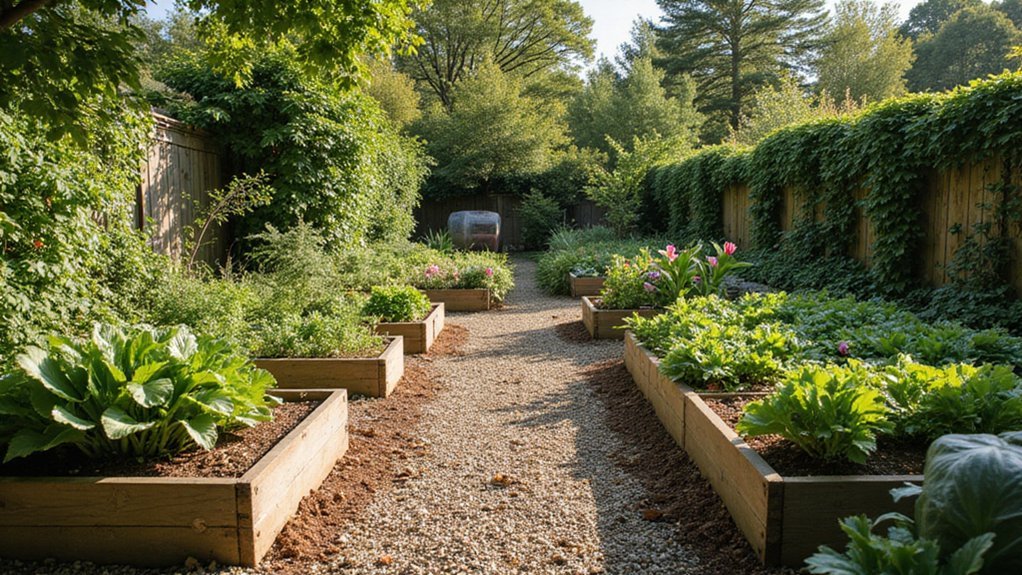
So you’re ready to turn your patchy lawn into an actual ecosystem? Great. Before you go planting everything like it’s a game of botanical roulette, you’ll want to spy on your backyard first. Watch where the sun hangs out, dig into your soil (literally), and see where water actually goes when it rains. These observations sound boring, but they’re basically your backyard’s secret recipe. Once you’ve got that intel, the real magic happens—but we’re getting ahead of ourselves.
Audit Your Backyard’s Sun, Soil, and Water Patterns
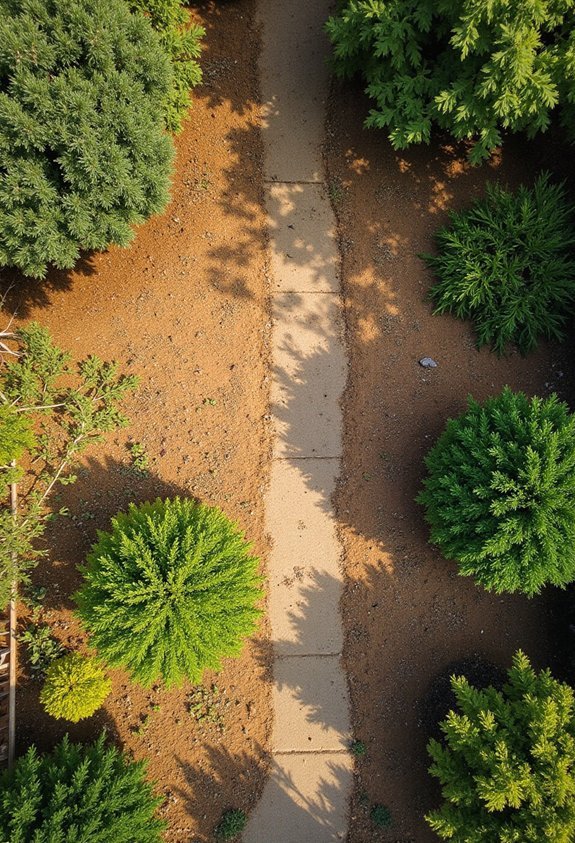
Before you go planting stuff everywhere like a wild squirrel burying acorns, you’ve gotta know what you’re actually working with back there. Grab a notebook and spend a week watching your yard like you’re a nature detective. Notice where the sun hits hardest—those scorching bright spots versus shadowy corners. Dig into your soil with a shovel and check if it’s dark and crumbly or pale and crusty. Is it honestly just clay? Yeah, that’s rough. Now track your water patterns after rain. Does it puddle up like a swamp or vanish faster than your motivation on Monday morning? These observations aren’t boring busywork. They’re your backyard’s personality profile, and understanding them means your eco-friendly plants will actually thrive instead of dramatically dying on you.
Set Realistic Eco-Friendly Goals for Your Space
Once you’ve figured out your yard’s quirks, it’s time to get real about what you can actually pull off without burning out like a solar panel in a thunderstorm. Don’t aim to transform your entire backyard into an eco-paradise overnight. That’s a recipe for exhaustion and regret. Instead, start small. Maybe you’ll plant three native shrubs this spring. Or install a rain barrel by summer. Small wins build momentum and keep you from face-planting in the dirt. Pick one or two goals that genuinely excite you. You’re more likely to stick with projects you actually enjoy. Set a realistic budget too. Your wallet will thank you, and you’ll avoid ecological guilt spending.
Choose Native Plants Suited to Your Climate and Soil
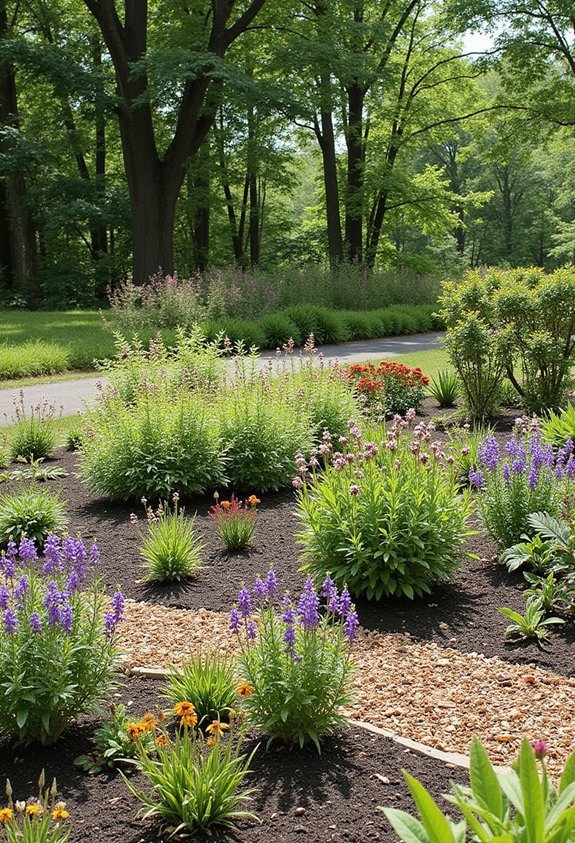
Now that you’ve got your goals locked in, it’s time to pick the plants that’ll actually survive in your yard instead of becoming expensive compost. Native plants are your secret weapon. They’re basically built for your climate and soil, so they’ll thrive without you fussing over them constantly.
Visit your local nursery and ask what grows wild nearby. Those plants already know your weather patterns and soil type. They’ll laugh in the face of your region’s droughts or downpours.
Check your soil first though. Is it sandy? Clayey? Acidic? Know what you’re working with. Then match plants to those conditions.
Native plants also attract local butterflies and birds. Your yard becomes an actual ecosystem instead of a monoculture desert. Plus, you’ll spend less money and effort maintaining them. That’s a win-win situation.
Install a Rainwater Harvesting System for Watering
While you’re filling your yard with thirsty native plants, here’s the thing: you’re gonna need water, and lots of it. Enter rainwater harvesting—basically catching free water from the sky like you’re stealing from the clouds (legally, though).
Grab a simple rain barrel, around 50-55 gallons, and position it under your downspout. Watch it fill during storms like it’s collecting liquid gold. You’ll slash your water bill faster than you can say “drought-resistant landscaping.” Connect a hose to the spigot at the bottom, and boom—instant irrigation system.
The best part? You’re basically getting paid by Mother Nature to water your plants. Your native flowers and shrubs’ll drink it up happily. Plus, you’re reducing runoff that pollutes local waterways. Win-win situation, my friend.
Build a Compost Bin for Kitchen and Garden Waste
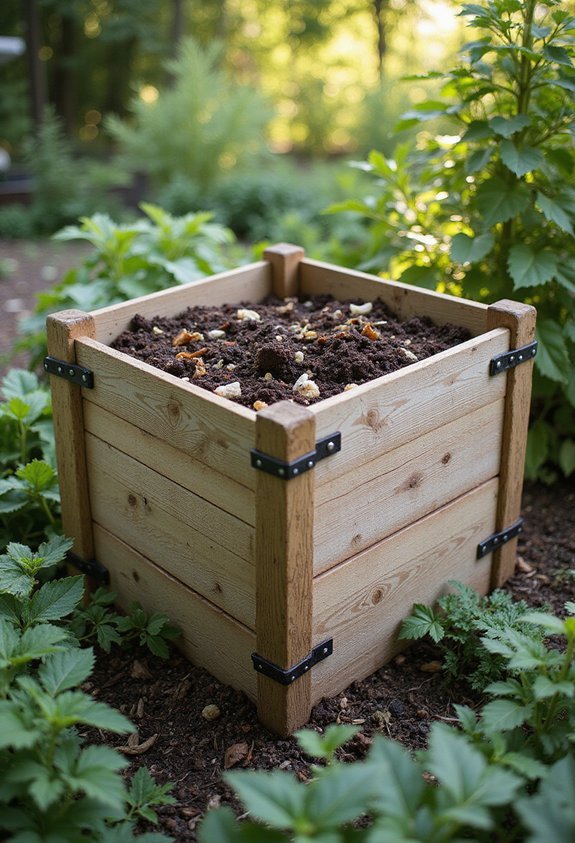
After you’ve got your rainwater system running smooth, it’s time to tackle the stuff that makes gardeners either laugh or gag: kitchen scraps and yard waste. Building a compost bin isn’t rocket science, honestly. Grab a plastic storage container—the big black ones work great—and drill holes around the sides and bottom for airflow. Layer your brown stuff (dry leaves, shredded paper) with green stuff (veggie scraps, grass clippings) in a 3-to-1 ratio. Skip meat and dairy though. They’ll attract rats faster than you can say “uninvited dinner guests.” Turn your pile every couple weeks with a pitchfork. Within months, you’ll have dark, crumbly gold for your garden beds. Your plants’ll love it, and your trash won’t smell like regret anymore.
Replace Chemical Inputs With Natural Pest Control
Your compost bin‘s churning out garden gold, but here’s the thing—bugs’ll still show up to wreck your plants like uninvited party crashers. Skip the toxic sprays that’ll poison your soil and pets. Instead, try natural solutions that actually work.
Sprinkle diatomaceous earth around your plants’ bases. It’s basically tiny glass shards to bugs—they hate it. Plant garlic and onions nearby. Aphids flee like they’ve smelled your gym socks. Release ladybugs into your garden. These polka-dotted heroes’ll gobble up pests faster than you can say “all-you-can-eat buffet.”
Make a simple spray using dish soap and water. Spray it on affected leaves every few days. Neem oil works too, breaking down insects’ exoskeletons.
Your garden’ll thank you. Plus, you’re not accidentally creating a chemical wasteland in your own backyard.
Create Pollinator and Wildlife Habitat Zones
Now that you’ve ditched the bug spray and brought in nature’s pest control squad, it’s time to roll out the welcome mat for the pollinators and critters that’ll actually make your garden thrive. Plant native flowers in clusters—think purple coneflowers and bright orange zinnias. Bees love a good buffet and won’t judge your decorating skills. Leave some dead wood lying around. I know, it sounds gross, but beetles think it’s basically a five-star resort. Add a shallow water dish filled with pebbles so butterflies can drink without drowning (they’re not the strongest swimmers). Create brush piles in corners using branches and leaves. Your backyard transforms into wildlife central, and you’re basically the coolest neighbor on the block.
Build a Rain Garden to Manage Stormwater Runoff
While you’re busy making your yard a five-star resort for beetles and butterflies, there’s something else that needs attention: all that water running off your roof and driveway during storms. That’s where rain gardens come in, and they’re basically plants’ favorite bathroom breaks.
Dig a shallow basin about 4-6 inches deep in a low spot. Fill it with native plants like coneflowers and black-eyed Susans that love wet feet. These plants absorb runoff like sponges, filtering out dirt and chemicals before they reach groundwater.
Your rain garden prevents flooding, recharges underground water supplies, and looks genuinely beautiful. Plus, you’re basically giving your yard superpowers. Native bees and birds will move in faster than you can say “water management.”
Switch Hardscaping to Sustainable, Permeable Materials
If you’ve got concrete patios and asphalt driveways that’re basically turning your yard into a parking lot, it’s time for an upgrade. Swap those hard surfaces for permeable alternatives like porous pavers, gravel, or recycled rubber. These materials let water drain right through instead of creating runoff that floods your neighbor’s basement—awkward! Permeable pavers come in earthy browns and grays, looking way nicer than plain concrete. Lay them about 2 inches apart and you’ve got instant eco-cred. Gravel’s even cheaper and easier to install yourself. Sure, you’ll rake it occasionally (it’s basically nature’s litter box), but the environmental payoff’s huge. Your yard’ll actually absorb rainwater instead of just sweating it out like you after climbing stairs.
Reduce Your Lawn and Plant Eco-Friendly Alternatives
Your lawn’s basically a thirsty green carpet that demands constant water, fertilizer, and mowing—basically a needy roommate that contributes nothing. It’s exhausting and wasteful. But here’s the good news: you can replace it with plants that actually earn their spot.
Try native ground covers like creeping thyme or sedums. They’re short, colorful, and laugh at drought. Plant pollinator-friendly wildflowers in scattered patches across your yard. Bees and butterflies will throw you a party. Add clover too—it naturally fertilizes itself, which is basically a plant doing your homework.
You’ll water less, mow never, and watch your carbon footprint shrink faster than your motivation on Monday mornings. Your lawn’s complaints? Gone. Your bank account? Happier. Your backyard’s actually useful now.
Plant Shade Trees to Cool Your Home and Sequester Carbon
Now that you’ve ditched the lawn, it’s time to add some vertical allies—shade trees. These leafy giants aren’t just pretty faces; they’re basically Earth’s air conditioners. A mature tree can cool your home by up to 9 degrees Fahrenheit. Plant them on your west and south sides for maximum shade action.
Trees also sequester carbon like tiny environmental superheroes. They absorb CO2 while you’re inside sweating less. Bonus: they reduce your energy bills, so your wallet wins too.
Choose fast-growing species like red maples or sycamores for quicker results. Space them 20-30 feet apart so they’ve got room to stretch. In five to ten years, you’ll have a shaded oasis that makes your neighbors jealous and your planet happy.
Use Mulch to Lock in Moisture and Suppress Weeds
Mulch is basically a blanket for your garden beds, and it’s about to become your new best friend. Spread a 2-3 inch layer of wood chips or shredded bark around your plants, and watch the magic happen. Your soil stays moist longer because mulch blocks the sun from evaporating water. Plus, weeds hate it. They can’t push through that dense brown barrier, so you’ll spend less time pulling annoying intruders. Mulch also breaks down over time, feeding your soil like a slow-release vitamin. It’s like giving your garden a spa day and a security system simultaneously. Your plants stay hydrated, weeds get defeated, and you look like a gardening genius. That’s basically the holy trinity of yard work right there.
Start Growing Vegetables to Reduce Your Food Footprint
When you grow even a few vegetables in your backyard, you’re basically telling delivery trucks they’re not welcome anymore. Seriously, there’s something magical about picking a sun-warmed tomato instead of buying one that’s been traveling for days. You’ll slash your food footprint faster than you can say “carbon emissions.” Start small with easy winners like lettuce, zucchini, and herbs in a sunny spot. Even a 4-by-8 foot bed makes a real difference. Your taste buds will throw a party, and your wallet will thank you. Plus, you’ll know exactly where your food came from—your own dirty hands. Nothing beats that satisfaction. Watch your carbon footprint shrink while your veggie confidence grows.
Create a Year-Round Maintenance Routine for Long-Term Success
Growing those veggies is just the beginning—now you’ve got to keep them happy all year long. Spring means planting and watering every two days. Summer? You’re basically a plant babysitter who sweats a lot. Fall requires pulling dead stuff and adding compost—yes, garden poop is real and necessary. Winter’s your break, but check for frost damage weekly.
Mark your calendar with these tasks: fertilize monthly, weed bi-weekly, and inspect for bugs like you’re a tiny detective. Your soil needs love too. Rotate crops yearly so plants don’t get bored in the same spot. Keep a garden journal with dates and notes—future you will appreciate past you’s handiwork.
Honestly, consistency beats perfection. Show up, stay present, and your garden will reward you with endless vegetables and zero regrets.
Frequently Asked Questions
How Much Budget Should I Allocate for a Complete Backyard Eco-Friendly Transformation?
You’ll want to allocate between $5,000 and $15,000 for a complete eco-friendly backyard transformation. Your budget depends on your yard’s size, existing features, and which sustainable elements you’re prioritizing—like composting systems, native plants, or rainwater harvesting.
What Timeline Is Realistic for Seeing Results From My Eco-Friendly Backyard Changes?
You’ll notice immediate changes within weeks—native plants establish quickly, and wildlife arrives fast. However, you’ll see full ecological benefits within 6-12 months as soil improves and your garden matures into a thriving, sustainable ecosystem.
Will an Eco-Friendly Backyard Increase My Property Value and Resale Appeal?
You’ll absolutely attract more buyers when you’ve installed native plants, composting systems, and water conservation features. Today’s homebuyers increasingly value sustainability, so you’re making a smart investment that’ll pay off at resale.
How Do I Handle Existing Non-Native Plants During My Backyard Transformation?
You’ll want to remove non-native plants gradually, starting with invasive species that threaten local ecosystems. Replace them with native alternatives that’ll attract wildlife and require less maintenance. You can compost removed materials or donate plants to local gardeners.
What Permits or Neighborhood Restrictions Might Affect My Eco-Friendly Backyard Project?
You’ll need to check local zoning laws, HOA restrictions, and building codes before starting. Contact your city’s planning department about permits for structures or water features. Some neighborhoods restrict native plant types or require approval for landscaping changes.
Conclusion
You’ve got this! Your backyard’s about to become an eco-friendly masterpiece, and honestly, you’ll feel like a superhero saving the planet one native plant at a time. Sure, you might get dirt under your fingernails and accidentally step in compost, but that’s the fun part. Start small, celebrate your wins, and before you know it, you’ll have butterflies buzzing around and zero guilt about your carbon footprint. Your future self’ll thank you!