
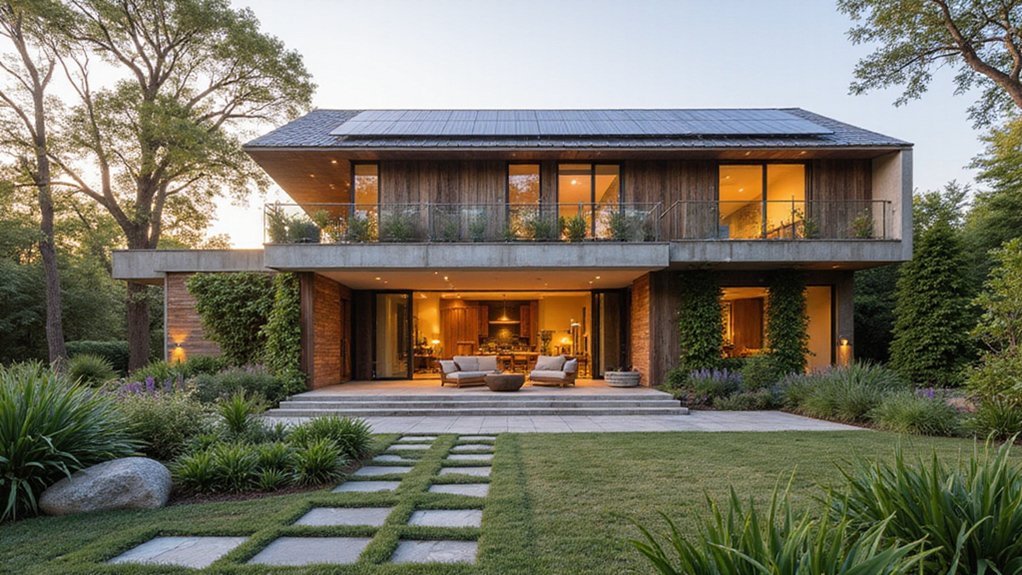
So you’re tired of your house looking like a landfill and feeling like an energy vampire? Good news—making your home eco-friendly doesn’t mean sacrificing style or living like a caveman. In 2026, you can actually have a gorgeous place that helps the planet instead of hurting it. But here’s the catch: some of these trends might surprise you.
Sustainable Building Materials That Look Modern
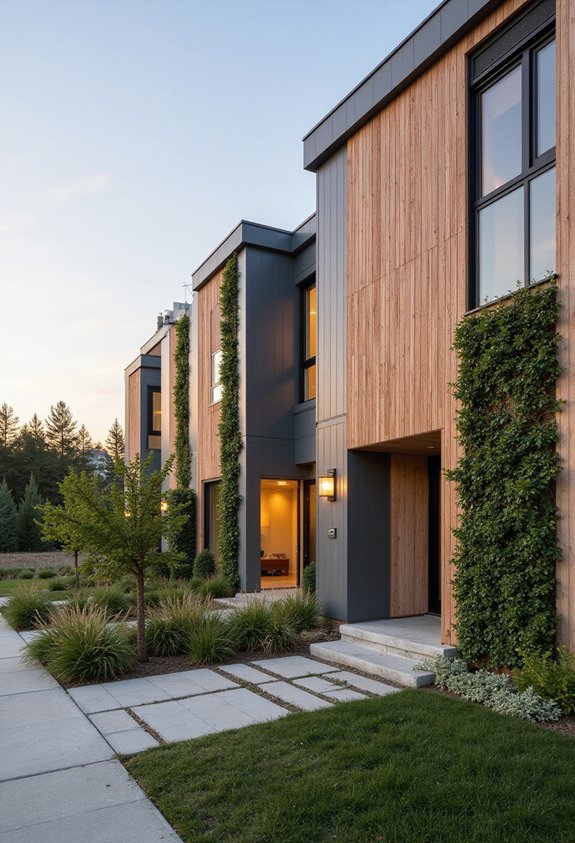
Here’s the thing about eco-friendly building materials—they used to look like, well, cardboard boxes designed by someone who’d never seen color before.
Not anymore! You’ve got sleek bamboo flooring now that’s actually gorgeous and grows back faster than your weird toenails. Recycled steel beams? They’re showing up in industrial-chic designs that make your space look intentionally trendy, not accidentally broke.
Cork walls come in warm taupes and creams—basically nature’s wallpaper without the boring vibe. Reclaimed wood isn’t just “old stuff.” It’s got character, depth, and stories embedded in every grain.
And here’s the kicker: these materials perform better too. They insulate properly, last forever, and won’t make you feel guilty about destroying the planet while sipping your morning coffee. Your home gets both brains and beauty now.
Smart Systems That Cut Energy Waste
Once you’ve got those gorgeous sustainable materials locked in, it’s time to make your home actually *smart* about using energy. Smart thermostats learn your schedule and adjust temperatures without you lifting a finger. They’re basically the responsible friend who remembers to turn off lights. Solar panels paired with battery storage mean you’re not just saving energy—you’re storing it like a squirrel hoards nuts, but way less messy. Smart lighting systems dim automatically when sunshine floods through windows. And those intelligent outlets? They cut phantom power drain from devices pretending to nap. Your home becomes an energy-conscious machine that actually thinks ahead. You’ll watch your utility bills shrink faster than your motivation on Monday mornings. That’s the future right there.
Biophilic Design: Why Plants and Nature Matter in Eco Homes
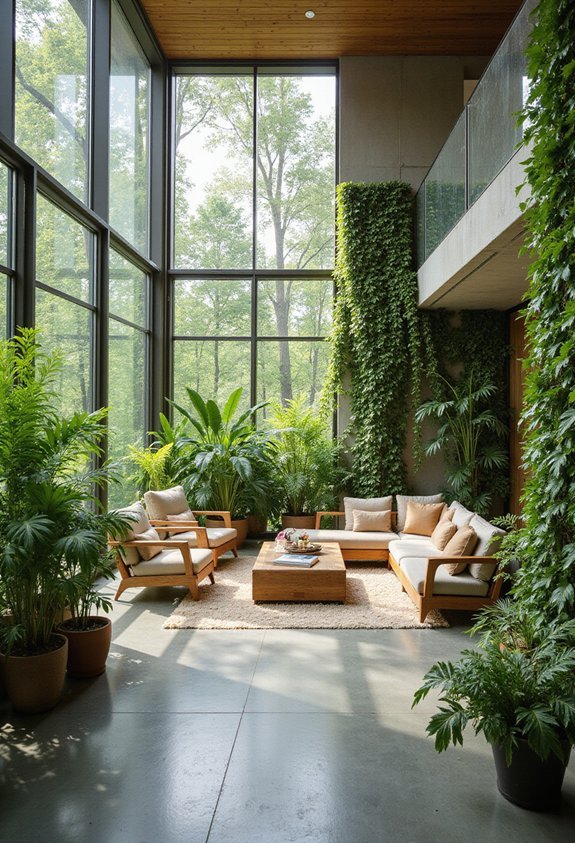
While all those smart gadgets are busy optimizing your energy use, there’s something equally powerful happening on your windowsills and in your corners—plants are literally making your home healthier. You’re basically getting free air purification and a mood boost rolled into one leafy package. A single pothos vine can tackle formaldehyde like a tiny green superhero. Your lungs will thank you, seriously. Plus, plants reduce stress and boost creativity without requiring passwords or software updates. Stick a fiddle leaf fig near your sofa. Toss some snake plants around bedrooms. They’re low-maintenance friends who actually improve your space. Nature’s humble reminder: you don’t need complicated tech to feel good at home.
Water-Saving Features You Can Install Today
Your showers don’t need to feel like standing under Niagara Falls to get clean, and your toilet isn’t a personal water park. Low-flow showerheads cut water usage in half while keeping pressure strong. Install one in under five minutes—seriously, it’s easier than assembling IKEA furniture. Dual-flush toilets let you choose between a light rinse and full flush, saving thousands of gallons yearly. Faucet aerators are tiny mesh screens that reduce flow without sacrificing splash. They cost under ten bucks and install on any sink. Rainwater collection barrels capture free water for gardens. Position them under downspouts, and you’ll never feel guilty watering plants again. These upgrades aren’t just smart—they’re genuinely fun to install and brag about.
Buying Secondhand and Modular Furniture That Lasts
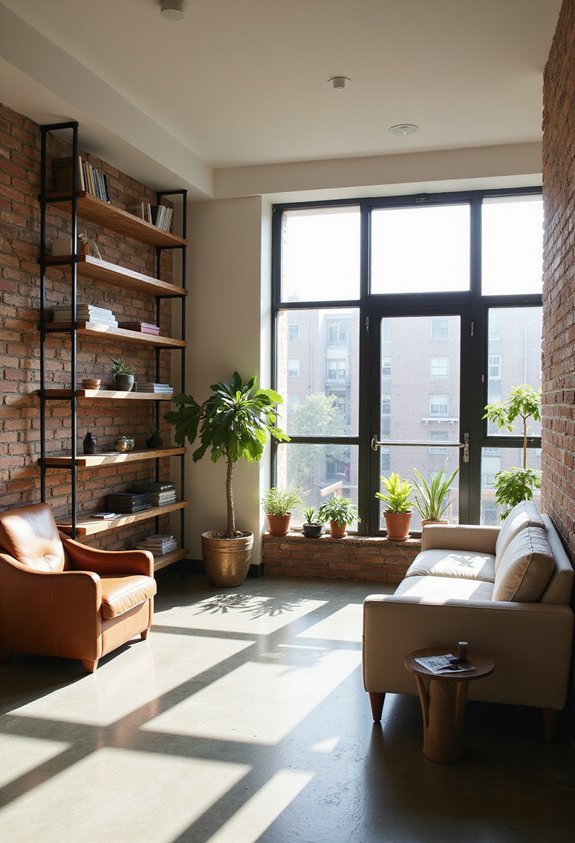
Before you drop thousands on a brand-new couch that’ll look tired in five years, hear me out—secondhand furniture is where it’s at. You’ll find incredible pieces at thrift stores, online marketplaces, and estate sales that cost a fraction of retail prices. These vintage gems usually outlast their new counterparts because they’re built solid, not designed to fall apart.
Modular furniture is your secret weapon too. You can rearrange those interlocking sectional pieces whenever you get bored, which means no landfill trips. Mix vintage finds with modern modular systems, and you’ve got a sustainable setup that actually lasts. Plus, your wallet stays happy, and you’re keeping stuff out of dumps. That’s pretty darn cool.
Frequently Asked Questions
How Much Does Transitioning to Eco-Friendly Home Design Typically Cost Initially?
You’ll typically invest $15,000 to $50,000+ initially for eco-friendly upgrades, depending on your home’s size and desired improvements. You can start small with energy-efficient appliances and insulation, then expand your green renovations over time as your budget allows.
What Certifications Should Homeowners Look for in Sustainable Building Materials?
You should seek materials certified by LEED, FSC, Cradle to Cradle, and GreenGuard. These certifications verify that your building materials meet strict environmental standards, reduce toxins, and come from responsibly managed sources, ensuring you’re truly investing in sustainable choices.
How Long Does It Take to See Energy Savings From Smart Systems?
You’ll typically notice energy savings within 1-3 months of installing smart systems. You can track real-time consumption through apps, adjust settings immediately, and optimize your usage patterns. Most homeowners see significant reductions in their utility bills within the first year.
Can Biophilic Design Work in Apartments With Limited Outdoor Space?
Yes, you can absolutely incorporate biophilic design into your apartment. You’ll create living walls, add indoor plants, install natural lighting, use wood elements, and display nature-inspired artwork. These strategies bring nature’s calming effects into your compact space effectively.
What Government Incentives or Rebates Exist for Eco-Friendly Home Improvements?
You’ll find federal tax credits for solar installations, energy-efficient windows, and heat pumps. Many states offer additional rebates for insulation upgrades and HVAC systems. Check your local utility company—they’re often providing incentives too. Visit ENERGY STAR’s website for current program details.
Conclusion
You’ve got this! Making your home eco-friendly doesn’t mean sacrificing style or going broke. Mix sustainable materials, smart tech, and some green plants, and you’re practically a planet-saving superhero. Your electric bill will thank you, your plants won’t die (okay, maybe one will), and you’ll sleep soundly knowing you’re doing something awesome. Start small, go secondhand, and watch your home transform into an environmental dream pad!