
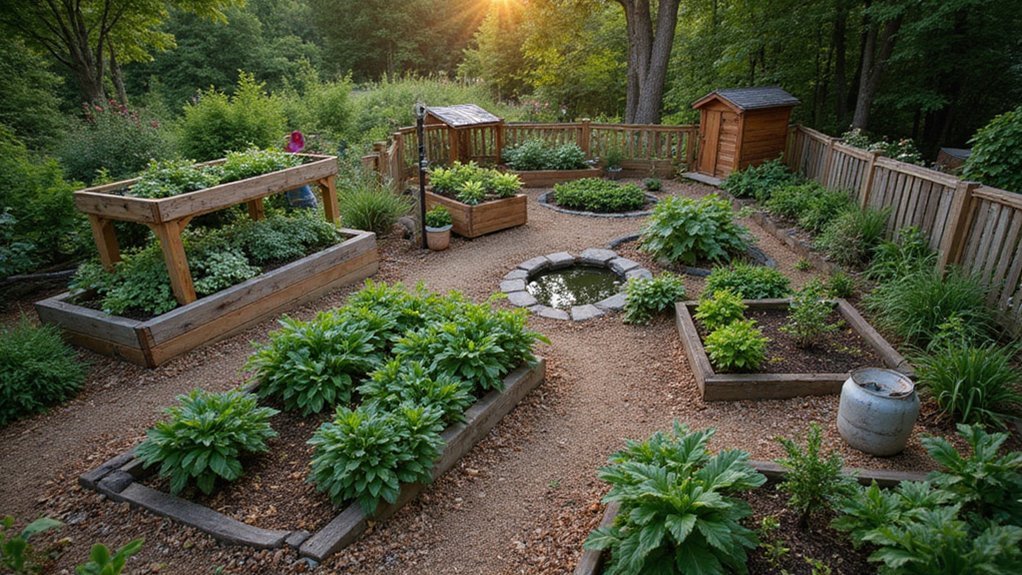
Ready to stop killing plants and the planet at the same time? You’re about to discover how native plants, composting systems, and rainwater harvesting can transform your yard into an eco-friendly paradise. Spoiler alert: your garden won’t need you hovering over it with chemicals anymore. But here’s the thing—sustainable landscaping isn’t just about feeling smug. It actually works better. Want to know how?
Choose Native Plants That Thrive Without Extra Resources
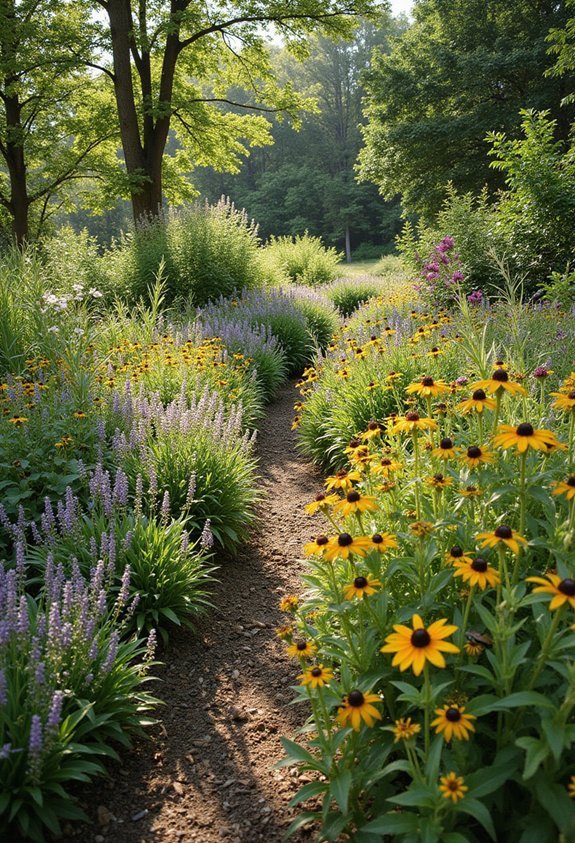
When you’re tired of babying plants that’d rather live somewhere else, it’s time to get smart about native plants. These tough little green buddies grow right in your area naturally. They don’t need you obsessing over them constantly. Native plants have deep roots that find water underground, so you’ll water way less. Your wallet and the planet thank you. Plus, they attract local butterflies and birds—basically free entertainment. You’re not fighting nature anymore. Instead, you’re working with it. Native plants laugh in the face of local pests and weird weather. They’re basically the superheroes of gardening. Plant them, forget about them (mostly), and watch your garden thrive. That’s the dream, right?
Use Organic Mulch to Retain Moisture and Suppress Weeds
Mulch is basically a blanket for your soil, and it’s one of the easiest wins you’ll ever get in gardening. Spread 2-3 inches of organic mulch around your plants, and watch the magic happen. Wood chips, shredded leaves, or compost work great. Your soil’ll stay moist longer, so you’re watering less often. That means lower water bills and less work for you. Bonus: mulch blocks sunlight from reaching weed seeds, basically giving those pesky plants the silent treatment. As the mulch breaks down, it feeds your soil nutrients too. It’s like getting a two-for-one deal on garden care. Just keep mulch a few inches away from plant stems, or you’ll accidentally create a cozy home for bugs and rot. Happy gardening!
Start a Compost System to Eliminate Chemical Inputs
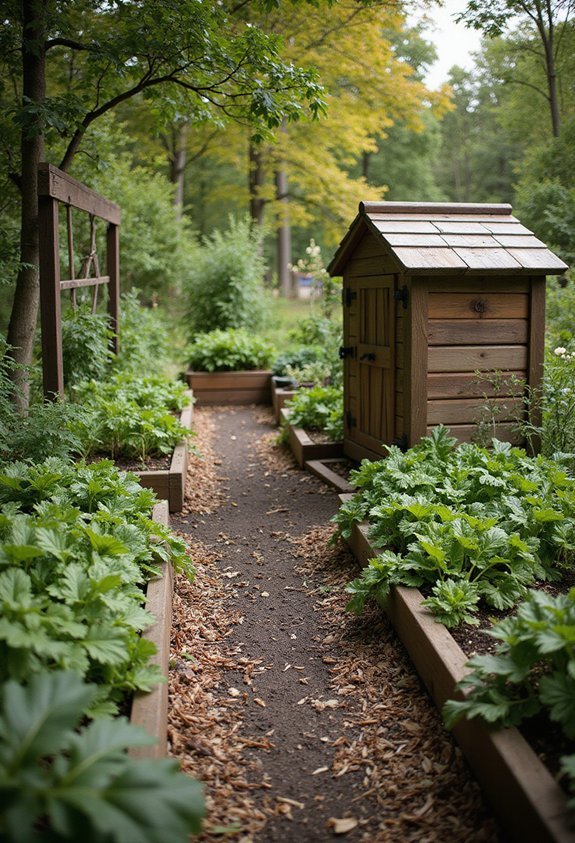
Now that your mulch is doing the heavy lifting in your garden beds, it’s time to stop buying expensive bag after bag of the stuff—and stop relying on chemical fertilizers altogether. Start composting! It’s basically controlled decomposition, and yes, your kitchen scraps will literally turn into gardening gold. Grab a bin (or build one from wood scraps), toss in brown stuff like leaves and cardboard, then add green materials like vegetable peels and grass clippings. The magic happens when you mix them together. Within months, you’ve got rich, dark compost that smells earthy—not like a dumpster. Your plants’ll drink it up, your wallet stays fatter, and Mother Nature does a happy dance. Win-win-win!
Build Raised Beds With Recycled and Sustainable Materials
Since you’ve got that compost machine humming along, you’re ready for the next big move—building raised beds that’ll make your garden look fancy without emptying your wallet. Grab old wooden pallets, reclaimed fence boards, or recycled plastic lumber from construction sites. Stack them into 4-by-8-foot rectangles about two feet high, and boom—instant garden beds. You’ll feel like a carpenter, minus the expensive tools and actual skill. Fill ’em with your homemade compost mixed with topsoil, and watch your plants absolutely lose their minds with joy. Your back’ll thank you too, since you’re not hunching over ground level anymore. These beds warm up faster in spring and drain better than in-ground gardens. Plus, they look intentional, like you actually planned this whole thing.
Create Eco-Friendly Wildlife Habitats for Pollinators and Beneficial Insects
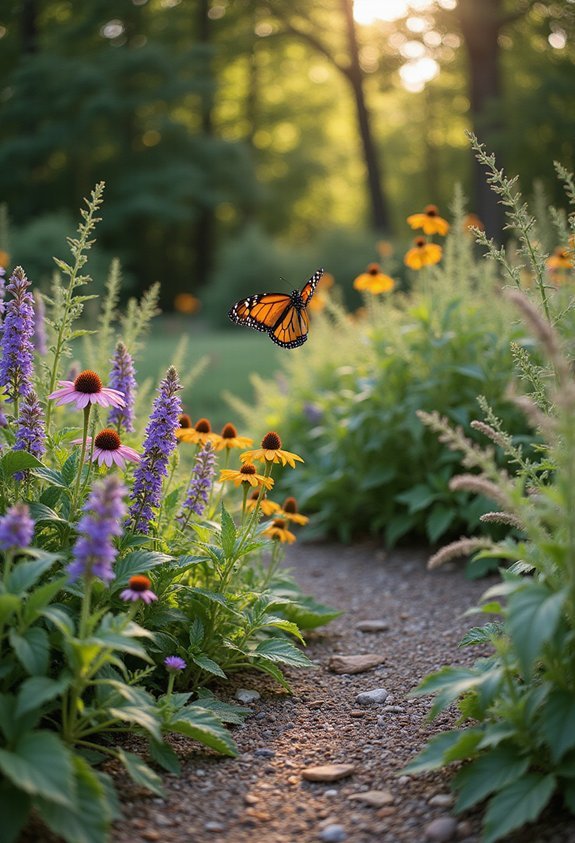
Your fancy raised beds are looking sharp, but here’s the thing—plants can’t throw a party by themselves. You need the guests! Plant native flowers like purple coneflowers and bright orange zinnias to roll out the red carpet for bees and butterflies. Leave some messy spots too—yes, really. Pile up twigs and leaves in a corner, and watch beneficial insects move in like they’re claiming free real estate. Add a shallow water dish with pebbles so thirsty bugs won’t drown. Skip the pesticides because they’re basically party crashers that ruin everything. Skip the mulch in some spots and let the soil breathe. Your garden’s about to become the hottest nightclub in the neighborhood, and pollination’s on the menu!
Design Sustainable Hardscaping With Permeable Materials
What happens when it rains on your garden path and water pools up like a tiny swamp? Yep, you’ve got a drainage disaster on your hands. That’s where permeable materials swoop in like garden superheroes. You can use porous pavers, gravel, or recycled rubber instead of solid concrete. These let water drain right through instead of creating puddles that’ll turn your ankles into nature’s water slides.
Think of it this way: regular pavement is basically a wetsuit for your yard. Permeable options? They’re like yoga pants for dirt—flexible, breathable, and way more forgiving.
Install 4-inch pathways using pea gravel or permeable pavers. Water soaks down naturally, replenishing groundwater while keeping your garden from becoming a swamp. Your plants’ll thank you, and you’ll stop cursing soggy shoes.
Install a Rainwater Harvesting System to Reduce Water Waste
When rain falls on your roof, it’s basically free water that you’re letting slide right into the storm drain—talk about throwing money away! Installing a rainwater harvesting system captures that precious liquid gold instead. You’ll need a downspout diverter and a blue or tan collection barrel (usually 50-100 gallons). Position it under your gutter’s downspout, and boom—you’ve got free irrigation. The collected water’s perfect for watering plants, washing garden tools, or feeding your thirsty lawn during dry spells. You’ll slash your water bill and feel incredibly smug about it. Plus, you’re reducing storm runoff that pollutes local waterways. Your plants get chemical-free water, and Mother Earth gets a high-five. It’s basically gardening gold without the hefty price tag.
Frequently Asked Questions
How Much Will an Eco-Friendly Garden Design Cost Compared to Traditional Landscaping?
You’ll likely spend 10-20% more upfront on eco-friendly gardens due to native plants and sustainable materials. However, you’ll save considerably long-term through reduced water bills, minimal maintenance costs, and fewer chemical expenses compared to traditional landscaping.
What Is the Best Time of Year to Start Implementing Sustainable Gardening Practices?
You’ll achieve the best results by starting your sustainable gardening practices in spring or fall. These seasons offer ideal temperatures and moisture levels, allowing you to establish plants, build soil health, and implement eco-friendly techniques effectively before extreme weather arrives.
Can I Convert an Existing Conventional Garden Into an Eco-Friendly Landscape Gradually?
Yes, you can absolutely convert your conventional garden gradually. Start by replacing synthetic fertilizers with compost, introduce native plants in sections, reduce lawn areas progressively, and install water-saving systems incrementally. You’ll minimize disruption while building your sustainable landscape.
How Long Does It Take to See Environmental Benefits From Sustainable Garden Design?
You’ll notice environmental benefits within months—soil improves, pollinator populations increase, and water usage drops. However, you’ll see the most significant impacts on biodiversity and carbon sequestration after one to three years of consistent sustainable practices.
What Certifications or Standards Exist for Eco-Friendly Landscaping Materials and Practices?
You’ll find several certifications worth considering: LEED certification, Sustainable Sites Initiative (SITES), and local green building standards. You can also look for FSC-certified wood products and verify suppliers’ environmental claims through third-party eco-labels.
Conclusion
You’ve got this! Your garden’s about to become a green machine that practically runs itself. You’re ditching chemicals, helping bugs thrive, and saving water like a total pro. Mother Nature’s gonna throw you a party. Sure, you’ll get dirt under your fingernails and probably trip over your raised beds once or twice. But that’s the fun part! You’re creating something awesome that makes the planet happier. Boom. Gardening superhero status attained.