
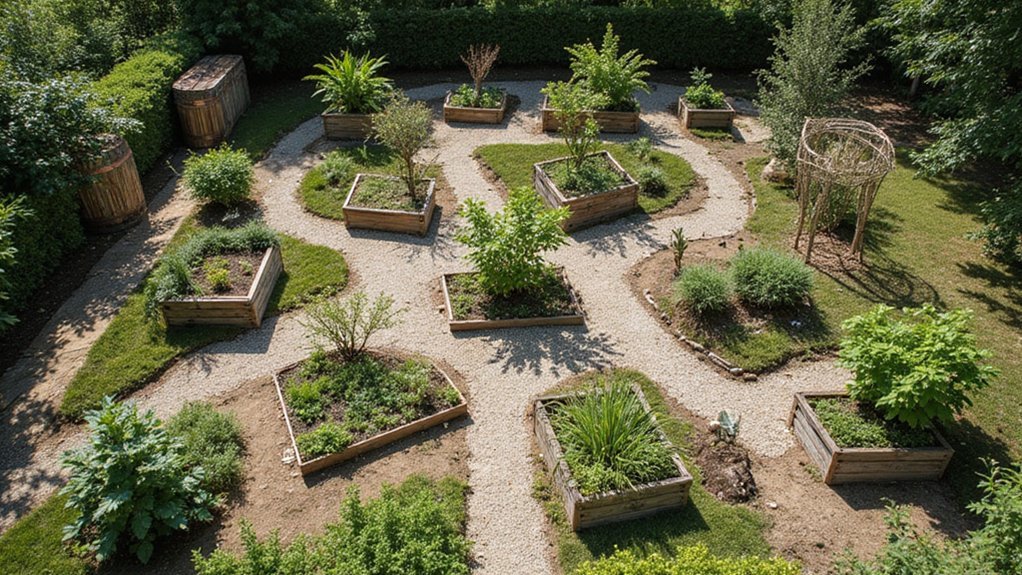
You’re probably tired of killing plants and feeling guilty about it—yeah, we’ve all been there. Well, what if your garden could actually *help* the planet instead of just looking pretty? You can build sustainable structures from stuff you’ve got lying around: reclaimed wood beds, recycled plastic shade covers, native plant fences. These aren’t complicated projects, and they’ll transform your outdoor space into a thriving ecosystem. But here’s where it gets really interesting…
Raised Beds Built From Reclaimed Wood and Recycled Materials
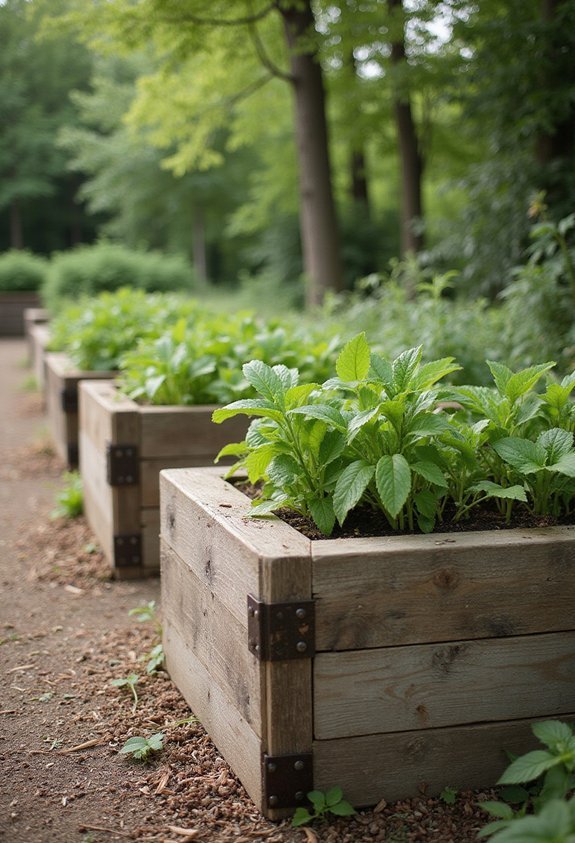
If you’ve ever wondered what to do with that stack of old wooden pallets gathering dust in your garage, here’s your answer: turn ’em into a killer raised bed! You’ll stack those babies about two feet high and fill ’em with soil. Old fence boards work great too—they’re basically free gardening gold. Your vegetables won’t judge their recycled home, trust me. You can even use reclaimed bricks or concrete blocks for the frame. The whole thing screams “I’m environmentally awesome” without breaking the bank. Your plants’ll thrive in that nutrient-rich soil, and you’ll feel like a sustainability superhero. Plus, you’re keeping junk out of landfills. That’s basically composting on a moral level.
Rainwater Harvesting Systems That Cut Water Waste
Now that you’ve built your awesome raised beds, let’s talk about keeping them quenched without watching your water bill skyrocket. Rainwater harvesting sounds fancy, but it’s basically you being a water ninja. Install a simple barrel—think 55-gallon blue drum—under your downspout. When it rains, gravity does the heavy lifting and fills your barrel while you nap. You’ll collect hundreds of gallons annually without lifting a finger. Hook up a soaker hose and boom—your plants drink free water that fell from the sky. No chlorine, no guilt, just pure plant happiness. Your garden stays hydrated, your wallet stays fat, and Mother Earth gives you a virtual high-five. That’s what I call a win-win-win situation right there.
Living Trellises That Support Pollinator-Friendly Vertical Growing
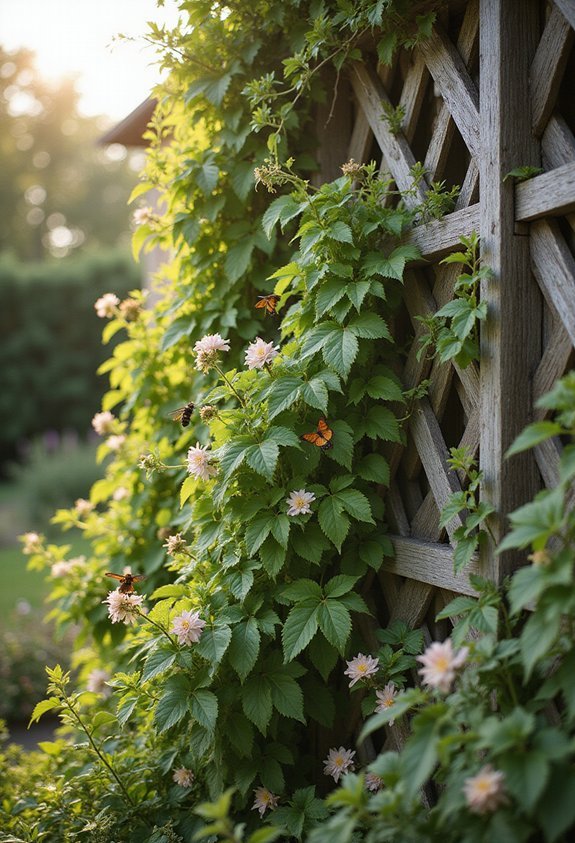
While your rainwater barrel’s doing the heavy lifting downstairs, let’s grow UP—literally. Living trellises turn vertical spaces into pollinator highways. You stack wooden frames—think 6 feet tall—and train vines like clematis or honeysuckle upward. Bees and butterflies zoom through, collecting nectar while you harvest beans or peas below. The structure itself becomes a living wall. Green leaves create natural shade that cools nearby areas. Your garden smells amazing too. Plus, vertical growing means less bending over (your back thanks you). These trellises aren’t just functional—they’re gorgeous. Imagine purple clematis blooms cascading down rustic wood. You’re basically building an apartment complex for pollinators while producing food. That’s some serious multitasking right there.
Compost Bins That Reduce Landfill Waste
Your kitchen scraps don’t have to become landfill villains—they can become garden gold instead. A compost bin transforms your banana peels, eggshells, and grass clippings into rich, dark, crumbly magic. You’re basically creating a tiny recycling factory in your backyard. Pick a bin around three feet by three feet, place it in a shady spot, and start layering. Brown stuff like leaves goes down first, then green stuff like vegetable scraps. The pile gets hot—seriously hot—as billions of microorganisms throw the ultimate decomposition party. In six months to a year, you’ll have finished compost that’ll make your plants jealous of each other. You’ll divert hundreds of pounds from landfills annually. Your garden wins, the planet wins, and honestly, you become a composting superhero.
Shade Structures Made From Recycled Plastic and Fabric
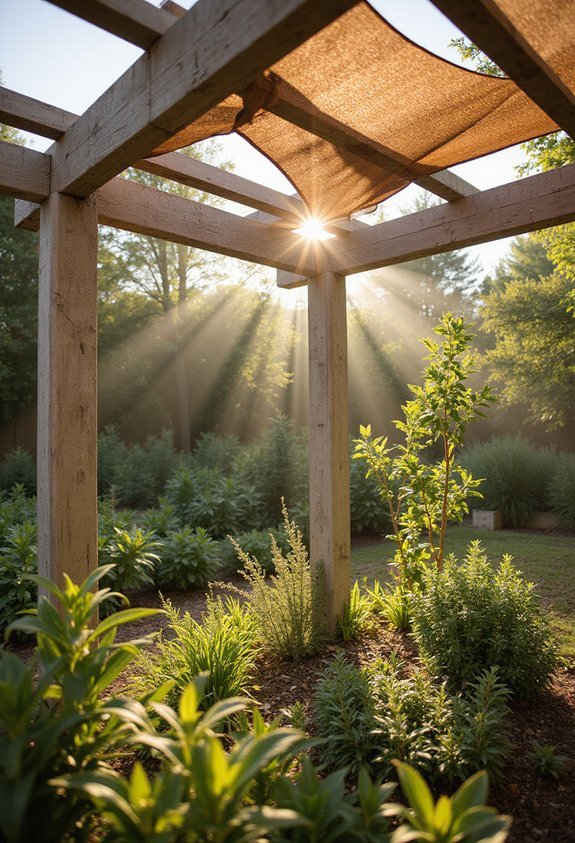
Once you’ve got your compost bin humming along like a tiny decomposition disco, it’s time to think about where you’ll actually sit while admiring all that garden magic. You’ll want shade, obviously. Your face doesn’t need to turn into a lobster.
Enter recycled plastic and fabric shade structures. These bad boys are eco-friendly superheroes in disguise. You can snag pre-made pergolas made from reclaimed plastic lumber—they’re sturdy, won’t rot, and laugh at termites. Just bolt them together and boom. Instant chill zone.
Fabric panels made from recycled polyester? Chef’s kiss. They’re durable, UV-blocking, and come in actual colors. Attach them to your frame with simple clips or ties. You’ve got yourself a 10-by-12-foot sanctuary without guilt. Your garden’s basically carbon-negative now.
Keyhole Gardens That Maximize Small Spaces
If you’ve got a garden space smaller than a shoebox, keyhole gardens are about to become your new best friend. These circular beds have a narrow path cutting through the middle, shaped like—you guessed it—a keyhole. You’ll pack way more plants into a tiny footprint, and that’s no joke.
Here’s the magic: build a circular bed about four feet wide using compost, soil, and cardboard. The path lets you reach every plant without doing awkward yoga moves. Your knees’ll thank you. You can grow veggies, herbs, and flowers all together in this compact powerhouse.
The best part? Keyhole gardens drain beautifully and warm up fast in spring. Small spaces don’t stand a chance against this design. Your plants will absolutely thrive, and you’ll feel like a gardening genius.
Hugelkultur Mounds That Build Soil While Conserving Water
While keyhole gardens work magic in tight spaces, hugelkultur mounds are the ultimate hack for turning yard waste into gardening gold. You’ll stack branches, leaves, and compost into mounds about three feet tall and five feet wide. As everything breaks down, it creates rich soil and traps moisture like a sponge. Your plants basically get a free buffet and spa treatment simultaneously.
The best part? You’re basically composting in fast-forward. Those wood chips decompose and release heat, warming your soil naturally. Your veggies will grow like they’re on performance-enhancing drugs. Plus, you’re recycling what you’d normally haul away. It’s gardening that actually makes environmental sense while giving you less weeding and more harvests. Your neighbors will wonder why your tomatoes look so darn happy.
Permeable Pathways That Prevent Runoff
Your garden paths don’t have to turn into muddy rivers every time it rains, and that’s where permeable pathways come in to save the day. These clever walkways let water drain straight through instead of pooling around your plants like unwanted bathwater. You can use gravel, mulch, or permeable pavers—basically anything that isn’t solid concrete being stubborn. Lay down landscape fabric first, then add 2-3 inches of your chosen material. Water soaks right through and feeds your soil instead of running off to bug your neighbors. Your garden stays drier, your plants stay happier, and you’ll actually enjoy walking around without doing the mud-slip shuffle. Plus, you’re stopping erosion before it becomes a real dirt situation.
Cold Frames and Cloches Built From Upcycled Materials
Because you’ve probably got a pile of old windows, glass jars, and plastic bottles lurking in your garage, you’re already sitting on a goldmine of season-extending tools. Build a cold frame by stacking old windows over a wooden box—it’s basically a tiny greenhouse that doesn’t judge your messy gardening habits. Want something simpler? Plop a clear plastic jug over your seedlings. Cut the bottom off and you’ve got instant protection from frost. Glass cloches look fancier but work the same way. Your plants’ll think they’re vacationing in tropical paradise while snow falls outside. These upcycled structures trap heat, extend your growing season by weeks, and cost you basically nothing. Your wallet and Mother Earth both win.
Natural Fencing Built From Native Plants
Once you’ve got your seedlings cozy under glass, it’s time to think about what goes around your whole garden—and we’re not talking about a chain-link fence that screams “boring.” Native plants make fantastic living barriers that actually belong in your landscape instead of looking like they wandered in from someone else’s yard.
You can plant dense shrubs like serviceberry or ninebark three to four feet apart. They’ll grow thick and create a natural wall. Hedgerows work brilliantly too. Mix different native species together, and you’ll get year-round interest plus food for wildlife.
These living fences need zero maintenance compared to wood or metal. They won’t rust, rot, or need repainting. Plus, birds nest in them. Your garden becomes an ecosystem instead of just dirt with plants.
Mulch Barriers That Suppress Weeds Using Organic Waste
While those native plant fences are doing their thing, don’t forget what’s happening down at ground level—weeds’ll take over faster than you can say “ugh, not again.” Mulch barriers are your secret weapon, and here’s the best part: you can make them basically for free using stuff that’d otherwise end up in the trash.
Spread shredded leaves, grass clippings, or wood chips about three to four inches thick around your plants. It’s like tucking your garden into a cozy blanket. Your weeds? They’ll suffocate under there, seriously. Plus, as the mulch breaks down, it feeds your soil, turning garbage into garden gold. You’re literally composting in place while blocking the bad guys. Talk about a win-win situation.
Beetle Banks and Bug Hotels That Support Beneficial Insects
Beetle banks are simple raised mounds you create using straw, wood chips, and leaves. Stack them about 12 inches high and 2 feet wide. These little fortresses become highways for ground beetles, which absolutely demolish pest eggs and larvae. It’s basically hiring tiny assassins for free.
Bug hotels? They’re wooden structures with stacked wood, pinecones, and bark. You’re creating fancy apartments for ladybugs and lacewings. Position them near your vegetables.
Both structures turn your garden into an insect paradise. Your plants stay safer. No chemicals needed. Just let nature do its thing while you sit back, sip lemonade, and watch the magic happen.
Frequently Asked Questions
How Much Does It Cost to Build Sustainable Garden Structures Compared to Conventional Options?
You’ll typically spend 10-30% more upfront on sustainable garden structures, but you’ll save money long-term through durability and reduced maintenance. Your initial investment pays back through lower water usage, energy savings, and decreased replacement costs over time.
What Is the Timeline for Seeing Environmental Benefits After Installing These Structures?
You’ll notice environmental benefits within weeks as your sustainable structures reduce water waste and energy consumption. Within months, you’ll see measurable improvements in soil health and carbon reduction. Long-term benefits compound over years, maximizing your positive ecological impact substantially.
Can These Sustainable Structures Withstand Extreme Weather Conditions and Last Long-Term?
You’ll find that quality sustainable structures withstand extreme weather remarkably well. They’re built with durable materials like recycled composite and metal that resist damage. You’ll enjoy decades of reliable performance when you maintain them properly and choose weather-resistant designs.
Do I Need Special Skills or Permits to Build and Install These Structures?
You’ll need basic DIY skills for most projects, though complex structures may require permits. Check your local building codes first. Many communities don’t regulate small garden structures, but you shouldn’t assume—verify requirements before you start building anything.
How Do Sustainable Garden Structures Affect Property Value and Curb Appeal?
You’ll boost your home’s curb appeal and property value by installing sustainable garden structures. Buyers appreciate eco-friendly features, green spaces, and attractive hardscaping. You’re creating an inviting landscape that demonstrates environmental responsibility and increases marketability.
Conclusion
You’ve got this! Your garden’s about to become an eco-superhero headquarters. Native plant fences’ll block wind, beetle banks’ll throw parties for bugs, and rainwater systems’ll quench your plants’ thirst without draining your wallet. You’re basically turning dirt into a thriving apartment complex for helpful critters. Plus, you’ll skip the nasty chemicals and actually enjoy your backyard. Mother Nature’s gonna be so proud of you!