
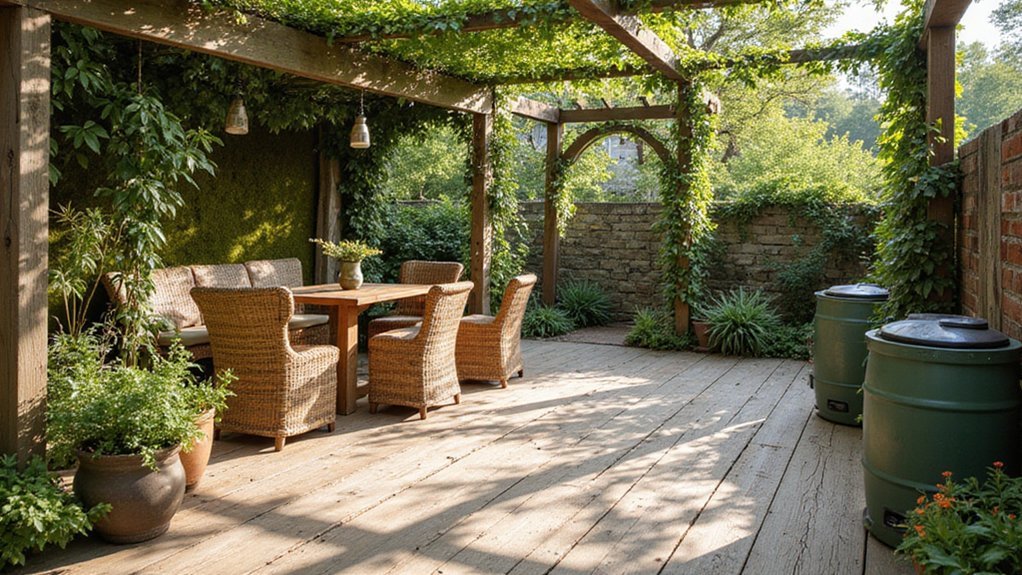
You’re about to transform your yard into nature’s playground—and honestly, it’s way easier than keeping a houseplant alive. We’re talking rich, dark soil, native plants that do the pest-fighting for you, and a composting system that turns your kitchen scraps into actual garden magic. But here’s the thing: your outdoor space doesn’t have to be complicated to be sustainable. Want to know the secret moves that’ll make your neighbors jealous?
Start Your Design With a Sustainability Plan
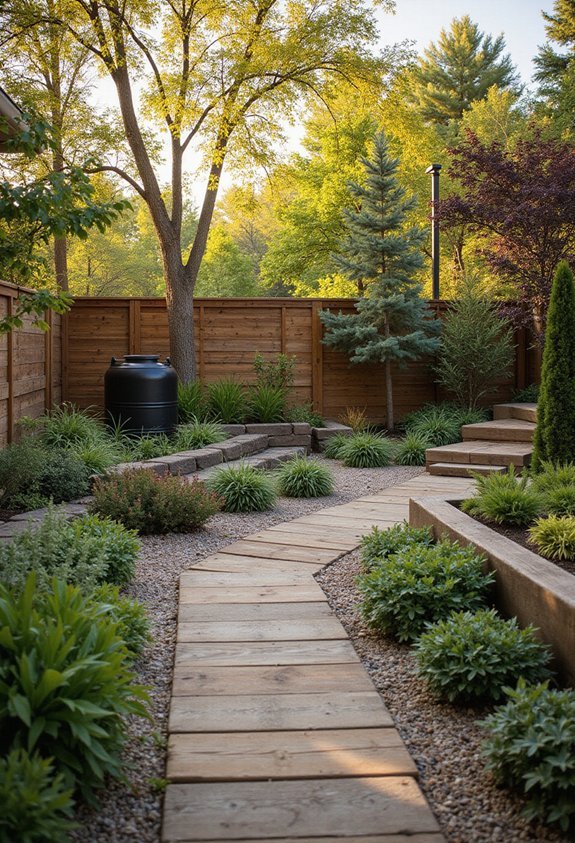
Before you start hauling in fancy furniture and bright umbrellas, you’ll want to pump the brakes and make a real plan. Think about what you actually need. Do you want a veggie garden? A chill-out zone? Both, if you’re feeling ambitious?
Sketch out your space on paper. Measure your yard—seriously, grab a tape measure. Know your sunny spots versus shady corners. The sun moves, so you’re basically playing chess with daylight here.
Ask yourself tough questions. What bugs you about your current setup? What’ll make you actually use this space instead of staring at it through the window?
This planning stage takes work, but it’ll save you from buying stuff you’ll regret. Your future self will thank you. And your wallet won’t be crying.
Choose Native Plants to Replace Lawn
Native plants also feed local butterflies, bees, and birds. Your yard becomes a buzzing, colorful party instead of a boring green carpet. Plant them in clusters of three or five for visual punch. Mix in some purple coneflowers, black-eyed Susans, and ornamental grasses. Add a few stepping stones winding through. Suddenly you’re not just saving the planet—you’re creating something genuinely beautiful. Your lawn’s days are officially numbered.
Design Water-Wise Gardens With Smart Irrigation
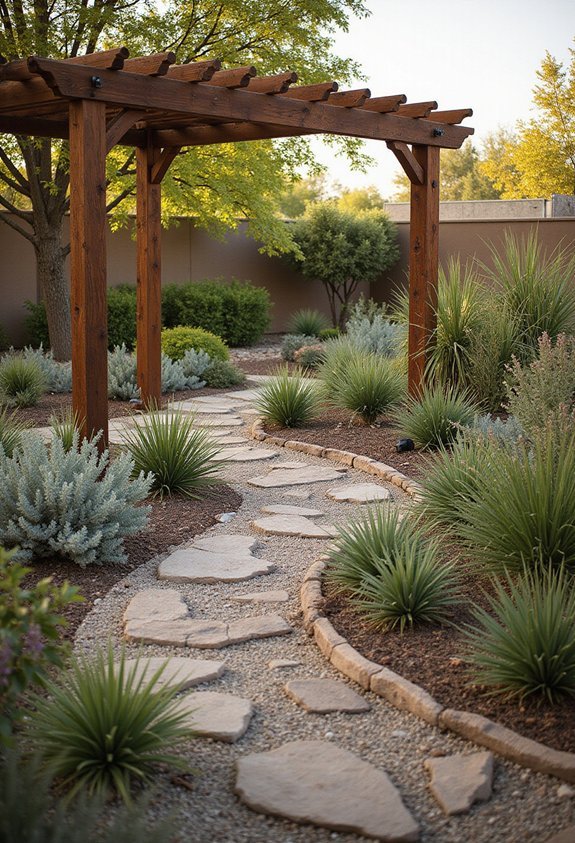
Your gorgeous native plant garden’s looking fantastic, but here’s the thing—all those beautiful flowers and grasses are thirsty little divas. So skip the sprinkler system that blasts water everywhere like a confused fire hose. Instead, grab a smart irrigation system that actually thinks for itself. These clever gadgets use soil moisture sensors and weather data to water your plants only when they need it. You’ll install drip lines near plant roots, not above their heads (way less waste). Set it on a timer, and boom—your garden drinks smart while your water bill takes a serious vacation. Plus, you’re basically giving Mother Earth a high-five. Your plants stay happy, your wallet stays happier, and everyone wins.
Select Sustainable Outdoor Furniture and Décor
Now that you’ve got your garden sipping water like a responsible adult, it’s time to furnish your outdoor space with stuff that won’t make Mother Earth frown at you.
Look for furniture made from reclaimed wood or recycled plastic. These materials are tough cookies and won’t decompose into sadness anytime soon. Bamboo chairs? Yes, please. They’re lightweight, stylish, and grow faster than your neighbor’s questionable beard.
Choose cushions from organic cotton or recycled fabrics. Skip the synthetic stuff that’ll outlast your great-grandkids. Stone or gravel pathways keep weeds humble while looking naturally gorgeous.
Add solar-powered lights throughout. They’ll charge during the day and glow at night without burning fossil fuels or your electricity bill. Your wallet and the planet both win here. That’s what I call a real power move.
Build Eco-Friendly Hardscaping With Recycled Materials
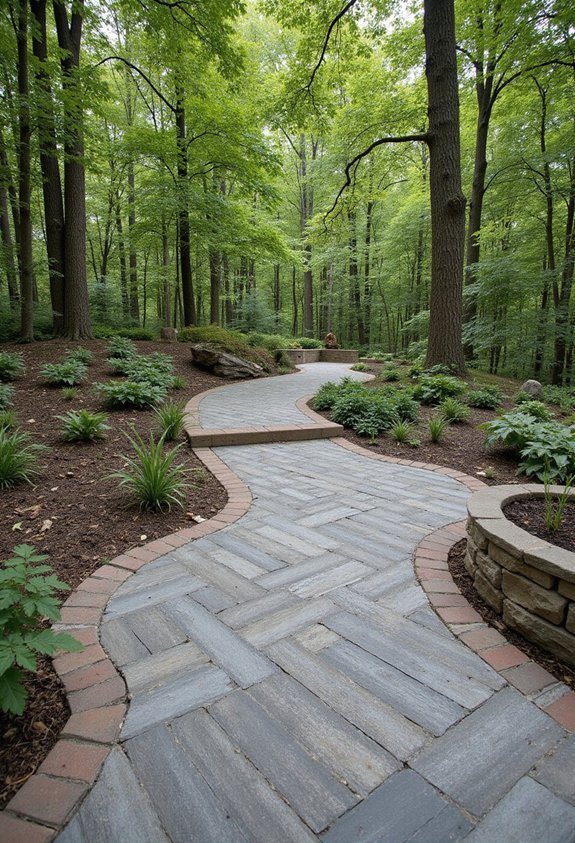
While you’re settling into your fabulous new furniture, don’t forget about what’s underneath your feet. Your hardscape—those patios, pathways, and edging—deserves eco-love too!
Recycled materials are hardscape heroes. Reclaimed bricks, salvaged wood, and crushed concrete create stunning walkways and patios without guilt. You’re basically giving trash a second life, and honestly, that’s pretty rad.
Permeable pavers let water drain naturally instead of creating puddles that’ll make you slip on your face. Gray or terracotta tones blend beautifully with most gardens. Old railroad ties work great for raised beds and borders too.
Hit up local salvage yards or demolition sites for treasures. You’ll save money and keep mountains of waste out of landfills. Your feet—and Mother Earth—will thank you!
Install Renewable Energy Solutions for Outdoor Lighting
Once the sun dips below the horizon, solar lights’ll keep your outdoor space glowing without draining your wallet or the planet. These little powerhouses soak up sunshine all day, then light up your patio like they’ve had too much coffee. You can stake them along garden beds, hang them from trees, or line pathways for that “fancy resort” vibe. String lights powered by solar panels work great too—they’re basically fairy lights that won’t make your electric bill faint. Wind-powered lights are another option if you’re feeling extra adventurous. Install these babies 6-8 feet apart for even coverage, and watch your outdoor space transform into an eco-warrior’s dream. No batteries needed, no guilt required.
Use Shade Structures to Cool Your Space Naturally
When summer heat cranks up like an angry oven, shade structures become your best friend—seriously, they’re cooler than a penguin in sunglasses. You can install a pergola, awning, or sail shade over your patio. These babies block the sun’s rays and drop temperatures by 10-15 degrees. That’s no joke—your sweat glands will thank you. A retractable awning works great because you control the shade. Need something permanent? Plant tall trees like oaks or maples on the west side of your space. They’re natural air conditioners. Vines climbing a wooden frame create dappled shade and look stunning. Position your structures strategically to catch afternoon breezes. You’ll spend less time melting and more time actually enjoying your outdoor area. Win-win situation, friend.
Add Permeable Surfaces to Manage Stormwater
If you’ve ever watched rain puddle up on your patio like a tiny indoor lake, you’ve met the enemy of outdoor spaces. Permeable surfaces are your drainage superhero. They let water soak right through instead of pooling like your neighbor’s sad attempt at landscaping.
Swap concrete for permeable pavers, gravel, or porous asphalt. These materials drain water into the ground below, reducing runoff and erosion. Seriously, your yard’s soil will thank you like it just won the lottery.
Install a rain garden nearby. It’s basically a shallow depression that catches runoff and filters it naturally. Plant native shrubs and flowers in there, and boom—you’ve got function and beauty.
Your outdoor space becomes smarter, greener, and way less swampy. That’s a win.
Integrate Rainwater Harvesting Into Your Landscape
That’s what you’ll get from rain barrels sitting under your gutters. Install a blue or tan 50-gallon barrel and watch it fill during storms. You’re basically getting paid by Mother Nature. Connect that barrel to soaker hoses that sneak water directly to your plants’ roots. No more lugging watering cans around like you’re training for the Olympics. Your thirsty flowers and veggies will drink it up without you breaking a sweat. Position barrels near garden beds for easy access. A screen on top keeps mosquitoes from throwing pool parties in there. You’ll slash your water bill and feel genuinely smug about it. Rainwater harvesting isn’t rocket science—it’s just smart plant parenting.
Grow Eco-Friendly Edible Gardens and Herbs
Now that you’ve got your rainwater barrel keeping your landscape hydrated, it’s time to grow something you can actually eat. Start with herbs like basil, mint, and rosemary in small containers near your kitchen door. They’re basically impossible to kill, which is perfect if you’ve got a black thumb. Plant tomatoes and lettuce in a sunny 4-by-8-foot bed, and watch them transform from tiny green specks into actual food. Your digestive system will thank you for the fresh produce. Use compost from your kitchen scraps as free fertilizer—nothing fancy needed. Stick your fingers in the soil to check moisture before watering. Growing your own stuff feels like magic, except it smells better and requires less chanting.
Build Healthy Garden Beds With Natural Soil
Your plants don’t care how pretty your garden looks—they just want good dirt. And honestly, who can blame them? Rich, dark soil is basically a five-star restaurant for roots.
Start by mixing compost, peat moss, and perlite in equal parts. This combo’s got serious staying power. You’ll want beds about 12 inches deep minimum, filled with this black gold mixture. Dark brown compost breaks down nutrients like a tiny food processor underground—no joke.
Layer it right: coarse stuff on bottom, fine stuff on top. Water it well and let it settle for a week. Your veggies’ll root deeper and happier than ever.
Healthy soil means healthy plants. And healthy plants mean you’re basically a gardening genius. You’ve earned bragging rights.
Integrate Composting Into Your Landscape Design
Once you’ve got that killer soil going, it’s time to think about where your compost actually lives. Your bin shouldn’t hide in shame like a bathroom break. Instead, place it where you’ll actually use it—near your kitchen door or garden beds. A three-by-three-foot wooden structure works great and looks intentional, not like trash day exploded. Paint it forest green or leave it natural. Position it on level ground, and you’re golden. Your compost pile is basically nature’s recycling center, breaking down scraps into black gold. It’s pretty humorous watching kitchen waste transform into garden magic. Keep it visible and accessible, and you’ll actually maintain the darn thing instead of abandoning it like a failed New Year’s resolution.
Use Native Plants to Naturally Deter Pests
Instead of drowning your garden in chemicals that smell like a science experiment gone wrong, let native plants do the heavy lifting for you. These tough little green heroes evolved right in your backyard’s neighborhood, so they know exactly what bugs to bug off. Plant fragrant lavender and purple coneflowers, and watch annoying insects basically say “nope, not today” and fly elsewhere. Native plants pack natural pest-fighting powers that’d make any bug reconsider visiting. You’ll get brilliant colors without the stinky spray bottles. Your garden becomes a fortress of flowers and foliage that pests actively avoid. Plus, butterflies and helpful insects actually want to hang out here. It’s basically hiring free security guards who also happen to look absolutely gorgeous while doing their job.
Maintain Your Sustainable Outdoor Space Year-Round
Building that gorgeous native plant garden is just the beginning—now you’ve got to keep the whole thing thriving from spring through winter. In spring and summer, water deeply but not constantly. Your plants aren’t babies needing sippy cups all day. Fall’s your chance to prep for the cold stuff ahead. Pull dead leaves, trim back dead branches, and let nature mulch things naturally. Winter seems boring, but it’s actually pivotal. Those dried seed heads you’re leaving? They’re basically all-you-can-eat buffets for hungry birds. You’re basically a wildlife restaurant owner now, and honestly, that’s pretty cool. Spring rolls around again, and boom—your garden’s ready to rock without needing constant fussing. You’ve basically created a low-maintenance paradise.
Frequently Asked Questions
How Much Does It Cost to Convert an Existing Yard Into an Eco-Friendly Outdoor Space?
You’ll spend $500–$5,000+ converting your yard into an eco-friendly space, depending on project scope. Native plantings cost less than hardscaping or water features. You can start small with composting or rain barrels and expand gradually within your budget.
What Is the Timeline for Seeing Results From Sustainable Landscaping Changes?
You’ll see noticeable results within 3-6 months as native plants establish themselves and soil health improves. However, you’ll experience the full benefits—increased biodiversity, reduced maintenance, and lower costs—within 1-2 years of implementing your sustainable landscaping changes.
Are Eco-Friendly Outdoor Spaces Suitable for Small Urban Apartments or Balconies?
You can absolutely create eco-friendly outdoor spaces on small balconies and apartment patios. Container gardens, vertical planters, native plants, and rainwater collection systems work perfectly in compact areas. You’ll transform limited space into sustainable, beautiful living areas that benefit both you and the environment.
How Do I Find Local Contractors Experienced in Sustainable Outdoor Design?
You’ll find local contractors through sustainable design directories, green building associations, and online platforms like Thumbtack or Houzz filtered by “eco-friendly” expertise. Ask for portfolios, check reviews, and request references from previous sustainable outdoor projects they’ve completed.
What Permits or Regulations Apply to Renewable Energy Installations in Residential Areas?
You’ll need to check your local building codes and zoning laws, as they’ll vary by location. You should contact your city’s permitting office and homeowner’s association to understand setback requirements, height restrictions, and electrical codes that’ll apply to your renewable installations.
Conclusion
You’ve built your eco-friendly outdoor paradise, and honestly? You’re basically a garden superhero now. Your native plants are crushing it, your composting system’s working hard, and you’re not fighting Mother Nature anymore—you’re teammates. Yeah, you’ll still get dirt under your fingernails, but that’s the price of awesomeness. Your outdoor space’ll keep thriving with minimal fussing. Sit back, enjoy your low-maintenance masterpiece, and bask in knowing you’re saving the planet one garden at a time.