
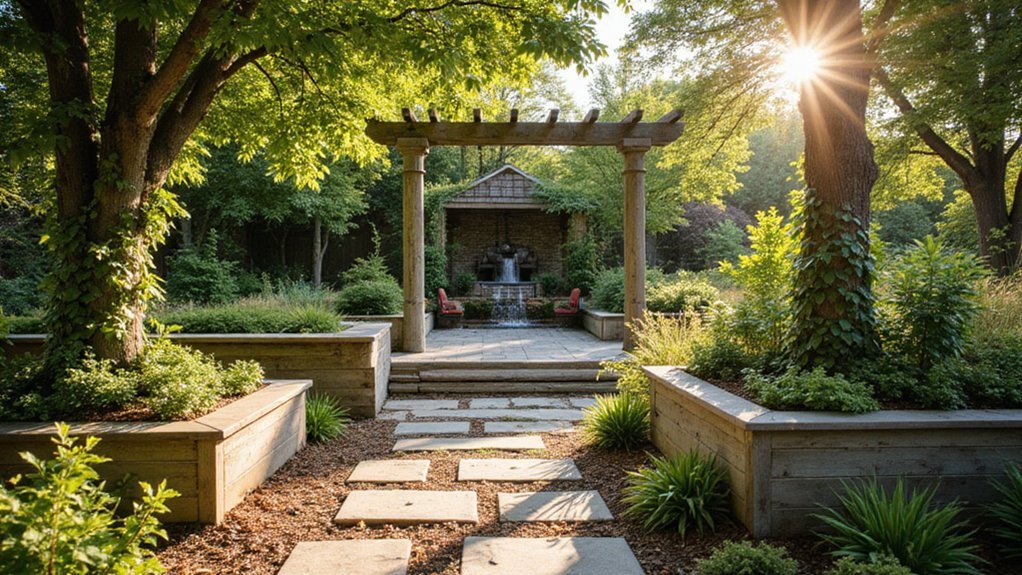
You’re probably tired of looking at that patchy lawn where nothing grows but weeds and regret, right? Well, here’s the thing: turning your backyard into an eco-friendly oasis doesn’t require a degree in environmental science or a trust fund. You’ve got seven solid moves that’ll transform your outdoor space into something actually thriving—and your neighbors will definitely notice. But before you start digging holes everywhere, there’s something you should know about what makes these elements work together…
Water and Energy Systems for Sustainable Outdoor Spaces
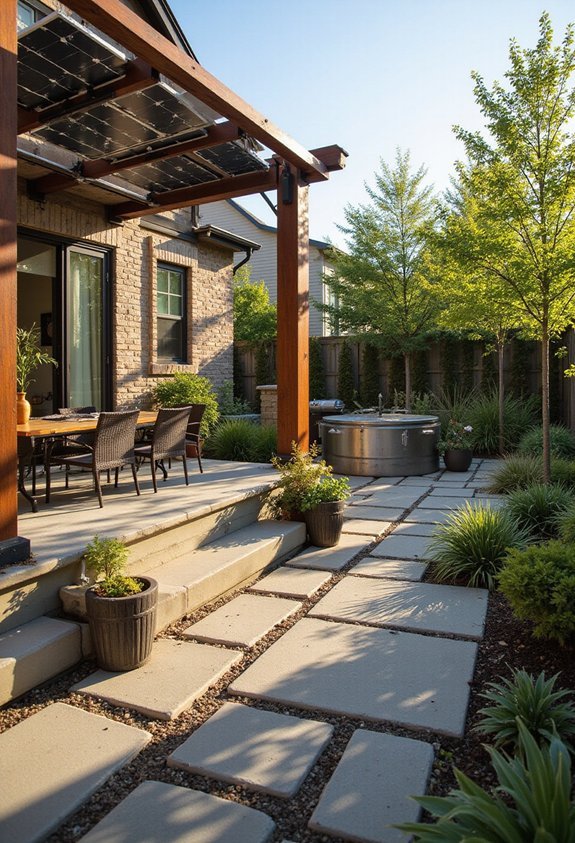
Because your outdoor space drinks water and gulps electricity just like the rest of your house, you’ve gotta make those systems work smarter—not harder. Install drip irrigation systems that deliver water directly to plants’ roots instead of spraying everywhere like a drunk sprinkler. You’ll slash water waste by half. Add solar panels or solar lights—they’re basically free electricity from that giant glowing ball in the sky. Rain barrels are your secret weapon, collecting thousands of gallons annually. Position them near downspouts and watch your water bill shrivel faster than a raisin in the sun. Energy-efficient outdoor lighting runs on rechargeable batteries and actually costs less than powering traditional bulbs. Your wallet and the planet both win. It’s honestly the easiest way to go green without feeling like you’re roughing it.
Choosing Natural and Recycled Materials for Your Design
Your outdoor space’s bones matter just as much as what you plant in it, and that’s where natural and recycled materials become your secret superpowers. Skip those plastic-looking decks that’ll crack faster than your willpower at a donut shop. Instead, grab reclaimed wood for patios—it’s got character and won’t break the bank. Recycled composite decking? It’s like the superhero of low-maintenance living, needing zero splinter drama.
Stone and gravel work beautifully together, creating natural pathways that drain water like your sinuses after a cold. They’re tough, gorgeous, and won’t decompose into sadness like cheaper alternatives.
Reclaimed bricks add vintage charm without the guilt. Old barn wood screams personality. Recycled plastic lumber lasts forever and keeps landfills less stuffed. Your outdoor space deserves materials with actual backbone, not wimpy shortcuts.
Native Plants That Support Pollinators and Wildlife
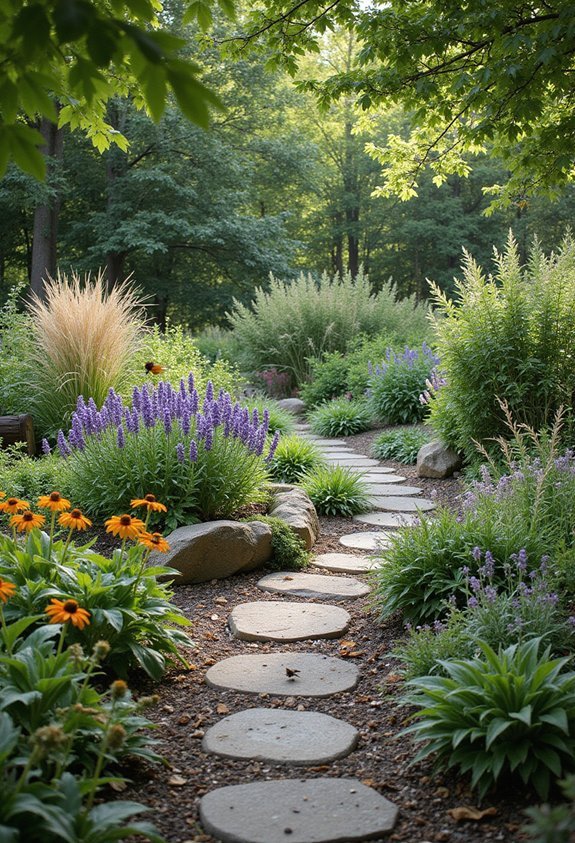
Most pollinators don’t care one bit about fancy ornamental plants that look pretty but taste like cardboard. They’re after the real deal—native plants that actually feed them. Plant native wildflowers like purple coneflowers and black-eyed Susans, and watch butterflies flock to your yard like it’s an all-you-can-eat buffet. Native shrubs such as serviceberry and elderberry offer nectar and berries for birds and bees. Position these plants in sunny spots, about three feet apart, and they’ll thrive without fussing. Your pollinator friends will literally bug out with joy—okay, that’s a terrible pun, but you get it. These plants support entire ecosystems and require less water than non-native species. Your garden becomes a buzzing, fluttering paradise that does real environmental work.
Building Soil Health With Composting and Organic Practices
While those native plants are busy feeding pollinators, they’re also dropping leaves, twigs, and flower bits all over your yard—and that’s actually fantastic news. You’ve got free compost material just lying there! Start a simple pile in a corner and toss in those fallen leaves, grass clippings, and kitchen scraps (no meat, though—unless you want raccoon dinner parties).
In about three to six months, you’ll have dark, crumbly gold that makes soil ridiculously happy. Your plants will literally drink it up. Skip the chemical fertilizers and let nature do the heavy lifting. Mix that finished compost into your garden beds, and you’re basically giving your soil a spa day. Healthy soil means stronger plants, fewer pests, and less work for you overall.
Designing Habitat Zones for Backyard Wildlife
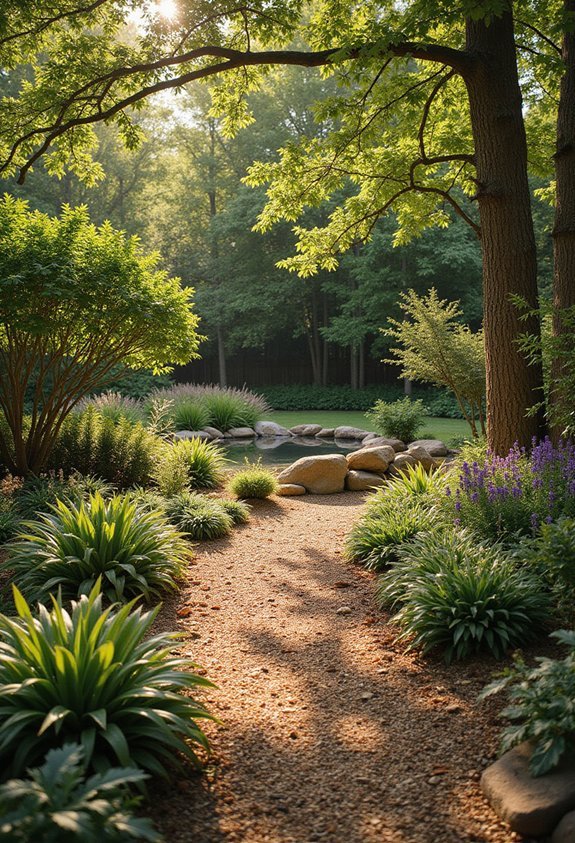
Now that you’ve got thriving native plants and rich compost brewing, it’s time to think like a wildlife real estate developer. You’re basically building a luxury resort for critters. Create a water feature—even a shallow 2-foot birdbath works wonders. Add a brush pile (just stack branches) for shelter. Leave some “messy” areas with leaf litter where bugs happily decompose. Install a bee hotel with bamboo tubes stacked horizontally. Plant dense shrubs for nesting spots. Position ground-level plants near taller ones, creating apartment-style living. You’ll attract butterflies, birds, and beneficial insects instead of just mosquitoes with attitude problems. Watch your backyard transform into nature’s hottest neighborhood. Your garden becomes an actual ecosystem, not just plants sitting around looking pretty.
Hardscape and Plant Maintenance Without Chemicals
Your backyard wildlife resort’s looking fantastic, but here’s the catch—you can’t spray chemicals all over it without evicting your new tenants. So what’s a green gardener to do?
Start with hand-pulling weeds from your beds and borders. Yeah, it’s work, but your knees’ll thank you later. For stubborn stuff, pour boiling water directly on them—cheap and satisfying.
Swap synthetic fertilizers for compost. That brown, crumbly gold you’ve made? It’s basically plant crack, and it won’t poison anything hopping around your yard.
Use neem oil or insecticidal soap for pest problems. They’re natural, effective, and won’t turn your soil into a chemical wasteland.
Mulch everything—3 to 4 inches thick—to suppress weeds naturally. Your plants stay happy, wildlife stays safe, and you’re basically a backyard superhero.
Measuring the Environmental Impact of Your Green Outdoor Space
Once you’ve ditched the chemicals and let nature run wild, you’ll probably wonder: am I actually helping the planet, or just feeling good about myself? (Spoiler: you’re probably doing both, but let’s measure it.) Start tracking what you’ve actually changed in your space. Count your native plants. They’re basically carbon-eating machines. Notice how many pollinators visit weekly. More bees mean you’re winning. Measure your lawn size now versus before. Smaller grass patches mean less mowing, less gas, less planetary burps. Check your water bill. Rainwater gardens cut usage dramatically. Document the soil quality—darker, richer dirt means healthier ecosystems underground. Take photos monthly. You’ll see the glow-up. These aren’t just vanity metrics. They’re proof you’re genuinely healing your corner of Earth, one native plant at a time.
Frequently Asked Questions
What Budget Should I Allocate for Converting My Outdoor Space Into a Green Design?
You should allocate 15-30% of your property’s value for a quality green outdoor conversion. Start by evaluating your space’s size and needs, then prioritize native plants, sustainable materials, and water features. You’ll maximize your investment by phasing projects over time.
How Do I Balance Aesthetic Preferences With Sustainable Practices in My Garden Layout?
You’ll balance aesthetics with sustainability by selecting native plants that’re visually appealing, installing permeable paving for drainage, and incorporating composting areas strategically. You can create functional beauty by integrating water features that conserve resources while enhancing your garden’s visual appeal.
What Permits or HOA Regulations Might Restrict My Green Outdoor Living Modifications?
You’ll need to check local building codes, zoning laws, and HOA bylaws before starting modifications. Contact your municipality’s planning department and review your HOA covenant restrictions. They’ll outline what you can’t alter regarding structures, plants, and hardscaping.
Can I Retrofit an Existing Hardscape With Sustainable Materials, or Must I Replace It?
You can retrofit your existing hardscape with sustainable materials—you don’t need to replace it entirely. Consider overlaying permeable pavers, adding native plantings between stones, or applying eco-friendly sealants to reduce your environmental impact affordably.
How Long Does It Typically Take to See Ecological Benefits From Green Design Changes?
You’ll notice immediate stormwater improvements within weeks, while soil health and biodiversity gains develop over months to years. Mature ecological benefits—including carbon sequestration and pollinator populations—typically flourish after two to three years of consistent green practices.
Conclusion
You’ve got this! Your green outdoor space’ll be the envy of the neighborhood—and way better for the planet. You’re basically a backyard superhero now, turning dirt into wildlife paradise. Sure, you’ll get messy composting (pun intended), but that’s half the fun. Your plants’ll thrive, pollinators’ll party, and you’ll save money on water bills. Mother Nature’s gonna high-five you. Now get outside and grow something awesome!