
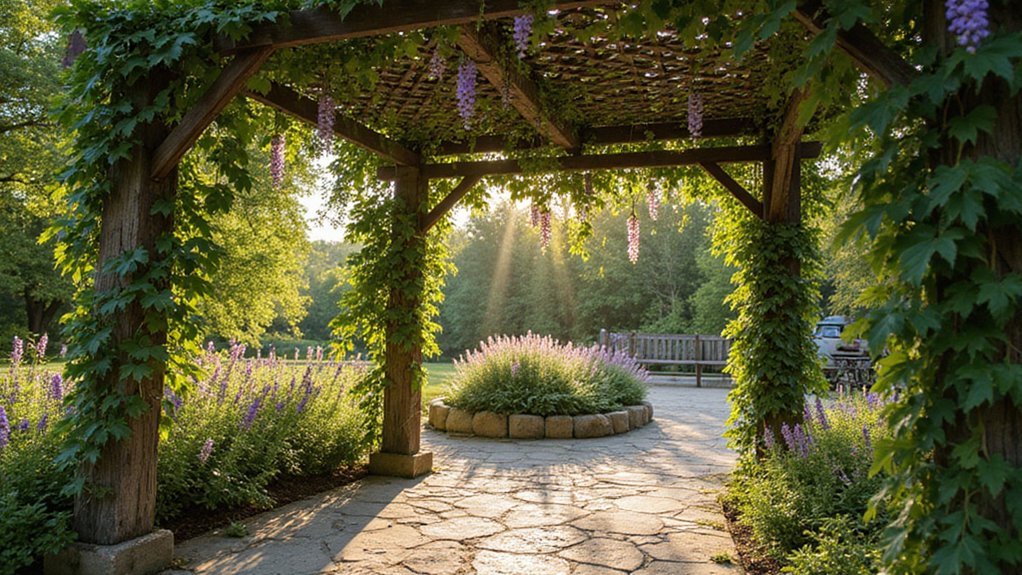
You’re about to discover that a pergola isn’t just some fancy wooden structure gathering dust in your backyard—it’s your ticket to creating a genuinely awesome outdoor hangout. Whether you’re picturing yourself sipping lemonade under dappled sunlight or watching climbing vines turn your yard into an Instagram-worthy paradise, there’s a pergola style that’ll fit your space and personality. But here’s the thing: picking the right design, placement, and plants gets tricky fast, and you’ll want the inside scoop before you swing that first hammer.
What Makes a Natural Pergola the Perfect Garden Addition
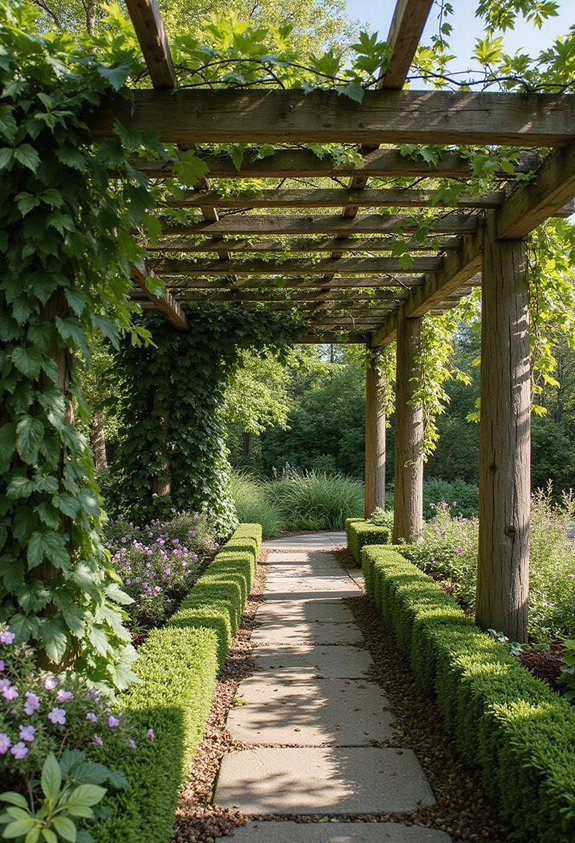
Ever wonder why your backyard feels like it’s missing something? A natural pergola might be exactly what you need. These wooden structures create the perfect spot to hang out without fully committing to a roof situation. You get shade when you want it, sun when you don’t—basically the Goldilocks of garden features.
Natural pergolas work magic because they’re honestly pretty chill. They frame your space at about 7-8 feet high, creating cozy vibes without blocking your entire sky. The open lattice design lets climbing vines grow wild, turning boring wood into a green wonderland. Plus, they don’t break the bank or require serious carpentry skills. Your backyard transforms from “meh” to “wow” faster than you can say “I planted something that actually survived.”
Wooden Pergolas: Timeless Designs That Age Beautifully
When you’ve picked out your perfect pergola spot, it’s time to talk about what’ll actually hold up your climbing vines and your afternoon nap dreams—the wood itself. Wooden pergolas are basically the cool grandparents of garden structures. They age like fine wine, developing this gorgeous silvery-gray patina that screams “I’ve got character.” Cedar and redwood are your best buddies here—they resist rot without getting all needy about maintenance. A typical 10×10 wooden pergola‘ll last you decades if you treat it right. You’ll watch those wooden beams mellow over time, creating dappled shade that’s honestly just *chef’s kiss.* Sure, you’ll need to stain or seal it occasionally, but that’s a small price for timeless garden vibes.
Stone and Metal Combinations for Modern Natural Gardens
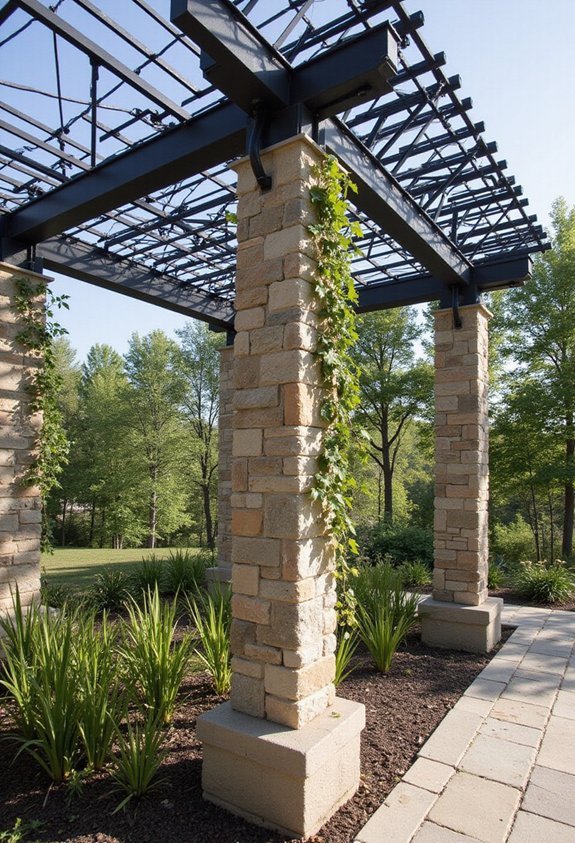
If you’re ready to ditch the whole “cozy cottage core” thing and go full modern, stone and metal combos are where it’s at. Think sleek black metal frames paired with gray stone pillars—it’s basically the pergola equivalent of wearing sunglasses indoors, but way cooler. You can use 4×4 stone posts anchored in concrete footings, topped with thin steel beams that’ll make your garden look like it hired an architect. Add some steel cables for climbing vines, and boom—you’ve got structure that won’t bore anyone. The best part? Stone and metal won’t rot like wood does. Your pergola won’t develop a personality disorder after five years of rain. This combo screams “I’ve got my life together,” even if you’re just winging it.
Climbing Plants That Transform Your Pergola Year-Round
Once you’ve got your stone-and-metal masterpiece standing there all proud and structural, you’ve gotta dress it up—and climbing plants are basically the pergola’s entire wardrobe. Spring brings you vibrant clematis with purple blooms that’ll make your neighbors jealous. Summer? Jasmine takes over, smelling absolutely divine and basically making your garden a perfume factory. Climbing roses in deep reds and pinks add drama like they’re auditioning for a movie. Fall gives you golden honeysuckle that butterflies literally can’t resist. Winter’s not left out either—ivy stays green and gorgeous, keeping your pergola from looking like a sad, naked skeleton. These plants don’t just sit there looking pretty either; they create shade, privacy, and basically turn your pergola into nature’s best fashion statement.
Pergola Placement: Finding the Ideal Spot in Your Yard
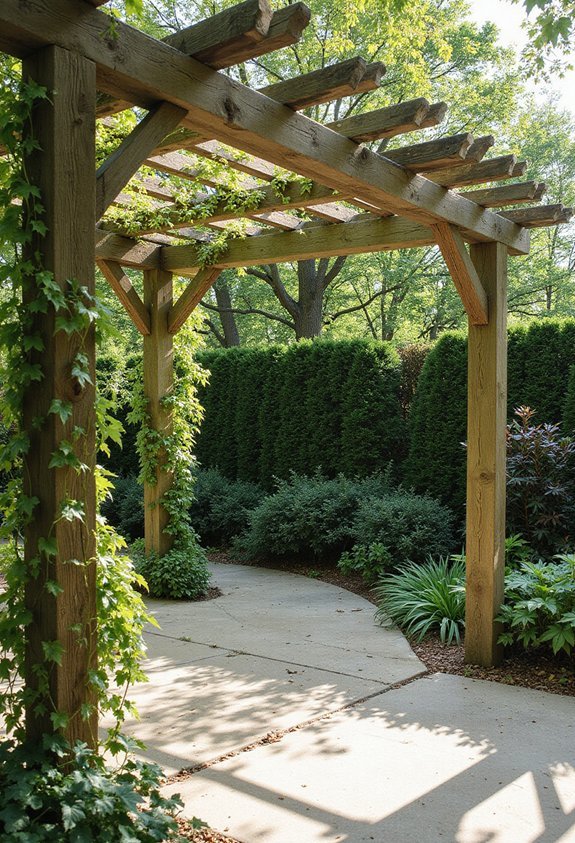
Now that you’ve got your climbing plants all lined up and ready to show off, it’s time to figure out where to actually stick your pergola so it doesn’t end up as the yard’s biggest eyesore. First, scout spots that get six to eight hours of sunlight daily. Your plants need light, but you’ll also want some shade for lounging. Avoid placing it too close to your house—give yourself at least ten feet. Check for underground utilities before digging. Consider wind patterns too. A spot near a fence or tall trees breaks harsh gusts. Think about sight lines from your patio and windows. You want views that make you smile, not regret your life choices. Trust me, proper placement saves headaches later.
Pergola Design Strategies for Shade and Sunlight Balance
Because you’ve picked the perfect spot, it’s time to make your pergola actually work for you—and that means getting the shade-and-sun thing right. Think about where the sun travels across your yard. Morning light? Glorious. Afternoon heat at 3 p.m.? Brutal. You’ll want dappled shade, not sweat-soaked misery.
Install your pergola where trees can help filter sunlight. Add climbing vines like clematis or jasmine—they’re like natural sunglasses for your space. Space the slats on top about 12 inches apart. This lets some rays through but won’t fry you like an egg.
Consider retractable shade cloth too. You’re basically building a chill zone that adjusts to your mood. Your future self sunbathing there will thank you endlessly.
Material and Plant Choices That Support Garden Wildlife
Your pergola’s about to become the hottest real estate in your garden—and we’re talking about the wildlife kind. Skip the fancy treated wood and grab cedar or composite instead. Birds won’t get splinters, and neither will your conscience. Plant native vines like clematis or honeysuckle along your 8-foot posts. Seriously, butterflies go bonkers for these guys. Add climbing roses for color and texture. They’re basically an all-you-can-eat buffet for pollinators. Leave some bark exposed on older wood—beetles think it’s five-star dining. Install a shallow water dish underneath. Thirsty critters need hydration too, not just snacks. Your pergola transforms into a wildlife hotspot without requiring a degree in entomology. Pretty neat, right?
Pergolas as Privacy Screens: Strategic Design Approaches
While your neighbors are busy spying on your garden activities, a strategically planted pergola can save you from becoming the neighborhood’s favorite reality show. You’ll want to position it along your property line where prying eyes usually hover. Plant climbing vines like clematis or jasmine on the sides facing neighbors—they’ll grow thick and leafy within two seasons. Go vertical with your greenery. A six-foot-tall structure works perfectly for blocking sightlines without completely blocking sunlight. Add a sturdy lattice backing, and you’ve got yourself a green fortress. Don’t worry about looking unfriendly; everyone appreciates privacy. Your pergola becomes a living wall that’s actually pretty to look at from your side. Plus, you’ll finally garden without an unseen audience judging your weeding technique.
Eco-Friendly Materials for Sustainable Pergola Building
How’d you like to build a pergola that won’t make Mother Nature cringe? You’ve got awesome options that’ll make your garden happy and your conscience happier too.
Reclaimed wood beams are your best friend here. They’re weathered, gorgeous, and they’ve already had their environmental moment. You’re basically giving old lumber a second life, which is pretty cool.
Bamboo’s another winner. It grows crazy fast, so harvesting it doesn’t drain the planet. Plus, it’s super strong and looks elegant in that natural golden tone.
Composite materials made from recycled plastics and wood fibers? They won’t rot or bug out. Seriously, no termite drama.
Untreated cedar lasts forever without toxic chemicals leaching into your soil. Your veggies won’t judge you, and neither will Mother Earth.
Water Features and Seating for Your Pergola Space
Once you’ve got your eco-friendly pergola standing tall, it’s time to make it actually livable—because let’s face it, you can’t just stare at wood all day without losing your mind. Pop a small water fountain in the corner. The gentle sound keeps you from going absolutely bonkers while you’re relaxing. Add some comfy seating—think cushioned benches or weathered chairs—positioned to catch the shade. A 4-foot bench works perfectly for two people without cramping your style. Consider a little birdbath too. You’ll get free entertainment watching birds splash around like they’re at an all-you-can-drink buffet. String some lanterns overhead, toss down a natural stone pathway, and boom—you’ve got yourself an actual destination spot instead of just a fancy stick structure.
Seasonal Maintenance to Keep Your Pergola Looking Natural
Your beautiful natural pergola won’t stay beautiful without a little TLC, and that’s just the truth. Spring means cleaning out dead leaves and debris—seriously, they pile up like forgotten gym clothes. Summer requires checking for wood rot, especially after heavy rains. You’ll want to inspect joints and beams for soft spots. Fall‘s your chance to seal or stain wood before winter arrives, preventing moisture damage. Winter? That’s when you monitor snow load on the structure. Brush off accumulating snow to avoid stress fractures. Check those support posts monthly. Trim any climbing vines threatening to strangle your pergola. Water-stain anything looking gray and tired. Your pergola’s basically like a houseplant—give it attention, and it’ll reward you with years of shade and style.
Budget-Friendly DIY Pergola Ideas for Small Spaces
All that maintenance talk might’ve made your wallet nervous, but don’t worry—you don’t need a trust fund to build an amazing pergola. Small spaces are perfect for budget builds. Grab some reclaimed wood or affordable pine planks, then nail together a simple 8-by-8-foot frame. Seriously, if you can hold a hammer without hitting your thumb (no judgment), you’ve got this. Paint it soft gray or natural white to match your garden vibe. Add climbing vines like clematis or jasmine—they’re cheap and look expensive. String some twinkle lights overhead for that magical feel. You’ll spend maybe $200-300 total and impress everyone. Your wallet will actually thank you for this one.
Pergolas for Cottage, Contemporary, and Mediterranean Gardens
Now that you’ve built your budget pergola, let’s talk about dressing it up for different garden styles—because a plain pergola is like spaghetti without sauce, you know?
For cottage gardens, you’ll want climbing roses and jasmine vines crawling up those 8-foot posts. Throw in some rustic lanterns and mismatched vintage chairs underneath. It’s cozy chaos, honestly.
Contemporary pergolas dig clean lines and minimalist vibes. Think steel frames, sleek white paint, and maybe some modern shade cloth. No fussy decorations here—just geometric perfection.
Mediterranean gardens? They’re basically pergolas’ favorite playground. Drape grapevines everywhere, add terracotta pots bursting with herbs, and position the whole thing to catch that golden sunset light. Your garden’ll feel like Italy called and demanded you visit immediately.
Transform Your Pergola Into an Outdoor Living Room
Forget the couch. You’re building an outdoor room instead. Grab some comfy chairs—think oversized cushions in warm terracotta or soft gray—and arrange them in a cozy circle under your pergola’s wooden beams. Add a small side table for drinks so you won’t spill lemonade on yourself (we’ve all been there). String up some warm white lights overhead for evening ambiance. Throw down an outdoor rug in neutral tones to define your space and make it feel intentional, not accidental. Pop in some potted plants around the edges—greenery makes everything better. Now you’ve got a gathering spot that actually works. Your pergola transforms from a boring structure into the best room in your house, minus the roof and the air conditioning.
Frequently Asked Questions
How Long Do Natural Pergolas Typically Last Before Requiring Replacement?
You’ll typically get 10-15 years from a natural wood pergola before you’ll need replacement, though you can extend its lifespan to 20+ years if you maintain it properly with regular staining, sealing, and inspections for rot or pest damage.
What Permits or Regulations Apply to Building a Pergola in Residential Areas?
You’ll need to check with your local building department for permit requirements, as regulations vary by location. Most residential areas require permits for structures over six feet tall or covering significant square footage. You should verify setback distances and HOA restrictions before building.
Can Pergolas Withstand Extreme Weather Conditions Like Heavy Snow or Strong Winds?
You’ll find that most pergolas can withstand moderate weather, but you’ll need proper engineering and materials for extreme conditions. You should reinforce your structure with steel brackets, use weather-resistant wood, and guarantee deep concrete foundations to handle heavy snow and strong winds effectively.
What Is the Average Cost to Professionally Install a Pergola Structure?
You’ll typically spend between $3,000 and $9,000 for professional pergola installation, depending on size, materials, and complexity. Labor costs usually range from $1,500 to $4,000, while materials vary considerably based on wood type or aluminum selection.
How Do I Prevent Pest Infestations in Wooden Pergolas and Climbing Plants?
You’ll prevent pest infestations by regularly inspecting your wooden pergola and climbing plants for signs of damage. You should apply natural insecticides, guarantee proper drainage, trim overgrown vegetation, and maintain good airflow around the structure to discourage pests from settling in.
Conclusion
You’ve got everything you need to build your dream pergola now. Whether you’re going rustic wood or fancy stone, your garden’s about to get a serious upgrade. Pick your spot, plant some vines, and watch it become your favorite hangout spot. Your backyard’s gonna be the envy of the neighborhood. So grab your tools, don’t overthink it, and get building. Your outdoor oasis awaits!