
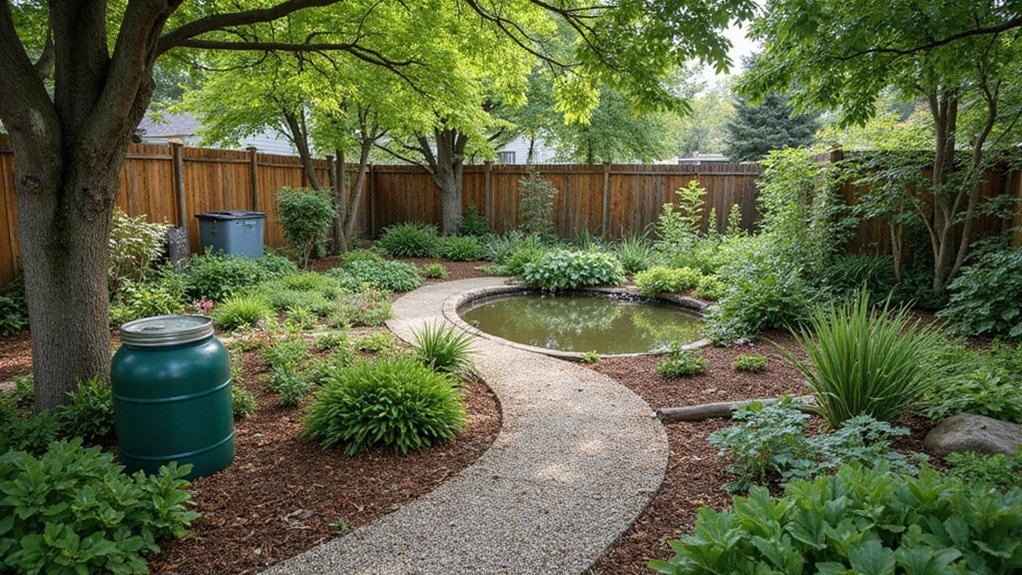
Here’s the thing: your backyard’s probably throwing away more water than a leaky faucet, and your lawn’s basically a green desert that demands constant attention. But what if you could flip the script? Native plants, rainwater systems, and smart composting could transform your outdoor space into an eco-friendly paradise that practically runs itself. Want to know the surprisingly simple moves that’ll make Mother Nature actually proud of you?
Native Plants: The Foundation of Sustainable Landscaping
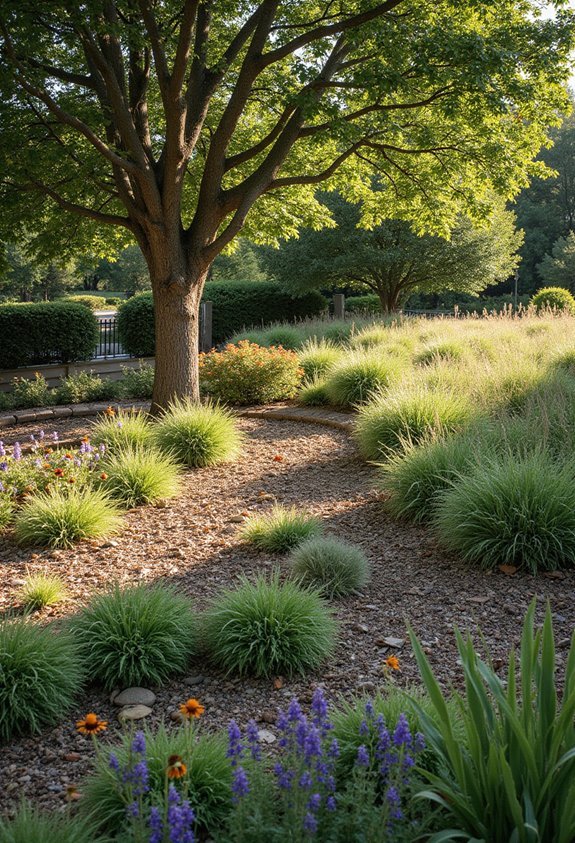
Native plants need way less watering, fertilizing, and fussing than fancy imported varieties. Your water bill’ll thank you. Plus, they attract butterflies and birds instead of demanding sprinkler systems that run 24/7. You’ll get a vibrant ecosystem doing backflips in your backyard.
Plant them in clusters, mixing different heights and colors. Add some mulch around them for that polished look. Honestly, it’s like having a garden that basically maintains itself while you sip lemonade. That’s the dream, right?
Build a Rainwater Harvesting System for Dry Spells
Why let all that free water just run off into the street when you could be catching it like you’re playing the world’s easiest game of water tag? Install a rain barrel—a blue or tan 55-gallon container—under your downspout. It’ll fill faster than you’d think, especially during storms. Position it on a sturdy stand so gravity does the heavy lifting when you’re watering plants. Connect a soaker hose and watch your garden drink like it hasn’t seen water in years. You’ll slash your water bill and feel smug about it. During dry spells, you’ve got backup reserves ready to go. It’s basically free water that’d otherwise become someone else’s problem downstream. Your plants’ll thank you, and Mother Earth might actually text back.
Adjust Watering Schedules by Season
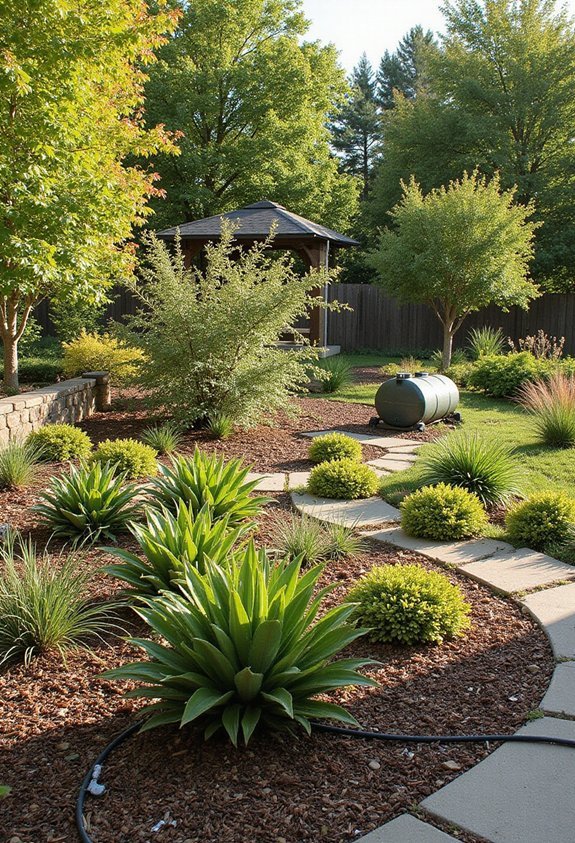
Just when you’ve got your rain barrel system humming along, the seasons’ll throw you a curveball—and suddenly your plants need totally different amounts of water. Spring’s thirsty time when everything’s growing like crazy. Summer heat’ll dry out soil faster than you can say “drought.” Fall? Your plants basically chill out and need way less. Winter’s a snooze button for most gardens.
Start Composting On-Site to Eliminate Waste
You’ve dialed in your watering game, and now it’s time to build up your backyard’s nutrient bank—composting is basically magic that turns your kitchen scraps and yard waste into gardening gold. Start a bin in a corner spot. Toss in your veggie peels, coffee grounds, and grass clippings. Layer brown stuff like leaves and shredded paper. Keep it moist, like a wrung-out sponge, and turn it weekly. In a few months, you’ll have rich, dark compost that smells earthy and amazing. Your plants will literally eat it up. Plus, you’re keeping garbage out of landfills. That’s a win for Mother Earth and your wallet. Composting isn’t rocket science—it’s just controlled decay done right.
Switch to Organic Soil Amendments
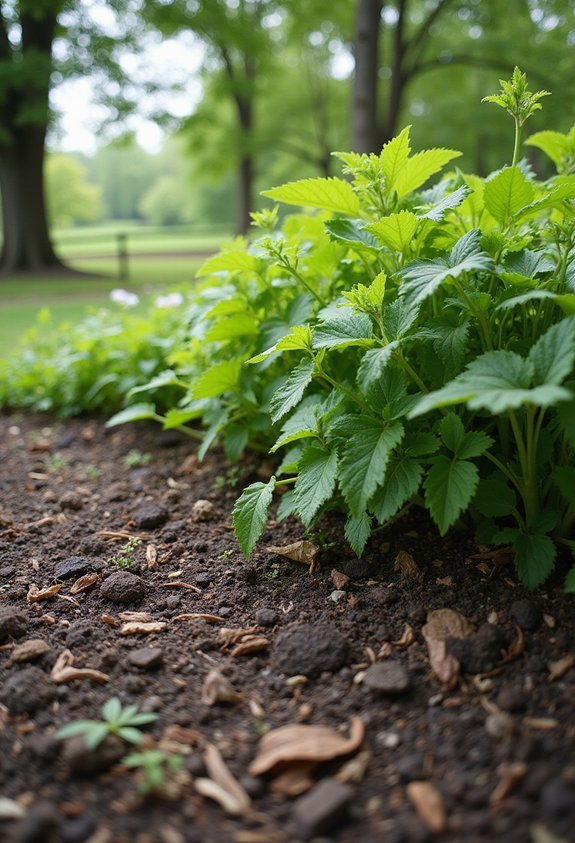
Now that you’ve got that compost cooking, it’s time to give your soil a real upgrade with organic amendments. Skip the chemical stuff—your dirt doesn’t need that junk. Instead, grab some aged manure, peat moss, or coconut coir and mix them into your garden beds. We’re talking about a 2-to-4-inch layer worked into the top 8 inches of soil. Your plants will literally eat this stuff up. Add some perlite for drainage so your roots don’t drown like I would in a swimming pool. These amendments break down slowly, feeding your garden season after season. Your vegetables will taste better, your flowers’ll bloom brighter, and honestly, your soil will smell like a fancy forest instead of a garbage dump.
Create Wildlife Habitats and Pollinator Gardens
Your backyard’s about to become the hottest nightclub in town—for bees, butterflies, and birds, anyway. Plant native flowers in clusters of three or more. Think purple coneflowers, orange zinnias, and yellow sunflowers. They’re basically an all-you-can-eat buffet for pollinators who’ll literally work for nectar.
Add a shallow water dish filled with pebbles. Insects need landing pads (even bugs appreciate good design). Position it near flowering plants so your new guests don’t have far to travel.
Skip the pesticides entirely. You’re inviting beneficial bugs, not poisoning them. Leave some “messy” areas too—dead wood and leaf piles aren’t lazy gardening, they’re five-star hotels for beetles and butterflies.
Your yard transforms into an ecosystem humming with life and purpose.
Replace Lawn With Permeable Hardscaping
While that pollinator paradise’s humming along nicely, here’s the thing about traditional lawns—they’re basically concrete in grass form, and rain just runs right off them like water off a duck’s back (except ducks actually like water). So here’s your mission: swap that thirsty green carpet for permeable hardscaping. Think porous pavers, gravel pathways, or recycled rubber stepping stones that actually let water soak through. You’re basically giving your soil a drink instead of creating a mini flood zone. These materials come in cool colors—warm grays, rusty reds, earthy browns—and they’ll handle foot traffic like champs. Plus, your water bill drops faster than your uncle at a family reunion. Win-win for your wallet and the planet.
Frequently Asked Questions
How Much Does Sustainable Backyard Landscaping Typically Cost to Implement?
You’ll typically spend $3,000 to $15,000 for sustainable backyard landscaping, depending on your yard’s size and project scope. You can start small with native plants and mulch, then expand as your budget allows. You’ll recoup costs through reduced water bills.
What Are the Best Native Plants for My Specific Climate Zone?
You’ll find the best native plants by checking your USDA hardiness zone online, then visiting local nurseries or your native plant society’s website. They’ll recommend species that thrive naturally in your region’s climate and soil conditions.
How Long Does It Take to See Environmental Benefits From These Changes?
You’ll notice immediate water conservation benefits within weeks of planting natives. Soil improvement and pollinator activity increase within months. Year two brings significant pest control advantages and reduced maintenance needs. Long-term ecosystem benefits develop over 2-3 years as your landscape matures.
Can I Gradually Transition My Yard or Must I Renovate Everything Immediately?
You can absolutely shift/move/transform gradually. Start by replacing one lawn section with native plants, adding a rain barrel, or installing a small composting system. Phased changes let you manage costs while you’re building your sustainable yard step by step.
Which Sustainable Practices Provide the Quickest Return on Investment for Homeowners?
You’ll see the quickest returns by installing rain barrels for water savings, planting native species that reduce maintenance costs, and mulching to decrease watering needs. These practices cut your utility bills immediately while boosting your property’s curb appeal.
Conclusion
You’ve got this! Your backyard’s about to become an eco-friendly powerhouse that’ll make Mother Nature proud. Native plants’ll do the heavy lifting while you kick back and enjoy the show. Rain barrels catch free water, composting turns your kitchen scraps into black gold, and those pollinator pals’ll visit constantly. You’re basically creating a tiny, sustainable paradise without breaking the bank or your back. Now go get ’em, eco-warrior!