
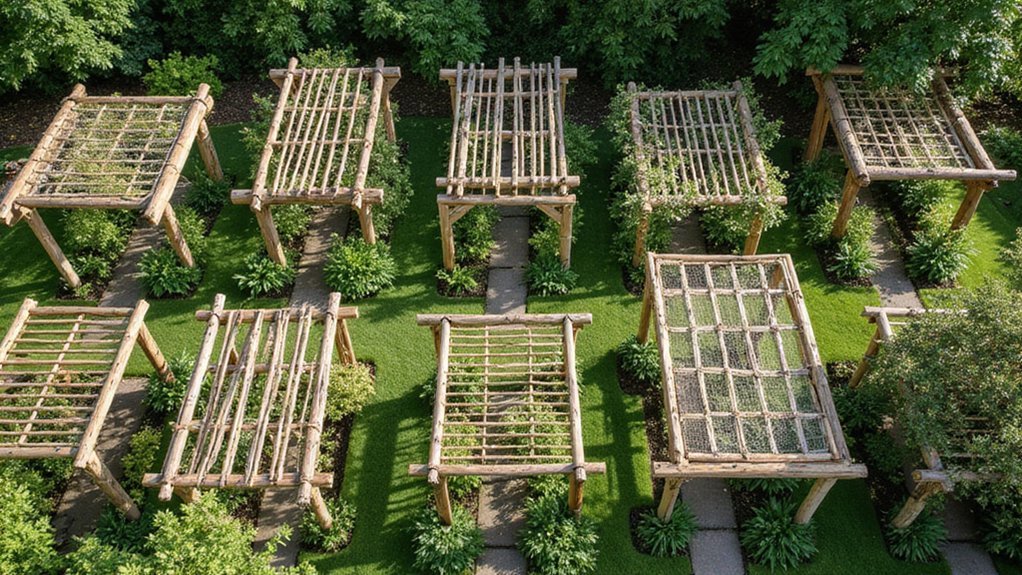
So you want a backyard shade spot that doesn’t make Mother Nature cringe? Great news—you can actually have a gorgeous pergola and keep your environmental conscience clean. Whether you’re dreaming of reclaimed wood beams, climbing vines doing the heavy lifting, or even solar panels soaking up rays, there’s a sustainable option that’ll fit your space perfectly. But here’s the thing—some choices are way smarter than others, and we’re about to show you exactly which ones won’t leave you sweating regrets.
Material Options: From Reclaimed Wood to Bamboo

What’s the secret to building a pergola that won’t make your wallet cry and won’t hurt Mother Earth’s feelings? You’ve gotta pick the right materials, my friend.
Reclaimed wood is basically nature’s recycling bin—literally. You’re grabbing old barn wood or salvaged beams (think 4x4s and 2x6s) that’ve already lived a life. They’re weathered, gorgeous, and frankly, way cooler than new stuff. They’ve got character and stories. Plus, you’re keeping wood out of landfills.
Then there’s bamboo. This stuff grows faster than your kids’ appetites. It’s super strong, naturally tan-colored, and sustainable as heck. Bamboo creates an airy, tropical vibe without guilt gnawing at your conscience.
Both options let you build something stunning while actually helping the planet. That’s what I call a win-win situation.
Sustainably Sourced Hardwood: Why Durability Matters
Now, while reclaimed wood and bamboo are fantastic choices, sustainably sourced hardwood is the real heavyweight champion of pergola materials—and here’s why it matters so much. You’re getting wood that’ll outlast your gardening phase by decades. Hardwoods like ipe and cumaru laugh at rot and insects—seriously, they’re basically pergola superheroes. Your 12-foot structure won’t need replacing after five years. Sure, they cost more upfront, but you’re not constantly patching things up. These dense, rich-colored woods develop gorgeous silver-gray patinas over time. And here’s the kicker: responsibly harvested hardwoods actually support forest conservation efforts. You’re building something beautiful while helping the planet. That’s what I call a win-win situation that won’t leave you sweating buckets.
Metal & Recycled Materials: The Industrial-Eco Hybrid
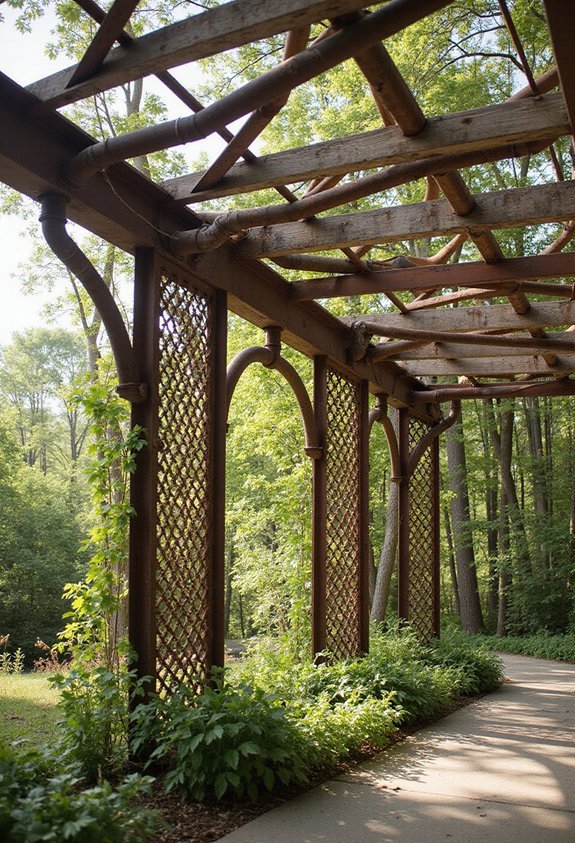
If you’re tired of the all-wood aesthetic and want something that screams modern cool, metal pergolas might just be your thing. You can use recycled steel beams and aluminum frames that won’t rot or warp. They’re basically indestructible, which means you won’t be crying over spilled rain damage next spring. Mix in reclaimed materials—old barn wood mixed with sleek black metal creates this awesome industrial-eco vibe that’s honestly pretty gorgeous. Your 10-by-12-foot pergola stays strong for decades while looking intentionally edgy. Plus, metal conducts heat differently than wood, so you’ll stay cooler on scorching days. It’s like giving your garden a leather jacket and a conscience at the same time.
Living Vines: How Plants Become Your Shade System
While metal pergolas are basically the superheroes of durability, there’s something magical about letting nature do the heavy lifting instead. You plant climbing vines—think clematis, jasmine, or grape vines—and they’ll grow up your pergola’s frame like they’re training for the Olympics. By summer, you’ve got a leafy canopy that actually breathes and adapts to sun and shade. Seriously, your plants work harder than you do on Mondays. Plus, these green buddies cool things down naturally. No electricity needed. Your pergola becomes a living, growing masterpiece that gets better each year. Insects and birds move in too, turning your backyard into a thriving ecosystem. Nature’s basically doing free air conditioning and throwing a party while you relax underneath.
Bamboo Pergolas: Fast-Growing Sustainability at Its Best

Bamboo’s basically nature’s cheat code for building a pergola that’ll make you feel like an environmental superhero. This stuff grows faster than your kids’ feet outgrowing shoes, reaching full height in just three to five years. You’re looking at a sturdy structure that’s naturally lightweight and gorgeous too.
The golden-tan color weathers beautifully over time, developing character like a good friend. Bamboo poles range from two to six inches in diameter, giving you flexibility for different designs. It’s stronger than you’d think, supporting climbing vines without breaking a sweat.
Plus, it’s renewable since bamboo regenerates without replanting. Your garden transforms into an eco-friendly oasis while you basically do nothing but sit back and admire your handiwork. That’s the dream right there.
Solar-Integrated Pergolas: Shade + Power Generation
You’ve got your bamboo pergola looking absolutely stunning, but here’s where things get seriously clever: slap some solar panels on top and you’re basically printing money while you nap in the shade. These bad boys convert sunlight into electricity, powering your outdoor lights, fans, and speakers without guilt. You’re literally soaking up rays and profits simultaneously. The panels sit at angles—usually around thirty degrees—catching maximum sun while still letting dappled light filter through. Your garden stays cool and shadowy below, perfect for sweaty afternoon relaxation. Plus, excess power feeds back into your home’s system, making your utility bill shrink faster than your courage in a cold pool. It’s shade with serious superpowers.
Permeable Foundations: Smart Installation for Soil Health
Now here’s the unsexy part that actually matters: what goes under your fancy pergola. Your soil’s basically holding its breath down there, and it needs to exhale. That’s where permeable foundations come in—they’re like giving your dirt permission to breathe and digest water properly.
Skip the concrete pad. Instead, use porous materials: permeable pavers, gravel, or recycled rubber. These let water soak through instead of creating puddles that’ll make your soil sadder than a plant without water (wait, that’s backwards). Install a 4-6 inch gravel base beneath your pergola footings. This prevents root rot and keeps beneficial microorganisms happy.
Your earthworms‘ll thank you. Seriously. They’re down there doing the real work, aerating and breaking down organic matter. Permeable foundations mean they can actually get stuff done instead of swimming in stagnant water like miserable tiny swimmers.
Modular Designs: Flexibility Without Waste
Most pergolas are basically giant puzzles that you’re stuck with forever, but modular designs? They’re like LEGO for grown-ups who actually care about the planet.
You can rearrange these bad boys whenever you want. Need extra shade in summer? Swap panels around. Want more sunlight in winter? Reconfigure without breaking a sweat or the environment.
Each section connects using simple clips or joints, so you’re not screwing up Mother Earth with permanent installations. The pieces come in standard sizes—think 4-by-4-foot sections—making swaps super easy.
When one part gets weathered after five years, you just replace that single module instead of ditching your entire pergola. Your wallet and the planet both do a happy dance. Talk about having your pergola and moving it too.
Choosing Climbing Plants for Your Pergola
A modular pergola‘s only as good as what you dress it up with, and that’s where climbing plants come in to save the day. You’ll want to pick vines that won’t murder your structure or drain your wallet. Clematis blooms purple and pink—absolutely gorgeous. Honeysuckle grows like it’s had too much coffee, spreading 15 feet easy. Ivy‘s the dependable friend who shows up every time, turning your pergola into a leafy fortress. Consider your climate first, though. Some plants thrive in shade, others need full sun like they’re solar panels. Check if they’re invasive before planting—nobody wants their pergola becoming a botanical villain. Mix fast growers with slow ones. This way, you’ll have coverage soon but won’t get completely swallowed by green chaos.
Low-Chemical Gardens: Building Maintenance Into Your Design
Once you’ve got your pergola dressed up in climbing plants, it’s time to think about keeping the whole setup thriving without turning into a chemical dumping ground. You’ll want to build smart maintenance straight into your design from the start. Space your plants about 18-24 inches apart so air flows freely and prevents disease. Add mulch around the base—it’s like a cozy blanket that keeps weeds down naturally. Install a drip irrigation system instead of splashing water everywhere like you’re giving your garden a sloppy kiss. Prune regularly to keep things healthy and prevent pest problems before they start. Hand-pick bugs when you spot them—it’s weirdly satisfying, honestly. Your future self will thank you for dodging the chemical rabbit hole.
Frequently Asked Questions
How Much Does an Eco-Friendly Pergola Cost Compared to Traditional Pergola Options?
You’ll typically spend 20-30% more on eco-friendly pergolas than traditional options. However, you’ll save money long-term through durability, reduced maintenance, and lower replacement costs. You’re investing in sustainable materials that’ll outlast conventional structures.
What Is the Average Lifespan of a Bamboo Pergola in Various Climates?
You’ll find that bamboo pergolas typically last 5-10 years in humid climates, 10-15 years in moderate conditions, and up to 20 years in dry regions. You can extend their lifespan considerably by applying protective sealants regularly and ensuring proper drainage.
Can I Install a Pergola Myself, or Do I Need Professional Help?
You can install a pergola yourself if you’ve got basic carpentry skills and the right tools. However, you’ll need professional help for complex designs, foundation work, or if you’re unsure about structural requirements and local building codes.
How Do I Winterize My Living Vine Pergola in Cold Climates?
You’ll need to prune back your vines before frost arrives, then wrap the structure with burlap for insulation. You should also drain irrigation systems, apply mulch around the base, and consider installing frost cloth to protect tender growth throughout winter.
What Permits or Regulations Apply to Building a Pergola in Residential Areas?
You’ll need to check your local building codes and zoning regulations before constructing your pergola. Most residential areas require permits for structures exceeding certain heights or setback distances. You should contact your municipal planning department to confirm specific requirements for your property.
Conclusion
You’ve got this! Building an eco-friendly pergola isn’t rocket science—it’s just smart outdoor living. Pick materials that won’t make Mother Nature cry, throw some climbing vines up there, and watch your garden transform. You’ll get shade, style, and bragging rights all rolled into one beautiful structure. Your backyard’s about to become the coolest hangout spot around. Now go forth and build something awesome!