
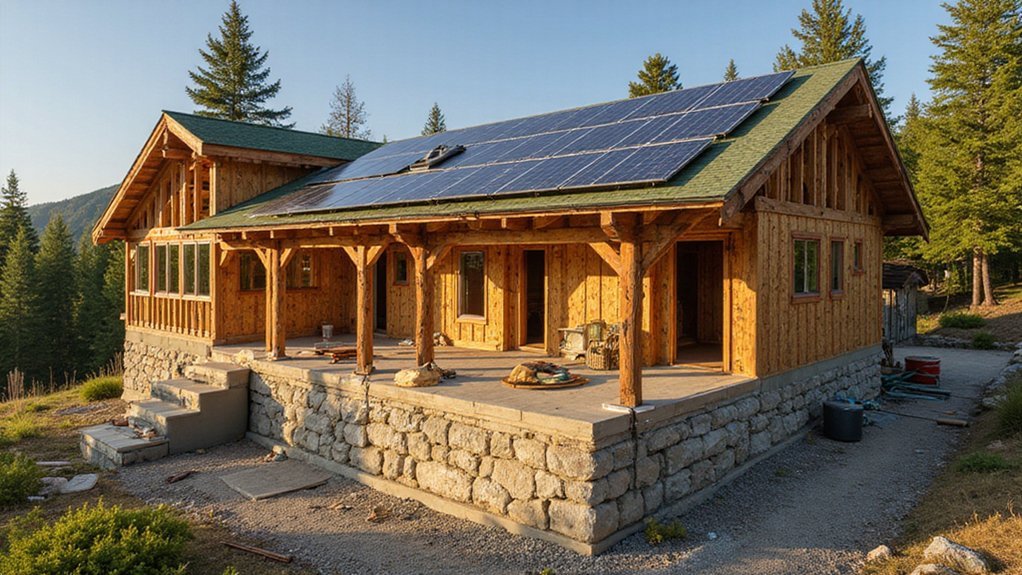
So you’re thinking about building a home that doesn’t make Mother Earth want to ground you? Smart move. Here’s the thing: sustainable building isn’t just about slapping some solar panels on your roof and calling it a day. It’s about creating a whole system that works together—from your walls’ insulation thickness to how water flows around your foundation. Want to know the secret that’ll actually save you money while saving the planet?
Passive House Design: The Foundation for Everything Else
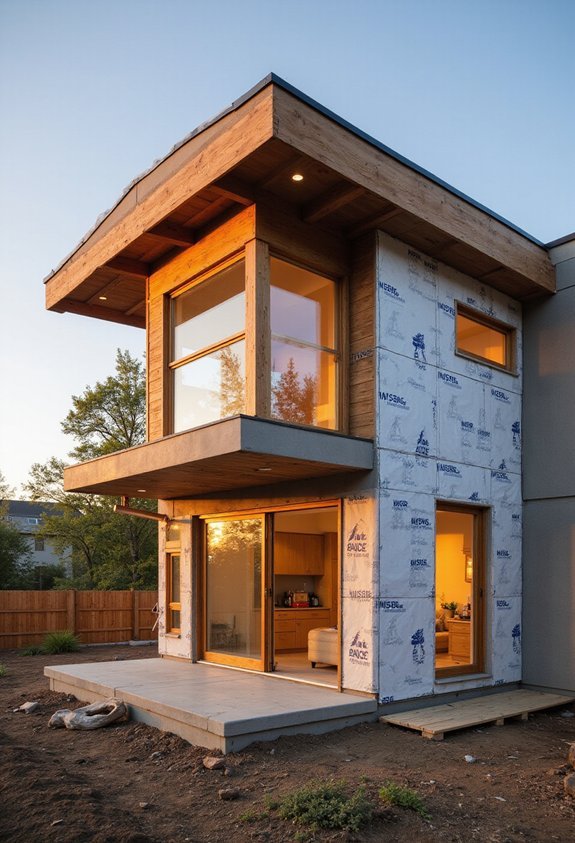
Before you even think about slapping solar panels on your roof or installing a fancy heat pump, you’ve got to nail the basics—and that’s where passive house design comes in. This approach means building super-insulated walls, usually 8-12 inches thick, that keep your home’s temperature stable like a cozy burrito. You’ll install triple-glazed windows facing south for free solar heat and minimal air leaks. The result? Your heating bills shrink faster than your jeans after Thanksgiving. Your home breathes through mechanical ventilation with heat recovery, so you’re not stuck with stale air or weird humidity. Basically, passive house design does the heavy lifting, making everything else you add—solar panels, efficient appliances—actually work hard instead of playing catch-up. It’s the smart foundation that’ll save you serious cash.
Energy-Efficient Insulation: Reducing Heating and Cooling Loads
Once you’ve got that passive house skeleton in place, it’s time to beef up your insulation game—because thin walls are basically just expensive air conditioning for your neighborhood. You’ll want at least 6-8 inches of quality insulation stuffed into those walls. Think of it like wearing a puffy winter coat instead of a t-shirt in January. Fiberglass batts, mineral wool, or spray foam all work, but they’re not created equal. You’re basically creating a thermal blanket that tells heat, “Nope, you’re not leaving this house.” Your heating and cooling systems will practically take vacations because they won’t work overtime anymore. That means lower energy bills and happier wallets. Insulation’s basically your home’s superhero cape, fighting temperature villains relentlessly.
High-Performance Windows: Thermal Control and Daylighting
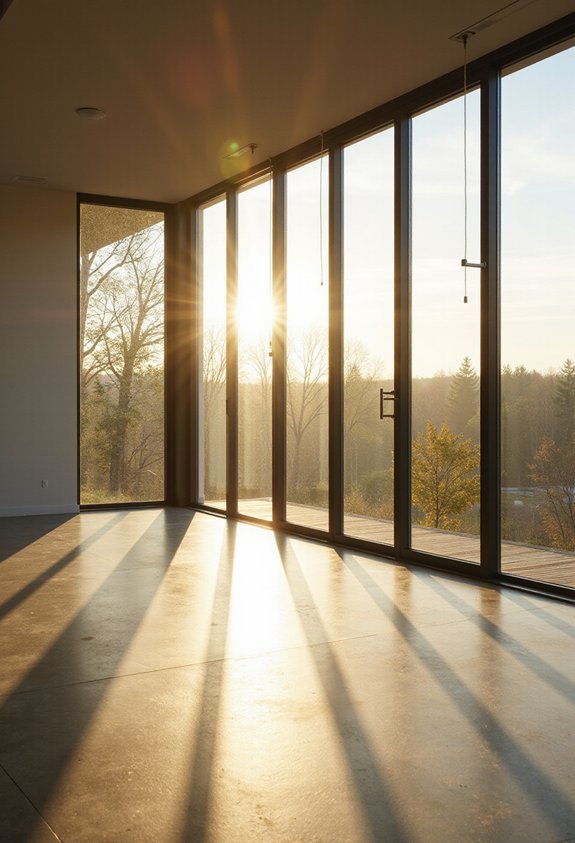
Now that your walls are wrapped up like a burrito in insulation, it’s time to talk about your windows—because they’re basically the weak link in your thermal armor. High-performance windows use triple-glazed glass with low-emissivity coatings that reflect heat back inside during winter. You’ll want frames filled with insulating foam, not hollow aluminum that conducts temperature like a conductor’s baton. These windows also maximize daylighting, reducing your reliance on artificial lights and cutting energy bills. Position them strategically on south-facing walls to capture free solar warmth. North-facing windows? Keep those smaller to minimize heat loss. The payoff’s real: better temperature control, less sweating in summer, warmer toes in winter, and sunlight flooding your spaces naturally.
Renewable Energy Systems: Solar, Heat Pumps, and Geothermal
Most sustainable homes need a power source that doesn’t involve burning stuff or crossing your fingers at the utility company. Solar panels on your roof catch sunlight and turn it into electricity. Heat pumps steal warmth from the air or ground and move it inside your home. They’re basically refrigerators running backwards, which is pretty wild. Geothermal systems dig deep underground where it’s always cool and stable. You’re tapping into Earth’s natural temperature, and that’s seriously smart. These three options reduce your carbon footprint dramatically. Solar works great in sunny places. Heat pumps handle heating and cooling. Geothermal costs more upfront but saves money long-term. Mix and match them based on your climate and budget. Your utility bills will shrink faster than your gym motivation in January.
Pairing Renewables With Battery Storage: Achieving Net-Zero Performance
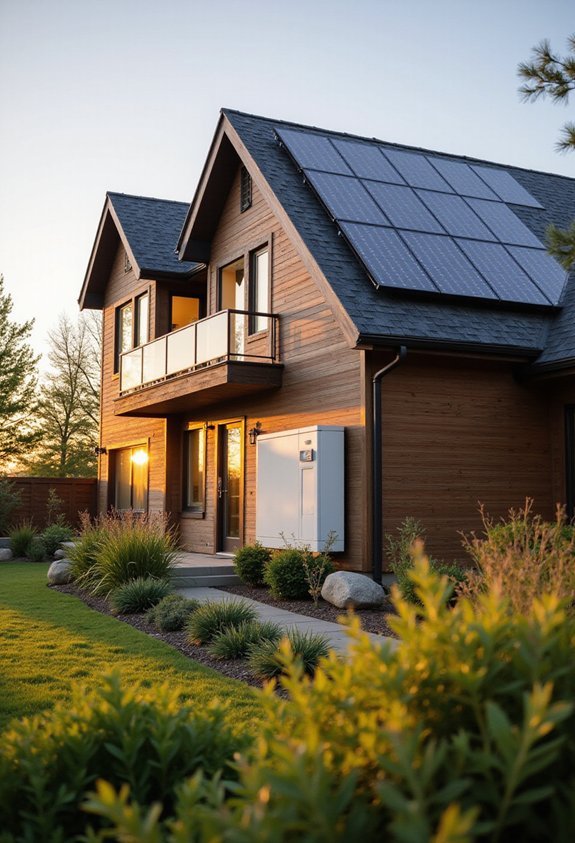
While your solar panels and heat pumps are doing great work, they’ve got a problem: the sun doesn’t always shine, and sometimes you need heat at 2 a.m. That’s where battery storage swoops in like a superhero in a cape.
You’ll install batteries—think giant metal boxes storing energy like squirrels hoard acorns—in your basement or garage. When your panels produce extra power on sunny days, batteries gulp it down. Then at night or during cloudy stretches, they release that stored energy back to your home.
This pairing achieves net-zero performance. You’re basically making your home energy-independent and telling the power company goodbye. Your system balances supply and demand, keeping everything running smoothly while you sleep soundly, knowing you’re winning at sustainability.
Sustainable Building Materials: Low-Impact Sourcing Without Compromise
You’ve built your net-zero energy system, and now it’s time to think about what you’re actually building *with*—because slapping regular drywall and concrete on your ultra-efficient home is like putting regular gas in a Tesla. Your materials matter just as much as your solar panels. Consider reclaimed wood for framing and flooring. It’s gorgeous, carbon-negative, and comes with character. Cork insulation is seriously good stuff. It’s renewable, squishy, and naturally fire-resistant. Recycled steel beams cost less than virgin steel while reducing mining waste. Hempcrete blocks are lightweight, breathable, and won’t make you regret your life choices. Skip the VOC-laden paints. Choose low-VOC options instead. Your lungs and the planet will high-five you.
Water Conservation Fixtures: Reducing Use Without Sacrifice
Water’s your next frontier, and here’s the thing—your fancy sustainable home won’t mean squat if it’s guzzling water like it’s going out of style. Let’s fix that.
Low-flow showerheads cut water use by 40% without turning your shower into a sad trickle. They’re chrome, sleek, and honestly? Your hair will survive. Dual-flush toilets let you choose between a half-flush for number one (we’ve all been there) and a full flush when needed. You’ll save thousands of gallons yearly.
Install aerators on bathroom sinks—tiny mesh screens that mix air with water. Nobody notices, but your water bill does. Upgrading to these fixtures costs less than you’d think, and you’re basically getting money back through lower bills. Win-win for your wallet and the planet.
Green Roofs and Living Walls: Insulation, Drainage, and Heat Reduction
Ever wonder why some roofs look like tiny gardens while others just sit there being boring and hot? Green roofs are your answer, friend. You’re basically growing plants on top of your house—and yes, it’s as cool as it sounds.
Here’s the magic: those plants and soil act like a blanket, keeping heat out in summer and warmth in during winter. Your air conditioning won’t work overtime sweating bullets. The layers also absorb rainwater, reducing drainage stress on your gutters. Living walls do similar tricks on vertical surfaces, adding insulation while looking Instagram-worthy.
You’ll need sturdy support (your roof must handle the weight), proper waterproofing, and plants that won’t throw a tantrum in your climate. The payoff? Lower energy bills and a home that actually breathes. Pretty neat, right?
Indoor Air Quality: Ventilation Strategies for High-Performance Homes
Since you’ve built an amazing green roof that looks like a tiny jungle, we’ve got to talk about what’s happening inside your house—and we’re not talking about your pet hamster. Your high-performance home needs serious ventilation, or you’ll basically be living in a sealed pickle jar. Installing a heat recovery ventilator (HRV) pulls stale air out while bringing fresh air in. Think of it as your house’s lungs working overtime. Open those windows when weather permits and use exhaust fans in bathrooms and kitchens. They’re lifesavers, literally. Air purifiers with HEPA filters catch dust and allergens before they settle on your furniture. You’ll breathe easier, and your nose will thank you. Fresh air beats stuffy air every single time.
Smart Home Monitoring: Tracking Energy Use in Real Time
Most of us have no clue where our electricity actually goes—it’s like money disappearing from your wallet, but for power. Smart home monitors fix that problem fast. You’ll install a small device on your main electrical panel (it’s less scary than it sounds). This gadget tracks every watt your house burns through, breaking it down by room and appliance. Your phone gets real-time data—literally watching your energy use happen. You’ll spot the energy vampires sucking power: that ancient refrigerator humming away, your heating system working overtime, phantom devices draining standby power. Armed with this knowledge, you’ll make smarter choices. Unplug that thing. Adjust your thermostat. Suddenly, your electric bill shrinks. It’s oddly satisfying watching those numbers drop.
Foundation and Flooring: Durable, Low-Impact Materials
You’ve got your energy-guzzling appliances figured out, but here’s the thing—all that power efficiency means nothing if your house is literally crumbling underneath you.
Your foundation and floors deserve serious attention. Consider recycled materials like reclaimed wood or cork, which look gorgeous and won’t destroy forests. Bamboo‘s another winner since it grows back faster than you can say “sustainable.” For concrete foundations, you’ll want low-carbon options that reduce environmental damage.
Durable flooring means fewer replacements down the road, which saves money and resources. Polished concrete floors? They’re practical and cool-looking. Stone or natural tile lasts decades without complaint.
Think of it this way: your home’s foundation is its backbone. Skip shortcuts here, and you’re literally throwing money away while Mother Earth weeps.
Green Landscaping: Native Plants and Water Management
What’s the point of building an eco-friendly house if your yard looks like a wasteland? Your landscaping matters big time. Plant native flowers and shrubs that actually belong in your region. They’ll thrive without constant babying and weird chemical fertilizers. You’ll save water, money, and your sanity.
Speaking of water, install a rain barrel to catch runoff from your roof. Those things collect hundreds of gallons per storm. Use that free water for thirsty plants during dry spells. Add mulch around plants in 2-3 inch layers. It keeps soil moist and stops weeds from crashing the party.
Create a small rain garden—a shallow dip where water naturally pools. Native plants there’ll soak it up happily. Your yard becomes a living, breathing ecosystem instead of a thirsty green desert demanding constant attention.
Construction Waste Reduction: Planning for Zero-Waste Builds
Building a sustainable home is great, but here’s the dirty truth: construction sites generate tons of actual dirt—and trash. You’re looking at dumpsters overflowing with wood scraps, drywall chunks, and packaging materials. It’s basically the construction equivalent of eating gas station nachos—messy and wasteful.
Here’s where you can actually make a difference. Plan ahead by ordering exact material quantities so you’re not buying extra stuff that ends up in landfills. Donate usable materials to local nonprofits instead of trashing them. Recycle metal, concrete, and wood through specialized facilities.
Partner with contractors who prioritize waste reduction and understand your zero-waste vision. Track everything leaving your site, and yes, that means actual paperwork. It sounds boring, but you’ll feel fantastic knowing you’ve reduced construction waste dramatically. Your future self will thank you.
Certifications Worth Pursuing: LEED, Passive House, Net-Zero
All that waste reduction paperwork? It’s paid off! Now you’re ready for the big certifications. LEED’s like the gold star of green building—it checks your energy use, water systems, and materials. You’ll get points for basically everything eco-friendly you do. Passive House is the overachiever option. It keeps your home so insulated and airtight that you’ll barely need heating or cooling. Your energy bills’ll make you laugh. Net-Zero homes produce as much energy as they consume, usually through solar panels on your roof. Think of it as your house working a day job and actually paying you back. These certifications aren’t just bragging rights either—they boost your home’s resale value and prove you’re serious about sustainability. Pick one or go for the triple crown!
Frequently Asked Questions
How Much More Expensive Is Sustainable Home Building Compared to Conventional Construction?
You’ll typically spend 5-10% more upfront for sustainable building, but you’ll recover costs through lower utility bills, tax incentives, and reduced maintenance. Your long-term savings and increased home value often offset the initial premium within 5-10 years.
What Is the Payback Period for Investing in Renewable Energy Systems and Efficiency Upgrades?
You’ll typically recover your renewable energy and efficiency upgrade investments within 5-10 years through reduced utility bills. Your exact payback period depends on your location’s climate, energy costs, system size, and available tax incentives or rebates you’re claiming.
Can Existing Homes Be Retrofitted With Passive House Design Principles and Sustainable Features?
Yes, you can retrofit existing homes with passive house principles and sustainable features. You’ll need to upgrade insulation, seal air leaks, install efficient windows, and improve ventilation. While challenging, you’ll greatly/considerably/substantially reduce your energy consumption and enhance comfort.
Which Sustainable Building Certifications Provide the Best Return on Investment for Homeowners?
You’ll find LEED and Passive House certifications deliver the strongest ROI. They’ll boost your home’s resale value, reduce energy costs substantially, and attract eco-conscious buyers willing to pay premiums. You’re investing in long-term savings and marketability.
How Do Local Building Codes and Permits Affect Sustainable Home Construction Timelines?
You’ll find that local building codes can substantially extend your project timeline. You’ll need permits approved before starting, and you’ll navigate inspections at multiple stages. Some jurisdictions don’t recognize newer sustainable materials, requiring you to obtain variances.
Conclusion
You’ve got this! Building sustainably isn’t as hard as it sounds—you’re basically making a cozy, efficient home that doesn’t drain your wallet or the planet. Stack these ideas together: super-insulated walls, fancy windows, solar panels, and smart storage. Your home’ll run itself almost. You’ll feel good, save money, and impress your friends. Plus, your carbon footprint shrinks faster than your energy bills. Win-win-win!