
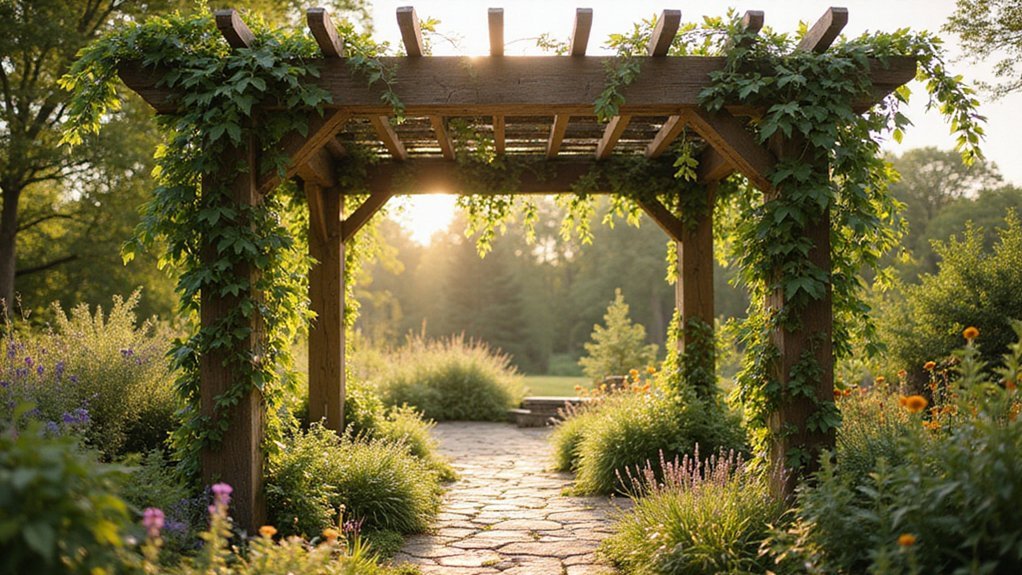
So you’re dreaming of a backyard oasis, but you’re worried about trashing the planet? Yeah, we get it—guilt’s a real buzzkill. Here’s the thing: you can build a killer pergola that actually helps Mother Earth instead of giving her indigestion. From reclaimed wood to sneaky solar panels, your outdoor space can look amazing and feel genuinely good. Want to know which materials won’t make you lose sleep?
Track Your Environmental Impact: See How Your Choices Matter
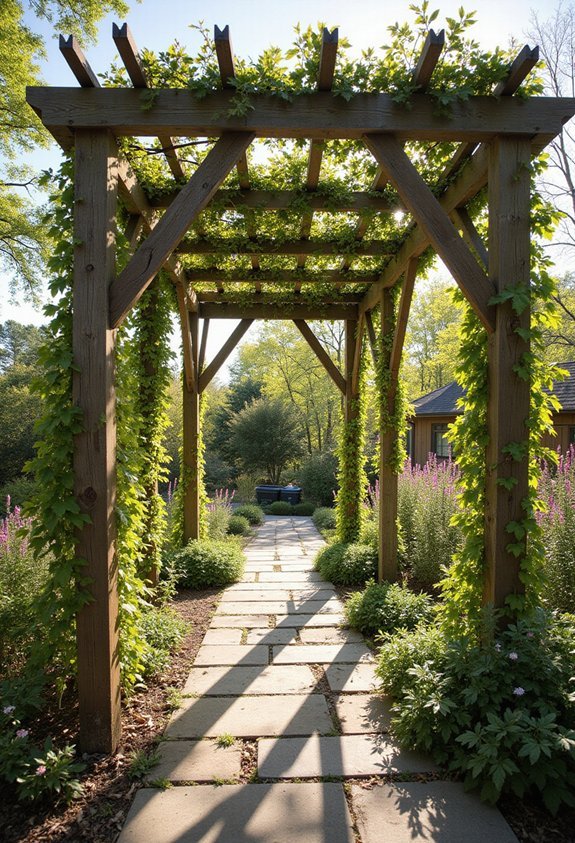
You’ve probably never thought about your pergola’s carbon footprint—and honestly, neither had we until we realized how much our outdoor choices actually matter. Here’s the thing: tracking your impact’s actually pretty fun. Start by noting where your materials came from. Did you buy recycled aluminum or new mahogany shipped from across the planet? That matters big time. Calculate how many trees your wooden pergola saved by choosing reclaimed wood instead. Measure your shade coverage too—a 10-by-12-foot pergola reduces cooling costs, which cuts energy use. Document everything. Take photos. Write down dates. You’ll feel like a environmental detective, minus the trench coat and unfortunate coffee addiction. Your choices genuinely shape Earth’s future. That’s worth celebrating.
Reclaimed Wood: Giving New Life to Salvaged Materials
Reclaimed wood is basically a time machine for your pergola—and it’s way cooler than new stuff. You’re literally building with history. Those weathered barn beams and salvaged fence planks? They’ve got character that money can’t buy. Plus, you’re keeping old wood out of landfills, which is pretty awesome.
Finding reclaimed materials takes some hunting, but it’s like treasure hunting for your backyard. Check local salvage yards and demolition sites. You might score gorgeous 8-inch-wide planks with that perfect silvery-gray patina. The wood’s already aged, so you skip years of waiting.
Your pergola becomes this beautiful mashup of old-meets-new. It tells a story while you’re sipping lemonade underneath. Mother Nature approves, and honestly, your neighbors will be jealous.
Recycled Metal Frames: Durable, Low-Impact Structures
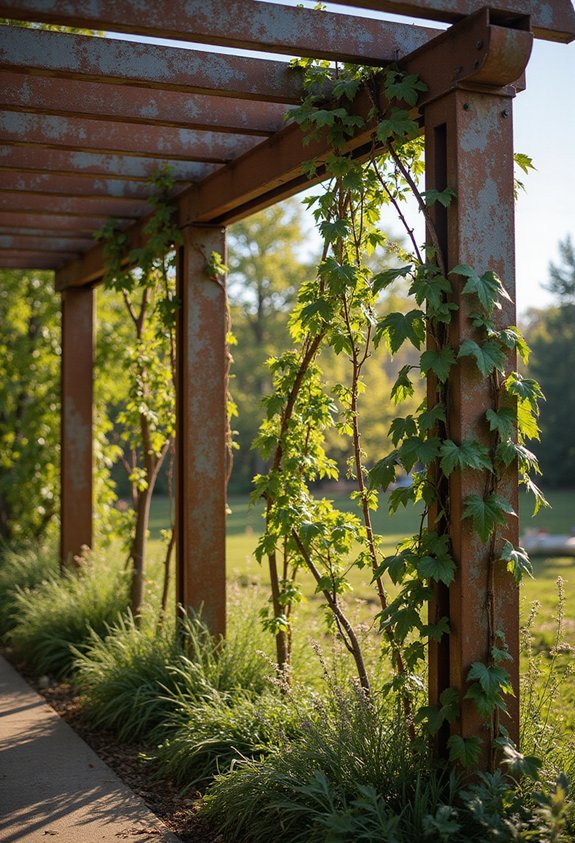
Most metal pergolas start their lives doing something completely different—maybe holding up old factories or supporting highway signs—but here’s the thing: they’re absolute tanks when it comes to durability. You’re basically getting industrial-strength protection that’ll outlast your garden gnome collection by decades.
These recycled steel or aluminum frames don’t rust like new metal does. They’ve already survived the hard stuff. You can paint them sleek black, weathered bronze, or even that trendy rust-orange if you’re feeling bold. They’re lightweight enough to install without hiring your entire friend group, yet strong enough to support vines without breaking a sweat.
The best part? Zero guilt. You’re rescuing metal from landfills while building something gorgeous. That’s what I call a win-win situation that actually sticks around.
Bamboo Pergolas: Fast-Growing and Renewable
While recycled metal’s got serious staying power, bamboo’s got something even cooler going for it: it grows back faster than your beard on vacation. You’ll love that bamboo shoots up about three feet yearly, so you’re basically planting instant shade. It’s also renewable—no guilt trips here. Your bamboo pergola won’t rot like regular wood does, and it’ll look gorgeous with that natural golden-tan color gleaming in sunlight. Plus, it’s lightweight, so installation’s way easier than wrestling metal frames around your yard. Bamboo’s naturally pest-resistant too, which means fewer creepy crawlies setting up shop overhead. Just note that untreated bamboo needs occasional sealing to handle weather like a champ. Your patio’s about to become seriously sustainable and seriously impressive.
Eco-Friendly Composite Materials: Durability Meets Sustainability
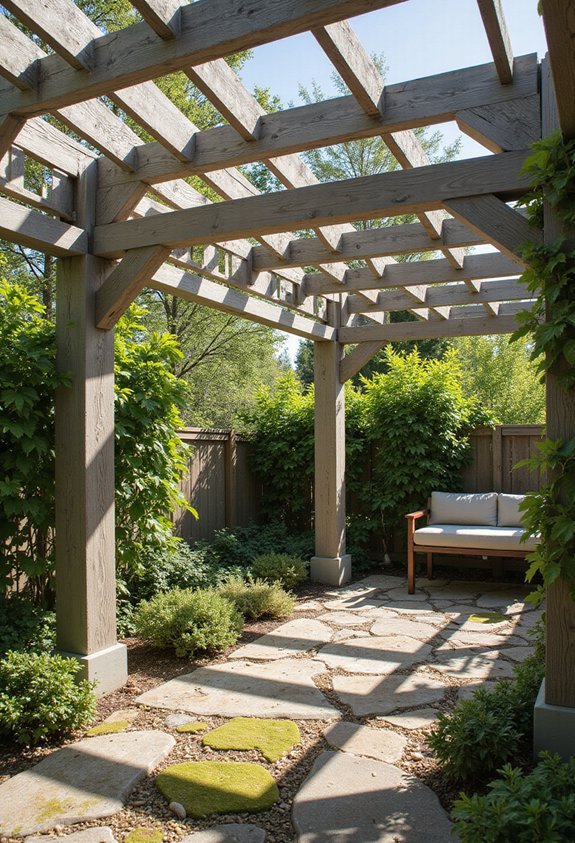
If you’re tired of picking splinters out of your fingers or watching metal rust like it’s got a personal vendetta against your yard, composite materials might just be your pergola soulmate.
These clever blends of wood fibers and plastic won’t rot, splinter, or need constant babying. You’ll skip the annual staining circus and endless repairs. Composite pergolas laugh in the face of rain, sun, and bugs. They’re built tough and stick around for decades without throwing tantrums.
Sure, they cost more upfront. But you’re basically paying now or sweating like a gym class later. Colors stay vibrant without fading into sad, washed-out versions of themselves. Installation’s straightforward too—no special carpentry degrees required. Your outdoor space deserves something low-maintenance and genuinely green.
Native Plants for Your Pergola: Support Local Wildlife
Your pergola’s about to become the hottest real estate in your yard—and we’re talking about for the bugs and birds, not just you. Plant native vines and flowers, and you’ll basically turn your structure into an all-you-can-eat buffet. Butterflies dig native milkweed. Hummingbirds can’t resist native honeysuckle. Bees? They’re throwing parties around native wildflowers.
Here’s the beauty: native plants are practically lazy—they love your local climate and don’t need constant babying. Plant them 8-12 inches apart around your pergola’s base. Within weeks, you’ll spot caterpillars, beetles, and chirping songbirds. Your yard transforms from a boring green space into a wildlife hotspot. Plus, you’re basically running a free nature documentary in your backyard. That’s pretty cool, honestly.
Angle and Plant Your Pergola to Maximize Summer Shade
Most folks don’t realize that a pergola’s angle can mean the difference between lounging in blissful shade and sweating like you’re stuck in an oven. You’ll want to angle your structure about 15 to 20 degrees toward the south. This simple trick captures that gorgeous summer sun while blocking the hottest rays. Plant climbing vines like clematis or honeysuckle on the south-facing side. They’ll grow thick and leafy by July, creating natural cooling magic. Your east and west sides? Plant faster-growing varieties there. By midsummer, you’re basically sitting in a green fort. Add some pale green or white flowering plants for extra reflection. Your friends’ll be begging for invites once they realize you’ve cracked the shade code.
Rainwater Harvesting for Your Pergola
Once you’ve got your shade situation locked down, here’s the thing—all those climbing vines you planted are gonna need water, and lots of it. Enter rainwater harvesting, your wallet’s new best friend. Install gutters along your pergola’s roof edges and connect them to a downspout leading to a rain barrel. A 55-gallon barrel costs maybe thirty bucks and collects serious H₂O during storms. Position it where gravity helps you water those thirsty plants without your back screaming. Your vines’ll drink like they’re at a desert oasis, and you’ll slash your water bill faster than you can say “sustainable living.” Plus, you’re basically stealing water from the sky legally. That’s pretty rad.
Permeable Flooring Under Your Eco-Friendly Pergola
Here’s the thing about what sits under your pergola—it matters way more than you’d think. Most folks pour concrete and call it a day. Big mistake! Permeable flooring actually lets water sink through instead of pooling like a sad puddle. You’re basically giving the ground a chance to breathe (yes, dirt needs oxygen too). Consider porous pavers, gravel, or recycled rubber mats. They’re eco-friendly, affordable, and way better for drainage. Plus, they look fantastic in natural tan or gray tones. Rain doesn’t sit around causing mosquito parties anymore. Your pergola becomes a genuinely sustainable zone where water flows downward, plants stay happy, and you don’t slip around like a penguin on ice. Win-win-win!
Green Roofs: Grow Plants Overhead for Extra Benefits
Imagine plants actually growing on top of your pergola instead of just hanging around underneath like they’re waiting for something to happen. You can totally do this with a green roof! Layer shallow soil (about 4-6 inches) across sturdy beams and add drought-tolerant plants like sedums. They’re basically the couch potatoes of the plant world—super low-maintenance and forgiving. Your pergola becomes a living, breathing masterpiece that filters rainwater, reduces heat, and attracts pollinators. Plus, you’ll feel like a gardening genius without actually trying hard. The lush green overhead creates natural shade and oxygen production. It’s like having nature’s air purifier right above your head, minus the weird noises. Your yard transforms into an eco-warrior’s dream space.
Solar Panels: Generate Power While Providing Shade
While you’re basking in the shade of your eco-friendly pergola, why not let those same beams do double duty and generate electricity? Solar panels mounted across the top transform sunlight into power for your outdoor lights, fans, or even your phone charger. You’ll feel like a genius watching those black panels soak up rays while you’re down there sweating like a couch potato at gym class. The best part? You’re literally powering your backyard without breaking a sweat—well, maybe a little sweat. These panels work year-round, even on cloudy days, though they’re definitely happier when sunshine’s involved. Install them at a slight angle for maximum efficiency, and you’ve got yourself a shade structure that pays rent through clean energy. Pretty bright idea, right?
Wildlife-Friendly Design: Create Habitat While You Relax
Your pergola can become a five-star hotel for butterflies, birds, and bees—no tiny mints on pillows required. Plant native flowers around your structure’s base, and you’ve basically created an all-you-can-eat buffet. Think purple coneflowers, black-eyed Susans, and orange zinnias. They’re colorful, they’re tasty, and they won’t judge your gardening skills.
Add a shallow water dish near the pergola’s corner. Birds need drinks too, and honestly, watching them splash around beats most streaming services.
Install a birdhouse on one side, positioning it about 5-6 feet high. Stack some branches underneath for shelter. You’re not just relaxing under shade anymore—you’re hosting nature’s greatest reality show. Your backyard becomes an ecosystem, and you’re basically a wildlife influencer now. That’s pretty neat.
Sustainable Plants That Thrive With Minimal Care
Once you’ve got your wildlife guests happily munching and splashing around, it’s time to think about the plants themselves—specifically, ones that don’t require you to baby them constantly. Sedums are your new best friends. These stubby little succulents store water like tiny green camels, so they basically laugh at drought. Lavender throws purple blooms everywhere and smells fantastic without demanding much. Native grasses sway gracefully and need zilch fertilizer. Climbing clematis vines cover your pergola posts with gorgeous flowers while asking very little from you. Honestly, these plants thrive on neglect. You’ll feel less guilty about forgetting to water them. Pair drought-lovers together, and your pergola becomes a low-maintenance paradise that actually looks intentional instead of accidentally abandoned.
Build Your Own Sustainable Pergola on a Budget
So you’ve planted all these gorgeous low-maintenance buddies, and now you’re probably wondering how to actually build the structure they’ll climb on without selling a kidney. Good news: you don’t need fancy materials. Grab some reclaimed wood pallets, sturdy 4×4 posts, and basic hardware from your local discount store. Dig four holes about two feet deep, set your posts in concrete, and attach horizontal beams. Boom—instant pergola skeleton. Add lattice panels across the top using affordable bamboo strips or recycled wood. Paint everything with eco-friendly stain to protect against weather. Your total investment? Probably less than two hundred bucks. Your plants? Absolutely thrilled. Your wallet? Still intact and ready for other life decisions.
Frequently Asked Questions
How Long Do Eco-Friendly Pergolas Typically Last Compared to Traditional Materials?
You’ll find that eco-friendly pergolas typically last 15-20 years, matching or exceeding traditional wood structures. They’re more resistant to rot, insects, and weather damage, so you won’t need constant maintenance. Your investment pays off through durability and longevity.
What Permits or Regulations Apply to Installing a Pergola in Residential Areas?
You’ll need to check your local building codes and zoning regulations before installing a pergola. Most areas require permits for structures over certain heights or sizes. You should contact your city’s planning department to confirm setback requirements and obtain necessary approvals.
Can I Retrofit an Existing Pergola With Sustainable Upgrades and Features?
Yes, you can retrofit your existing pergola with sustainable upgrades. You’ll want to add solar panels, install rainwater collection systems, apply eco-friendly stains, incorporate climbing plants, and upgrade to LED lighting for maximum environmental benefits.
What Maintenance Schedule Is Needed for Different Eco-Friendly Pergola Materials Annually?
You’ll need to inspect bamboo quarterly for splits, clean composite materials twice yearly, and treat reclaimed wood annually with eco-friendly sealant. Cedar requires yearly staining, while metal pergolas need spring touch-ups to prevent rust damage.
How Much Does Building an Eco-Friendly Pergola Cost Versus Conventional Options?
You’ll typically spend 20-40% more upfront for eco-friendly pergolas using recycled materials or sustainable wood. However, you’ll save greatly/vastly/tremendously on maintenance costs and replacements over time, making them more economical long-term than conventional options.
Conclusion
You’ve got this! Building an eco-friendly pergola isn’t rocket science—it’s actually pretty fun. You’re saving the planet while creating your own awesome outdoor hangout spot. Whether you pick reclaimed wood, bamboo, or recycled metal, you’re making choices that matter. Plus, you’ll have the coolest shade structure on your block. Your future self (and Mother Earth) will totally thank you for going green!