
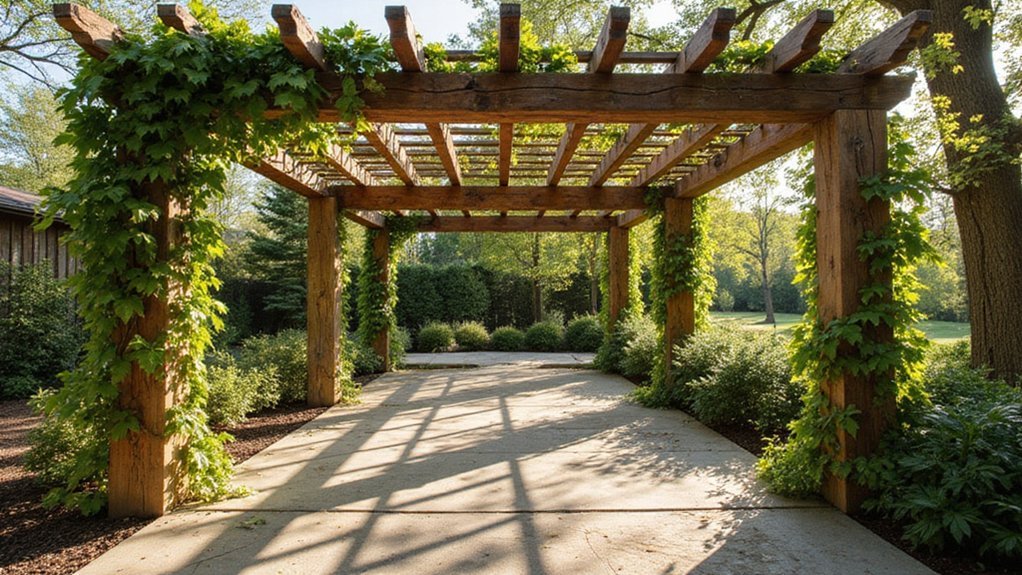
You’ve probably noticed that wooden pergolas look amazing draped in green vines and dappled sunlight, right? But here’s the thing: not all wood is created equal. Some pergolas rot faster than last week’s lettuce, while others last decades without breaking a sweat. The real question isn’t just whether your pergola looks good—it’s whether it’s actually good for the planet. So which wood choices actually make a difference?
Why Sustainable Wood Matters for Your Pergola
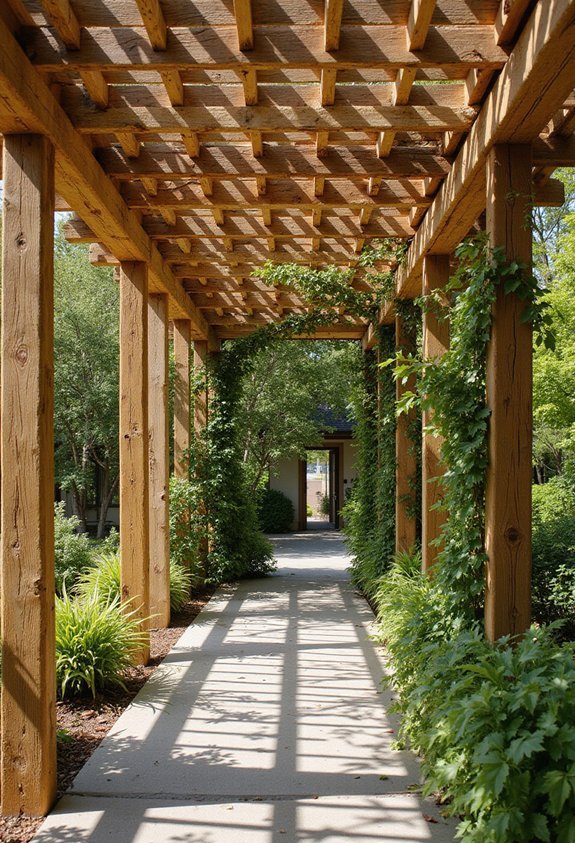
When you’re building a pergola that’ll actually last more than a season or two, the wood you pick makes all the difference—and we’re not just talking about avoiding splinters in awkward places.
Sustainable wood means your structure won’t rot into a sad, droopy mess after three rainy springs. It resists bugs, weather, and time itself. You’re basically choosing between wood that’ll stick around and wood that’ll turn into expensive mulch.
Eco-friendly options like FSC-certified cedar or reclaimed timber keep forests standing while protecting your backyard investment. They’re stronger, prettier, and won’t make Mother Nature glare at you during backyard parties.
Your future self—the one not replacing rotted beams—will thank you profusely.
Sustainable Wood Choices: FSC-Certified vs. Reclaimed
So you’ve decided sustainable wood is the way to go—smart move—and now comes the fun part: picking between FSC-certified fresh timber and reclaimed wood that’s already lived a whole other life.
FSC-certified wood comes from responsibly managed forests. You’re basically getting permission slip vibes—proof that trees weren’t bulldozed down willy-nilly. It’s fresh, predictable, and honestly? Less likely to harbor creepy surprises like rusty nails.
Reclaimed wood’s the cool vintage option. That weathered gray patina? Pure character. You’re upcycling 2×6 beams from old barns, giving them second acts in your backyard. Plus, you’re keeping stuff out of landfills. The downside: it’s pricier and sometimes stubbornly warped.
Pick FSC-certified for straightforward building. Choose reclaimed for jaw-dropping aesthetics and serious eco-cred.
Best Sustainable Wood Species for Pergolas
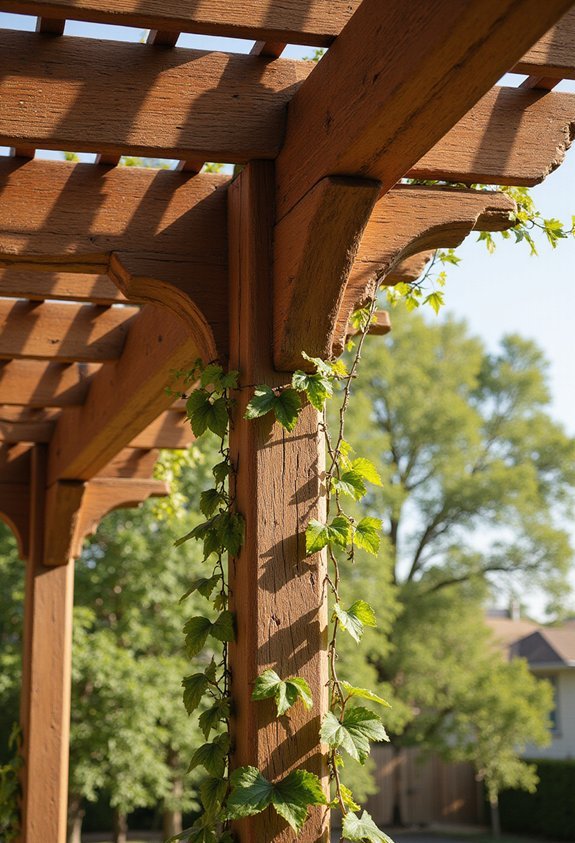
Now that you’ve picked your wood source, let’s talk species—because not all trees are created equal when it comes to hanging out in your backyard for the next decade or two. Ipe wood is basically nature’s superhero. It’s crazy dense, won’t rot, and laughs at bugs. Teak’s another winner—golden-brown and gorgeous, but your wallet might cry. Cedar’s the friendly choice. It’s soft, smells amazing, and resists decay naturally. Cumaru works too. It’s durable, affordable, and has this rich chocolate color that’d make any pergola jealous. Oak? Skip it unless you enjoy replacing wood every five years. The real trick? Pick species that grow fast and replenish themselves. Your future self—and the planet—will thank you.
Build It Once: Design Choices That Last 40+ Years
Why do some pergolas look brand-new after four decades while others crumble faster than a cookie in milk? The secret’s simple: you’ve gotta build it right the first time.
Choose posts that’re at least 6×6 inches. They’ll handle Mother Nature’s mood swings better than skinny toothpicks. Install them 3 feet deep into the ground—seriously, don’t skimp here. Your future self will thank you.
Pick wood that naturally resists rot, like cedar or redwood. These bad boys laugh at termites and moisture like they’re bad jokes at a dinner party.
Add proper drainage around those posts. Water sitting around is like leaving gym clothes in your car—nobody wants that smell.
Paint or seal everything every three years. Yeah, it’s annoying, but your pergola’ll still be standing when you’re not.
What’s the Real Carbon Cost of Your Wood?
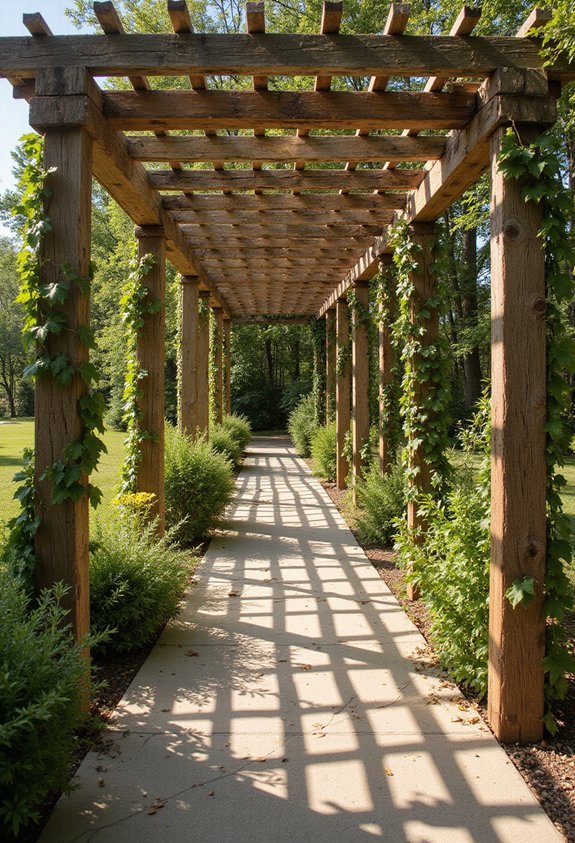
Before you pat yourself on the back for picking that gorgeous cedar pergola, let’s talk about what went down to get it to your backyard—and I’m not just talking about the delivery truck.
Your wood traveled. Maybe thousands of miles. Trees got chopped down, processed, shipped across oceans, and trucked to your place. That’s a lot of carbon emissions happening behind the scenes.
Here’s the thing: not all wood is created equal. Locally sourced wood? Way better. Tropical hardwoods shipped from far away? Not so much. Cedar’s pretty popular, but where’d it come from?
Check your supplier’s story. Ask questions. Some companies actually measure their carbon footprint and share it. That’s the kind of transparency you want.
Your pergola can still be eco-friendly. Just know the real cost first.
Eco-Friendly Wood Finishes for Sustainable Pergolas
So you’ve got your sustainably sourced wood all picked out—nice work—but here’s where a lot of folks drop the ball: they slap some toxic finish on it and basically undo all that eco-friendly goodness.
Skip the gnarly chemical stains that’ll make your deck smell like a paint factory exploded. Instead, grab water-based finishes or natural oils like tung oil. They’re totally non-toxic and won’t off-gas like your uncle at Thanksgiving dinner.
Plant-based sealers work great too and actually let your wood breathe. Your pergola stays protected without the environmental guilt trip.
Natural finishes might need reapplication every couple years, but that’s honestly fine. You’re building something that lasts while keeping Mother Earth happy. Win-win, friend.
Pergola Styles That Maximize Shade and Minimize Waste
Now that your wood’s looking fresh and eco-friendly, let’s talk about the actual shape and design of your pergola—because honestly, you can’t just throw together some random beams and call it a day. You want maximum shade without wasting precious wood, right?
Try a louvered design. Those angled slats rotate, so you control exactly how much sun sneaks through. You’ll use fewer boards and still get serious shade coverage. It’s basically the pergola equivalent of sunglasses.
Alternatively, go lattice-heavy on the south side and open on the north. This smart positioning maximizes shade where you actually sit and minimizes material everywhere else. Your wallet and the planet both win here.
DIY vs. Hire: Which Has Lower Environmental Impact?
You’ve got to think beyond just the cash you’re spending. Going DIY means you’re not paying for a contractor’s gas-guzzling truck to show up at your door. But here’s the thing: if you’re making mistakes and rebuilding that 12-foot pergola twice, you’re wasting wood and your sanity. Hiring a pro who knows what they’re doing gets it right the first time, cutting down on scrap materials. They’ve also got efficient tools and experience that saves resources. The real winner? It depends on your skills, honestly. A confident builder? Go DIY and feel smug. Unsure about your carpentry? Hire someone local to minimize transportation emissions. Either way, you’re keeping that pergola out of landfills, and that’s what matters most.
Sustainable Design: Growing Plants on Your Pergola
When you turn your pergola into a living, breathing garden, you’re basically creating nature’s air conditioner and your own personal jungle gym. Climbing vines like clematis and jasmine’ll transform those wooden beams into leafy highways. Plant them 12 inches from the base, and they’ll scramble upward like they’re late for work.
Hanging baskets stuffed with petunias or trailing ivy add pops of color overhead. Your pergola becomes a shaded oasis that actually photosynthesizes—talk about multitasking! Hanging plants also keep bugs from invading your personal space, which beats any bug spray.
Water regularly during hot months. The dense foliage creates cooler microclimates underneath, reducing your AC dependency. You’ll breathe easier knowing your garden’s doing the heavy lifting. Plus, you get bragging rights about growing actual food or flowers instead of just dust bunnies.
Sustainable Pergola Care: Maintenance Tips
All those gorgeous climbing vines and hanging baskets won’t stay gorgeous on their own—they need some TLC to keep thriving. You’ll want to inspect your wooden pergola monthly for rot, especially in shady spots where moisture loves to hang out like an unwelcome houseguest. Check those vines too—they’re basically pergola vampires, slowly draining your structure’s life force if left unchecked. Prune back aggressive growers every spring, or they’ll take over like your uncle at Thanksgiving. Apply eco-friendly wood sealant every two to three years to protect against weathering. Water your plants deeply but less frequently to encourage strong roots. Remove dead leaves promptly before they become pest condos. Your future self will thank you for staying on top of maintenance instead of frantically googling “why’s my pergola collapsing?”
Finding Affordable FSC-Certified and Reclaimed Wood in Your Region
Building an eco-friendly pergola doesn’t mean you’ve got to raid your retirement account. Check out local reclaimed wood suppliers and salvage yards first—they’re goldmines of character and savings. You’ll find weathered beams, old barn wood, and funky vintage pieces that cost way less than new lumber. FSC-certified wood comes from responsibly managed forests, so you’re not making Mother Nature hold her breath. Hunt for it at specialty lumber yards or online retailers offering regional shipping. Call around to construction sites demolishing old structures; contractors sometimes practically give away materials. Community Facebook groups and Craigslist hide treasure too. Yes, you’ll spend time hunting instead of money, but your wallet and the planet will both thank you. That’s what I call a win-win situation.
Modern Minimalist Designs for Eco-Conscious Aesthetics
The magic’s in restraint. A natural stain or weathered gray finish lets the wood breathe without screaming for attention. Position it where it frames your view, not competes with it. Keep sightlines open and uncluttered—basically, don’t cram it full of dangly things.
This approach wastes nothing, costs less, and honestly? It looks way cooler. Your minimalist pergola proves that sustainability and style aren’t mutually exclusive. They’re basically the dynamic duo of eco-conscious design.
Design a Pergola That Attracts Pollinators
While you’ve been busy building the perfect minimalist pergola, you’ve basically ignored your garden’s tiniest (and hungriest) visitors. Let’s fix that! Plant native flowers around your pergola’s base—think purple coneflowers and orange zinnias. Bees go absolutely bananas for bright colors. Space plants 12-18 inches apart so pollinators can actually land without bumping into each other. Add a shallow water dish with pebbles; butterflies need drinking fountains too. Skip the pesticides—they’re basically poison for your pollinator pals. Vining plants like clematis or honeysuckle work great on pergola sides, creating natural highways for butterflies. Plant in clusters of three or five for maximum visibility. Your garden will buzz with activity, literally. Plus, more pollinators mean better fruit and veggie production. Win-win!
Make Your Pergola Project Carbon Neutral
Once you’ve built your pollinator paradise, here’s the thing—you’ll want to make sure your pergola project didn’t just help bees while hurting the planet. So let’s talk carbon offsets, friend.
Your wooden structure’s got embedded carbon from harvesting and transport. But don’t sweat it—you can totally balance that out. Plant native trees nearby. They’ll absorb CO2 like they’re on a mission. Every tree removes about 48 pounds annually. Pretty solid.
Use reclaimed wood if you’re starting over. It’s basically recycling with style. Skip the power tools when possible and go manual—your arms’ll thank you later, and you’ll emit zero fumes.
Compost your wood scraps. Watch them transform into garden gold while reducing methane in landfills. Your pergola becomes genuinely green, not just literally wooden.
Frequently Asked Questions
How Do Sustainable Wooden Pergolas Compare in Cost to Traditional Vinyl or Metal Alternatives?
You’ll find sustainable wooden pergolas typically cost less upfront than vinyl alternatives, though they’re comparable to metal options. However, you’ll invest more in maintenance over time since you’ll need regular sealing and staining to preserve durability.
Can I Install a Sustainable Wooden Pergola Myself Without Professional Carpentry Experience?
You can install a sustainable wooden pergola yourself if you’re willing to learn. Start with beginner-friendly kits, follow detailed instructions carefully, and don’t hesitate to hire professionals for complex structural work to guarantee safety and durability.
What Permits or Regulations Apply to Building Pergolas in Residential Neighborhoods?
You’ll need to check with your local building department about setback requirements, height restrictions, and property line distances. Most neighborhoods require permits for permanent structures, so you’ll submit plans showing dimensions and materials before construction begins.
How Often Should I Refinish or Treat My Sustainable Wooden Pergola?
You should refinish your wooden pergola every 2-3 years, depending on your climate and wood type. If you’re using sustainably sourced hardwoods, you’ll need less frequent treatment. Always inspect annually for damage or weathering signs.
Which Sustainable Wood Species Resists Pest Damage and Rot Most Effectively?
You’ll find that cedar and redwood naturally resist rot and pest damage best. They’re your top choices for sustainable pergolas. Alternatively, you can consider tropical hardwoods like ipe or cumaru, though they’re pricier and less eco-friendly overall.
Conclusion
You’ve got this! Building a sustainable pergola isn’t rocket science—it’s just smart choices that’ll make your backyard look amazing for decades. Pick FSC-certified or reclaimed wood, plant some climbing vines, and boom—you’re basically a environmental hero with a killer outdoor hangout. Your future self (and the planet) will thank you. Now go forth and build something beautiful that won’t rot away in five years!