
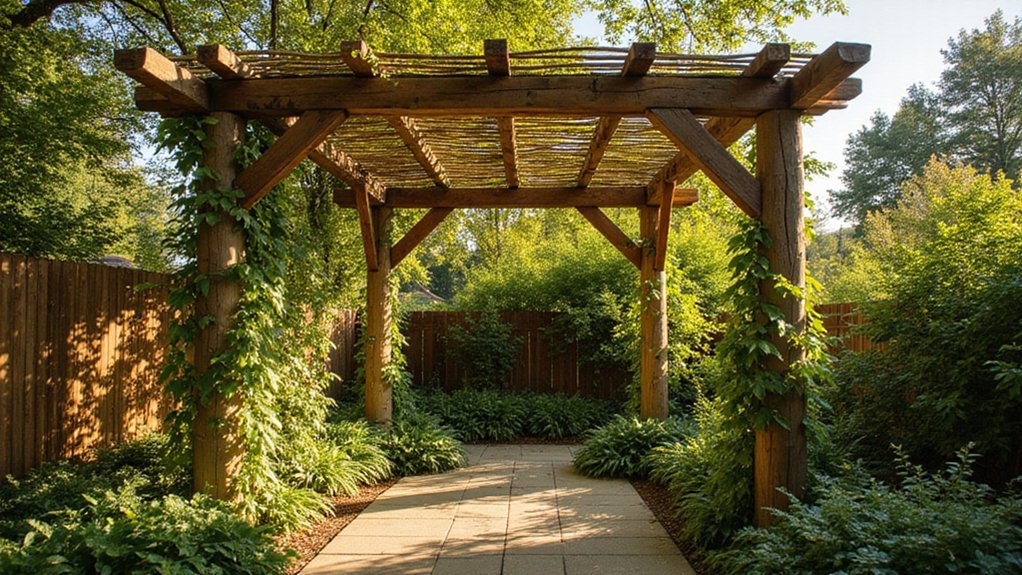
So you want shade that doesn’t make Mother Earth groan, right? Sustainable pergolas are basically your backyard’s way of saying “I care about the planet and look good doing it.” You’ve got options—reclaimed wood that whispers stories, bamboo that grows back faster than your neighbor’s complaints, composite materials that laugh at rot. But here’s the thing: picking the right one? That’s where it gets interesting.
Reclaimed Wood Pergolas: Beauty With Purpose
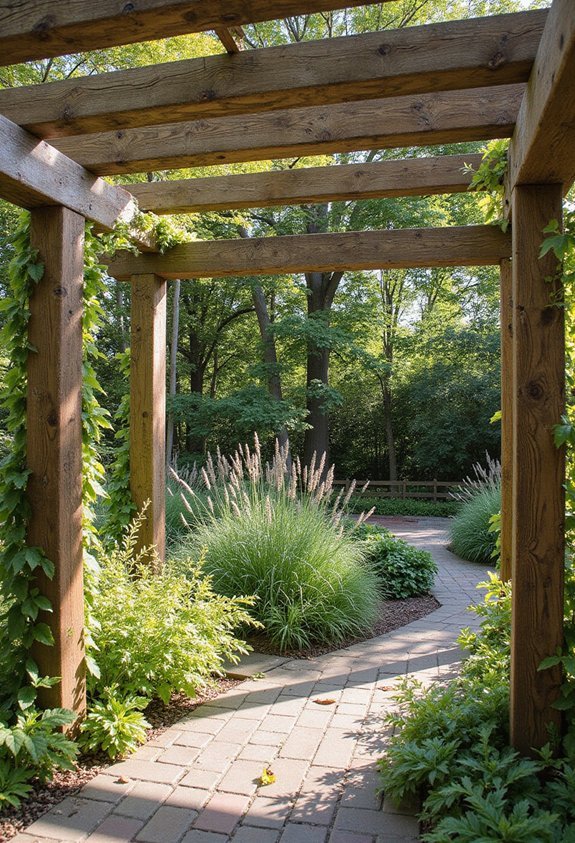
If you’ve ever walked past an old barn and thought, “Man, that wood’s got character,” you’re ready to understand reclaimed wood pergolas. You’re basically giving old timber a second life, and honestly, it’s pretty cool. That weathered oak or chestnut you’re installing? It’s already been through the wringer, so it won’t throw a fit about a little rain. Your pergola gets instant charm without the guilt of chopping down fresh trees. These beauties typically span 10 by 12 feet and feature gorgeous silver-gray patina that screams sophistication. The wood’s already aged like fine wine, developing natural color variations and rustic appeal. You’ll save money and the planet simultaneously. That’s what I call a win-win situation that doesn’t require questionable yoga poses to achieve.
Bamboo Pergolas: Sustainable and Elegant
While reclaimed wood’s got that vintage swagger down pat, bamboo pergolas are stepping up to prove that sustainable doesn’t mean sacrificing style. You’re looking at a material that grows back faster than your kid’s grass-stained laundry pile. Bamboo shoots up three feet annually, making it seriously eco-friendly. These pergolas feature warm, honey-colored beams that age beautifully into silvery gray tones. You can score eight-foot heights for decent shade without creating a cave situation. The slender stalks create an airy vibe that won’t block your whole backyard view. Installation’s pretty straightforward, and you won’t need a structural engineer’s degree. Plus, bamboo’s naturally strong and resists rot better than your Uncle Bob resists potato salad. Your garden’ll look zen-like while you’re basically being an environmental superhero.
Composite Pergolas: Durable, Tree-Friendly
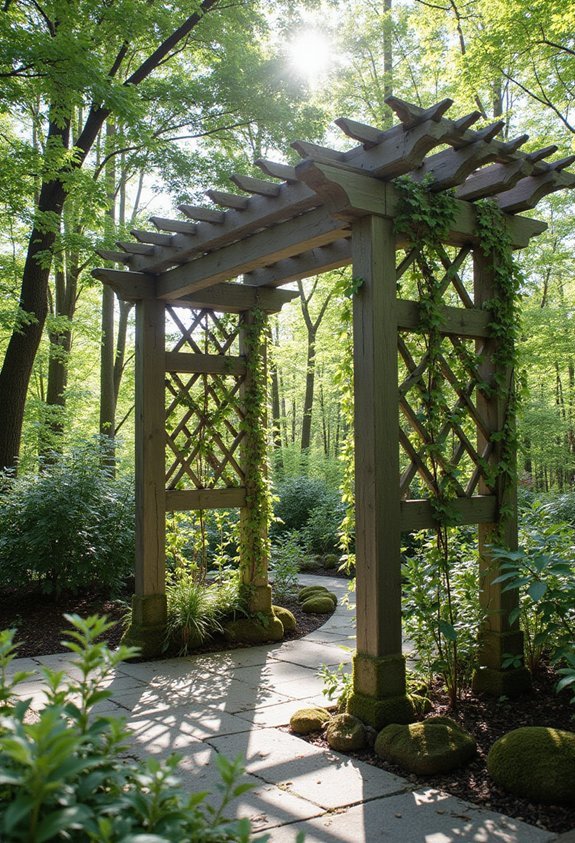
Now that bamboo’s shown us what eco-friendly can do, composite pergolas are bringing their own superpower to the sustainability game. These beauties are made from recycled plastic and wood fibers—basically, they’re giving trash a second life. You won’t need to repaint them every three years like regular wood, and they won’t splinter and poke you like some jealous ex. Your 10-by-10-foot pergola will look fresh for decades without the constant fussing. Plus, they’re totally tree-friendly since you’re not cutting down forests. Yes, they cost more upfront, but they’ll save you money on maintenance and replacement. Composite pergolas come in warm gray, natural tan, and chocolate brown. They’re the responsible choice that actually looks good doing it.
Recycled Plastic Pergolas: Waste Into Shade
Composite pergolas blend recycled materials beautifully, but recycled plastic pergolas take the eco-friendly concept even further—they’re basically saving the planet one soda bottle at a time. You’re literally converting trash into treasure here. These pergolas use reclaimed plastic bottles and bags transformed into sturdy lumber that won’t rot or splinter. They resist fading, so your dark gray or tan structure stays looking fresh for decades. Installation’s simple too—you bolt them together like adult Legos without breaking a sweat. They won’t attract termites or need painting. Plus, you’re keeping plastic out of landfills and oceans. Your backyard becomes an actual environmental hero spot. Sure, they cost slightly more upfront, but the durability and zero-maintenance vibes make them totally worth it.
FSC-Certified Cedar: Responsibly Sourced
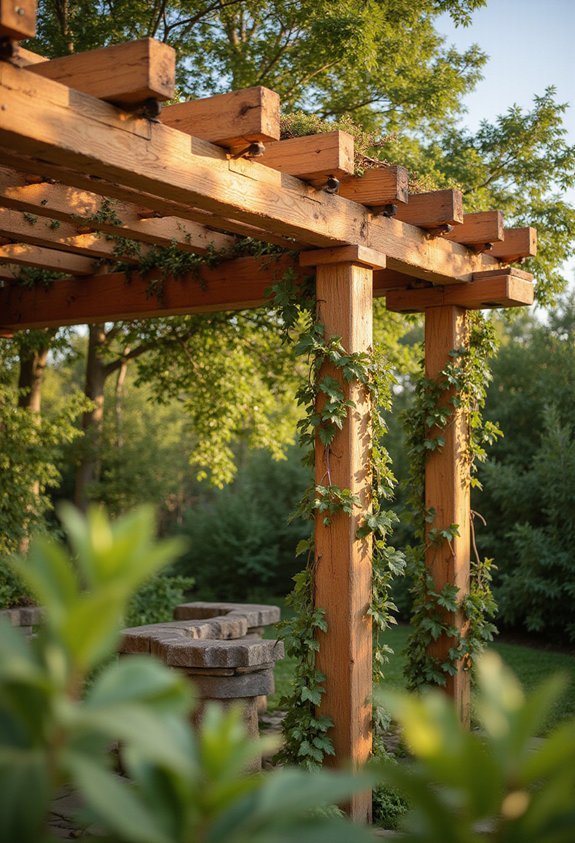
If you want your pergola to look absolutely stunning and feel good about where it came from, FSC-certified cedar‘s your answer. This wood comes from forests that are actually managed responsibly—no clear-cutting chaos here. You’re getting beautiful, reddish-brown timber that weathers gorgeously over time, developing this silver-gray patina that honestly looks incredible.
Cedar naturally resists rot and bugs, so your pergola won’t decompose faster than your composting habits. The wood’s aromatic too—not in a stinky way, but genuinely pleasant. FSC certification means real foresters checked that trees were harvested sustainably and replanted properly.
Sure, it costs more than pressure-treated lumber, but you’re investing in quality that’ll last decades while supporting responsible forestry. Your backyard gets shade, and Mother Earth gets a high-five.
Metal Pergolas: Modern Sustainable Design
While cedar’s got that natural charm and forest-friendly vibes, metal pergolas bring a whole different energy to your backyard—think sleek, modern, and honestly pretty tough. Aluminum and steel don’t rot or attract termites, which means they’ll outlast your houseplants by decades. You’ll love how they require basically zero maintenance, no staining needed. These babies reflect heat too, keeping your patio cooler on scorching summer days. Metal pergolas come in gorgeous finishes: matte black, bronze, or brushed silver. They’re lightweight yet sturdy, handling wind like champions. Recycled aluminum options exist, making them genuinely eco-friendly. Sure, they lack wood’s warmth, but they’ll make your space look like a magazine cover. Your backyard’s about to get seriously Instagram-worthy.
Living Pergolas: Growing Vines and Integrated Greenery
Here’s where your pergola becomes basically a living, breathing work of art. You’re not just building shade anymore—you’re growing a green monster that’ll make your neighbors jealous.
Vines like clematis and jasmine do the heavy lifting. Plant them at the base, and they’ll climb those 8-foot posts like they’re training for the Olympics. Within two seasons, you’ll have a purple and white flowering explosion overhead. It’s like nature’s own air-conditioning unit, minus the electricity bill.
The best part? Your pergola actually photosynthesizes. Seriously. Those leaves filter air and drop temperatures up to 8 degrees. Plus, you get privacy without looking like you’re hiding from the world. Just remember: thirsty vines need regular watering, or they’ll stage a dramatic plant protest.
Sustainable Pergolas Under $500
Now that you’ve got the living vine situation down, let’s talk about building one without selling a kidney. You can totally grab a solid wooden pergola kit for under $500. Look for pressure-treated pine or cedar options at your local home improvement store. These bad boys come with pre-cut beams and simple instructions that won’t make your brain hurt. A standard 8×8 foot structure runs around $300-$400, leaving you cash for hardware and maybe a fancy latte. Metal pergolas are cheaper too, running $200-$350 for smaller sizes. Sure, assembly requires patience and possibly some creative cursing, but you’ll feel like a DIY superhero when it’s done. Your backyard’s about to look incredible without destroying your wallet.
Build Your Own: DIY Pergolas From Reclaimed Wood
Grab eight-by-eight posts for your frame and two-by-sixes for the top lattice. Don’t worry if the wood’s weathered—that rustic gray look costs extra at fancy stores. Measure twice, cut once, and maybe don’t sneeze near the saw.
You’ll need basic tools: drill, circular saw, and a level (your floor isn’t level, trust me). Bolt everything together with galvanized hardware so rust won’t ruin your vibe. The whole project runs about three hundred bucks instead of a thousand.
Your backyard’ll look intentionally vintage, not accidentally sad.
Keep Your Pergola Beautiful: Easy Maintenance for Every Material
Since you’ve just built your pergola masterpiece (or bought one), you’ll want it to stick around longer than last year’s New Year’s resolutions. Here’s the thing: maintenance isn’t as scary as it sounds.
Wood pergolas need love. Inspect them yearly for rot and bugs—nobody wants termites throwing a party on your patio. Stain or seal every two to three years. It’s like sunscreen for your wood.
Metal pergolas? Way easier. Just hose them down and wipe dry. Rust is their sworn enemy, so keep moisture away.
Vinyl’s basically the lazy person’s dream. Grab a cloth and mild soap. Done.
All pergolas need leaf cleanup and debris removal. Clogged gutters are basically asking for trouble. Stay on top of it, and your pergola’ll look fresher than a daisy for years.
Frequently Asked Questions
What Is the Average Lifespan of Sustainable Pergolas Compared to Traditional Materials?
You’ll find sustainable pergolas typically last 20-30 years, outlasting traditional wood structures that often deteriorate within 10-15 years. They’re more resistant to rot, insects, and weather damage, making them a smarter long-term investment for your backyard.
Do Sustainable Pergolas Require Special Tools or Permits for Installation?
You’ll typically need standard carpentry tools for installation, similar to traditional pergolas. However, you should check your local building codes, as some areas require permits for structures exceeding certain heights or sizes. Contact your municipality first.
How Do Climate and Weather Conditions Affect Different Sustainable Pergola Materials?
You’ll find that wood materials warp and rot in humid climates, while composite materials resist moisture damage effectively. Metal structures rust without proper coating, and bamboo requires regular treatment in rainy regions to prevent deterioration.
Can Sustainable Pergolas Be Relocated or Disassembled for Moving Purposes?
Yes, you can relocate most sustainable pergolas. You’ll find that modular designs with bolted connections allow you to disassemble and reassemble them easily. However, you should check your specific pergola’s instructions, as some permanently installed models won’t disassemble without damage.
What Are the Cost Differences Between Sustainable and Conventional Pergola Options?
You’ll find sustainable pergolas typically cost 20-40% more upfront than conventional options. However, you’ll save money long-term through durability, minimal maintenance, and energy efficiency benefits that conventional pergolas don’t offer.
Conclusion
You’ve got tons of awesome pergola options that’ll make your backyard the envy of the neighborhood. Whether you’re going fancy with bamboo, budget-friendly with recycled plastic, or DIY with reclaimed wood, you’re helping the planet while creating a killer outdoor hangout spot. Pick what fits your style and wallet, and you’ll be chilling in the shade like a boss. Your backyard’s about to get seriously upgraded!