
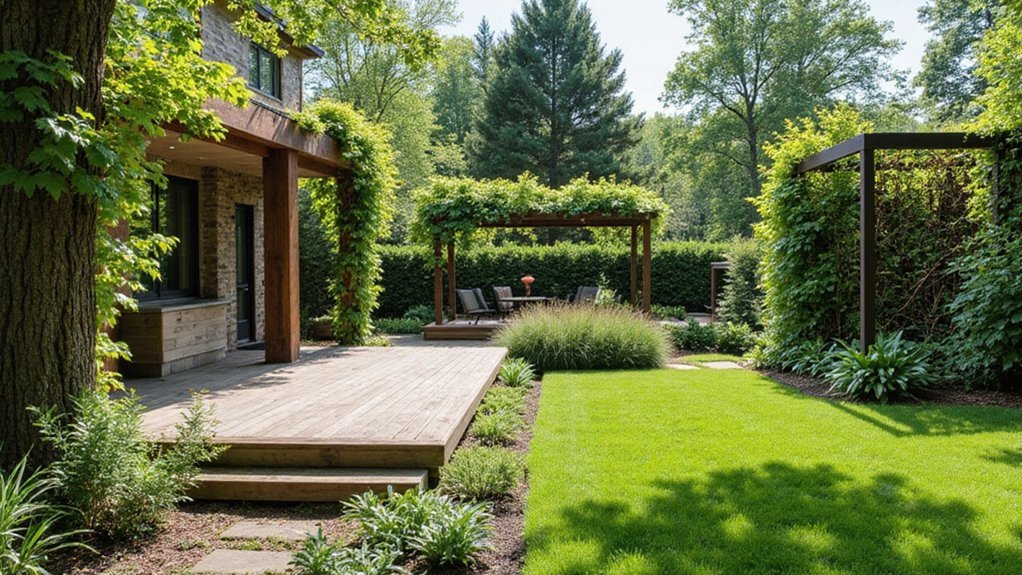
Here’s the thing: your backyard’s been calling for an upgrade, and Mother Earth’s basically begging you to answer. You’ve got tired wood that splinters like it’s got a personal vendetta, and let’s be real—maintenance feels like a second job nobody hired you for. But what if you could have an outdoor space that actually looks better over time *and* doesn’t require constant babying? We’re talking three game-changing solutions that’ll make your yard the envy of the block, and honestly, they’re pretty cool. Let’s break down your options.
Recycled Composite: Eco-Friendly Decking Without Maintenance Hassles
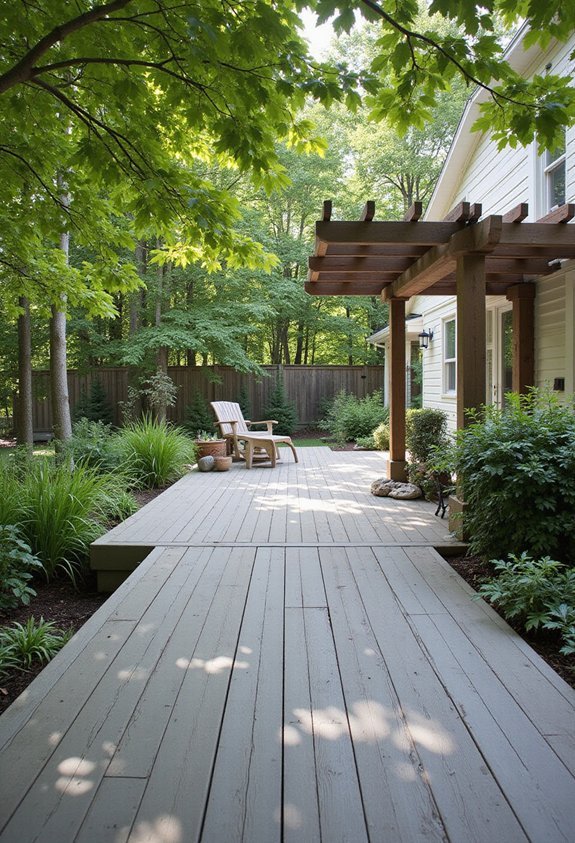
Envision this: you’re sipping lemonade on your back deck while your neighbor frantically scrubs wood stains with a wire brush—and you’re not doing a thing. That’s the magic of recycled composite decking. You’ve got a dark gray or warm brown surface that literally laughs in the face of maintenance. No staining. No sealing. No sweating through your shirt every summer weekend.
Recycled composite blends reclaimed wood fibers and plastic. The result? A deck that won’t rot, splinter, or invite termites to dinner. Your 12-by-16-foot space stays pristine with just occasional rinsing. Spilled grape juice? Wipe it away. Sun damage? It won’t happen. Your back stays pain-free because you’re not bent over sanding anything. That’s the eco-friendly dream right there.
Sustainably Sourced Wood: The Green Deck That Proves Longevity
Now, if you’re the type who actually *likes* maintaining things—who gets a weird satisfaction from oiling wood and watching it glow—sustainably sourced timber’s your answer. These FSC-certified boards come from responsibly managed forests, and they’re basically trees that grew up right. You’ll spend weekends conditioning your deck with natural oils, turning it from dull gray back to rich honey tones. Sure, it requires effort. But here’s the thing: that wood actually *gets better* with age. It weathers beautifully, developing character like a well-worn leather jacket. Your deck becomes this gorgeous silver-gray masterpiece after a few seasons. Plus, knowing your boards came from ethical sources? That feels genuinely good. You’re not just building an outdoor space. You’re building something that lasts decades and makes the planet proud.
Living Pergolas: Turn Your Yard Into a Carbon-Capture System
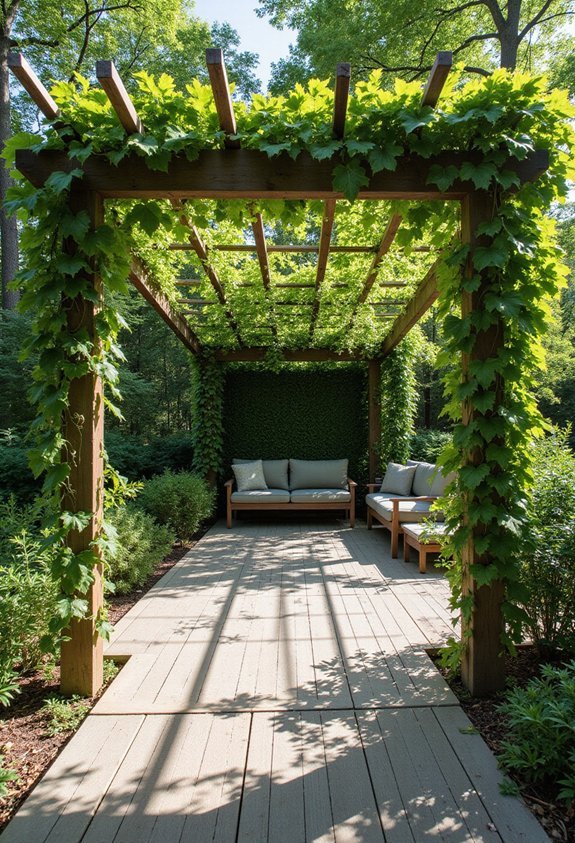
While decks give you a place to stand, living pergolas actually *work* for the planet—they’re like hiring a tiny forest to hang out in your backyard and scrub the air clean. You plant climbing vines like clematis or jasmine on sturdy frames, and boom—instant carbon-capture machines. These green walls absorb CO2 while you’re basically doing nothing but sipping lemonade. Your pergola’s leafy canopy cools things down by up to 9 degrees, which means less AC usage and lower energy bills. Plus, you’ll attract butterflies and bees who’ll actually thank you by pollinating your garden. It’s environmental heroism wrapped in beautiful green, turning your outdoor space into an oxygen factory that looks absolutely gorgeous.
Frequently Asked Questions
What Is the Cost Difference Between Recycled Composite and Traditional Wood Decking?
You’ll typically pay 15-25% more upfront for recycled composite decking than traditional wood. However, you’ll recoup those costs through reduced maintenance expenses, longer lifespan, and fewer repairs over time, making composites more economical long-term.
How Long Do Eco-Friendly Deck Materials Typically Last Before Replacement?
You’ll find that eco-friendly deck materials typically last 25-30 years with proper maintenance. Recycled composite decking won’t rot or splinter, requiring you to perform minimal upkeep compared to traditional wood that demands regular staining and sealing.
Can I Install Green Outdoor Spaces on a Sloped Yard?
Yes, you can install green outdoor spaces on a sloped yard. You’ll need to implement proper grading, drainage solutions, and potentially build retaining walls or use tiered decking. You should consult a professional to guarantee structural stability and ideal water management for your specific slope.
Which Deck Material Works Best in Extreme Weather Climates?
You’ll find that composite decking performs best in extreme weather climates. It resists warping, cracking, and fading better than wood. You won’t need constant maintenance, and it handles temperature swings and moisture without deteriorating markedly.
Do Living Pergolas Require Special Soil Preparation or Drainage Systems?
You’ll need to prepare well-draining soil enriched with organic matter for your living pergola. Install a drainage system if you’re in a wet climate to prevent root rot. You should amend your soil annually to maintain ideal growing conditions for climbing plants.
Conclusion
You’ve now got the eco-friendly deck of your dreams! Whether you pick recycled composite, sustainably sourced wood, or a living pergola (or go wild and do all three), you’re basically giving Mother Earth a high-five. Your yard’ll look stunning, you’ll feel smug about saving the planet, and you won’t spend weekends scrubbing wood. That’s a win-win-win situation right there. Your outdoor space—and the planet—will thank you!